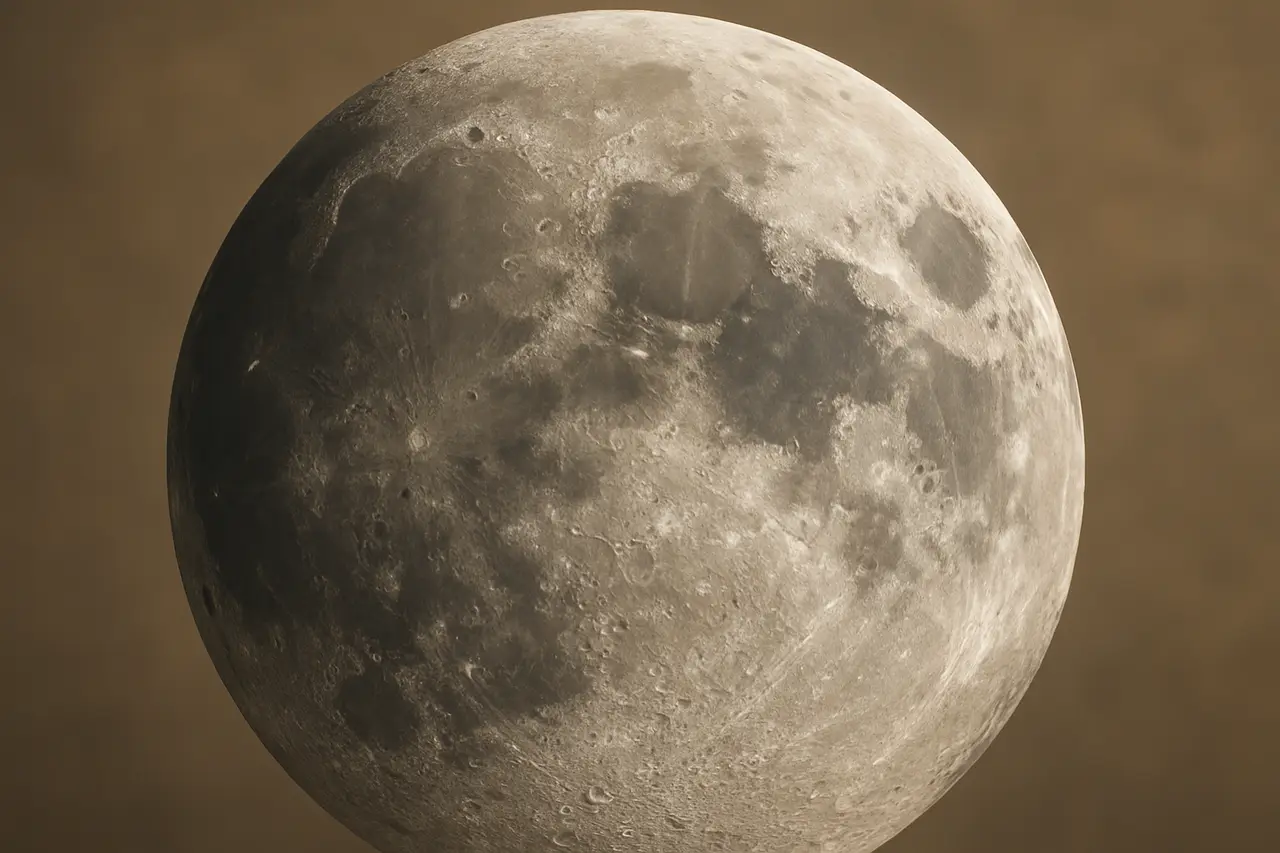
The short answer: The total mass of the asteroid belt is estimated at about 3 × 10²¹ kg (roughly 6.6 × 10²¹ lb), which is only about 4% of the mass of the Moon.
Asteroid belt weight by type
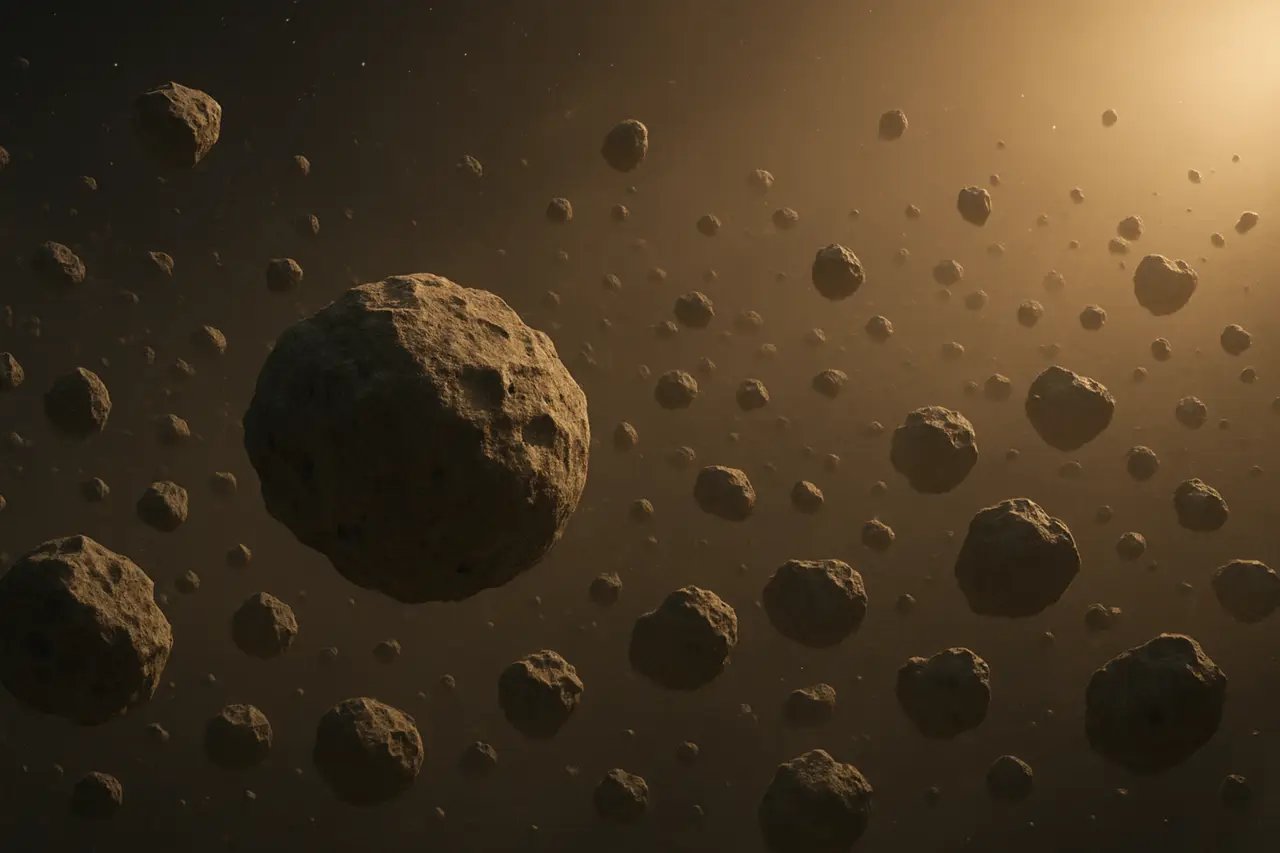
The asteroid belt lies between Mars and Jupiter and contains millions of rocky objects, yet its combined mass is far smaller than most people expect.
| Contributor | Share of belt mass |
|---|---|
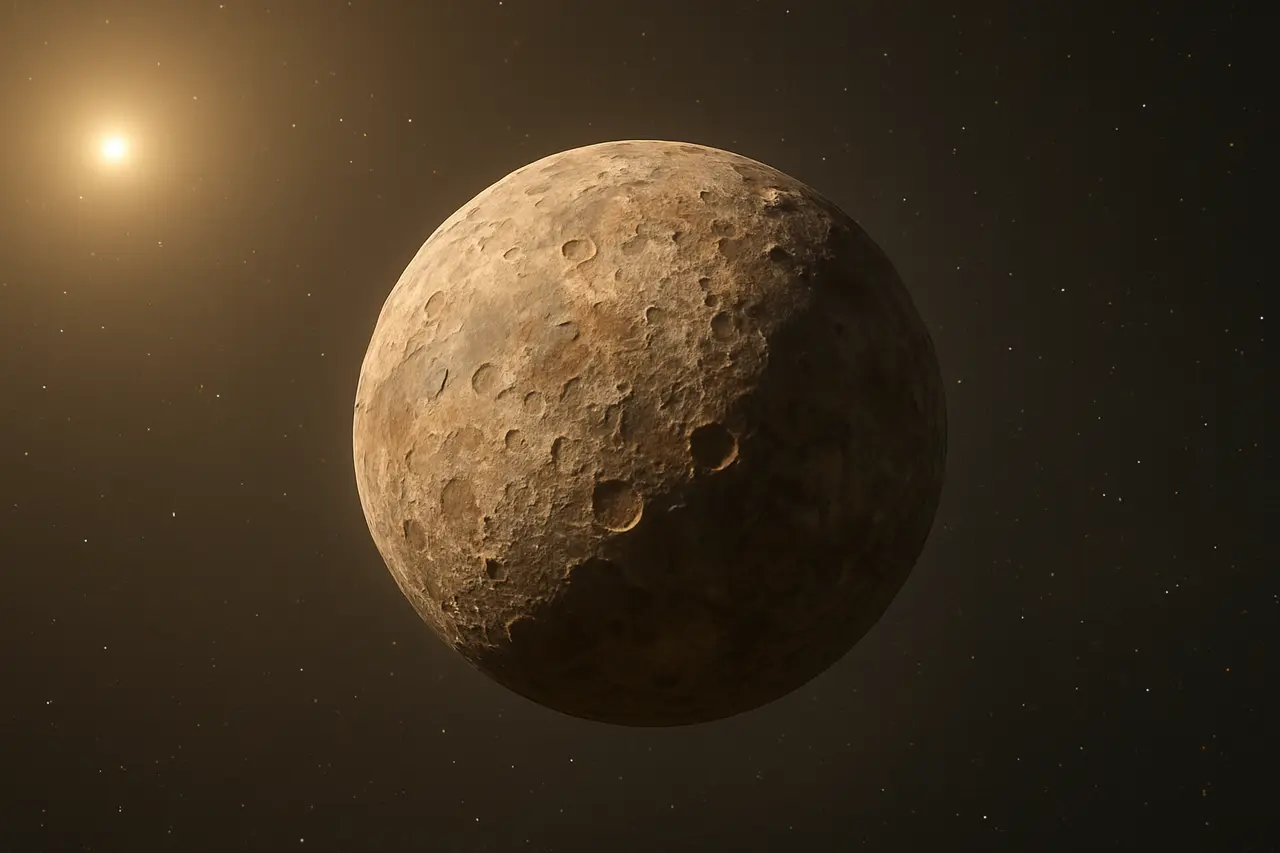
| Ceres | about one-third |
| Vesta, Pallas, Hygiea | another large share |
| Top four objects combined | about half |
| All remaining asteroids | the rest |
What affects asteroid belt weight
- A few dominant bodies. Ceres alone holds roughly a third of the belt's total mass.
- Mostly small objects. The vast majority of asteroids are tiny and add little mass.
- Wide composition range. Rocky, metallic, and carbon-rich asteroids have different densities.
- Large empty volume. The belt spans a huge region, so material is spread very thinly.
- Estimation uncertainty. Because countless small bodies are unmeasured, the total is an estimate.
How asteroid belt weight compares
Despite containing millions of objects, the entire asteroid belt weighs only about 4% as much as the Moon, and roughly a third of that mass is locked up in Ceres alone.
Frequently asked questions
Is the asteroid belt heavier than the Moon?
No. The asteroid belt's total mass is only about 4% of the Moon's mass. Even with millions of objects, its combined material is far less than our single natural satellite.
Which object holds the most mass in the belt?
Ceres holds the most, accounting for roughly a third of the entire asteroid belt's mass. The next largest, Vesta, Pallas, and Hygiea, make up much of the rest.
Why is the asteroid belt's mass so small?
Most asteroids are very small, and Jupiter's gravity prevented the belt from coalescing into a planet. The material is spread thinly across a huge region of space.