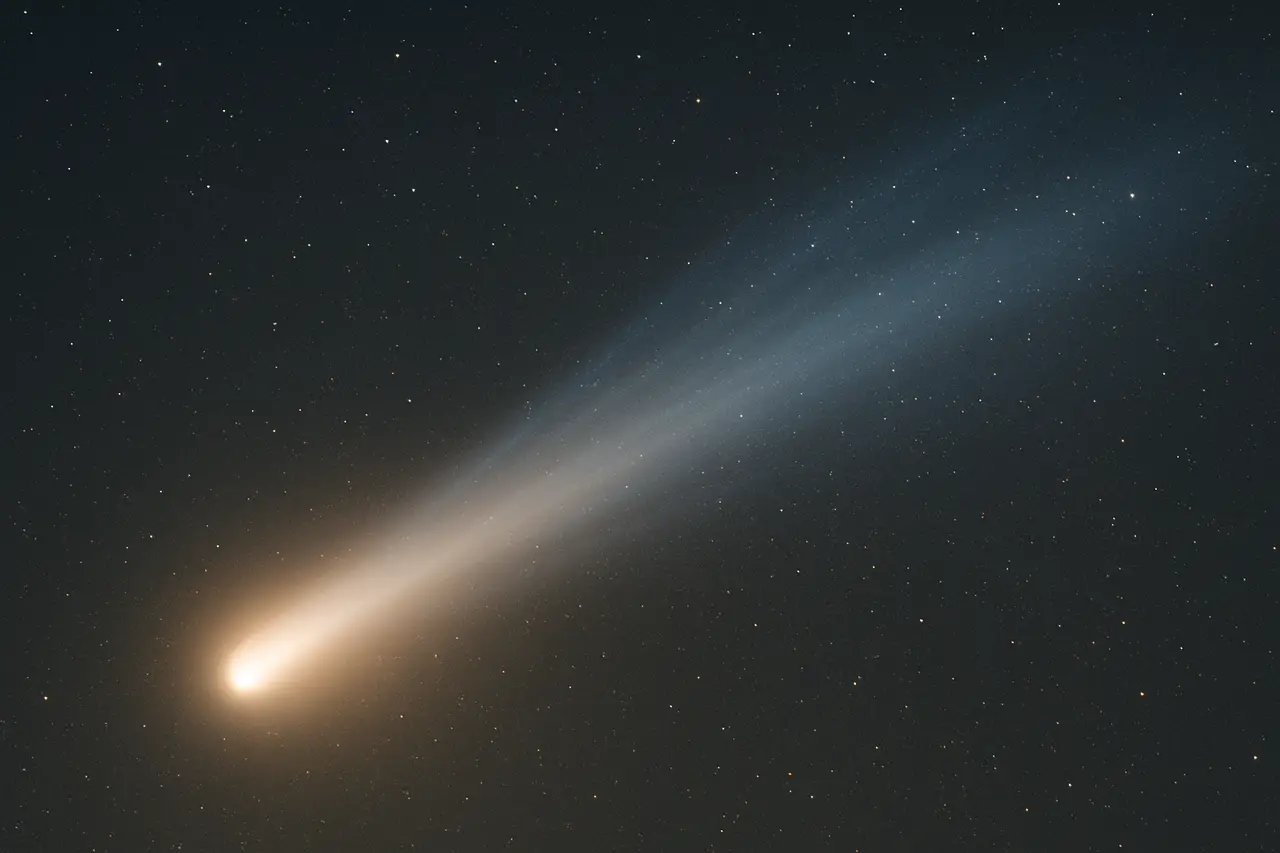
The short answer: Comets typically weigh anywhere from a few billion to several trillion kilograms (roughly 10 billion kg, or about 22 billion lb for a mid-sized comet like 67P/Churyumov-Gerasimenko), depending on size and composition.
Comet weight by type
Comets are icy bodies that orbit the Sun, and their mass spans an enormous range depending on the size of the nucleus and how much ice, dust, and rock it contains.
| Type (example) | Typical mass |
|---|---|
| Small comet nucleus (~1 km) | about 1 billion kg |
| Comet 67P/Churyumov-Gerasimenko | about 10 billion kg |
| Halley's Comet | roughly 220 billion kg |
| Large comet (Hale-Bopp class) | several trillion kg |
What affects comet weight
- Nucleus size. The diameter of the solid core is the single biggest driver of a comet's total mass.
- Density. Comets are porous "dirty snowballs," so their low density keeps mass well below that of a solid rock of the same size.
- Ice-to-dust ratio. A more rocky, dust-rich comet weighs more than an icy one of equal volume.
- Sublimation losses. Each pass near the Sun boils off ice and dust, gradually reducing the comet's mass.
- Measurement method. Masses are estimated from gravity, orbital changes, or spacecraft data, so figures carry real uncertainty.
How comet weight compares
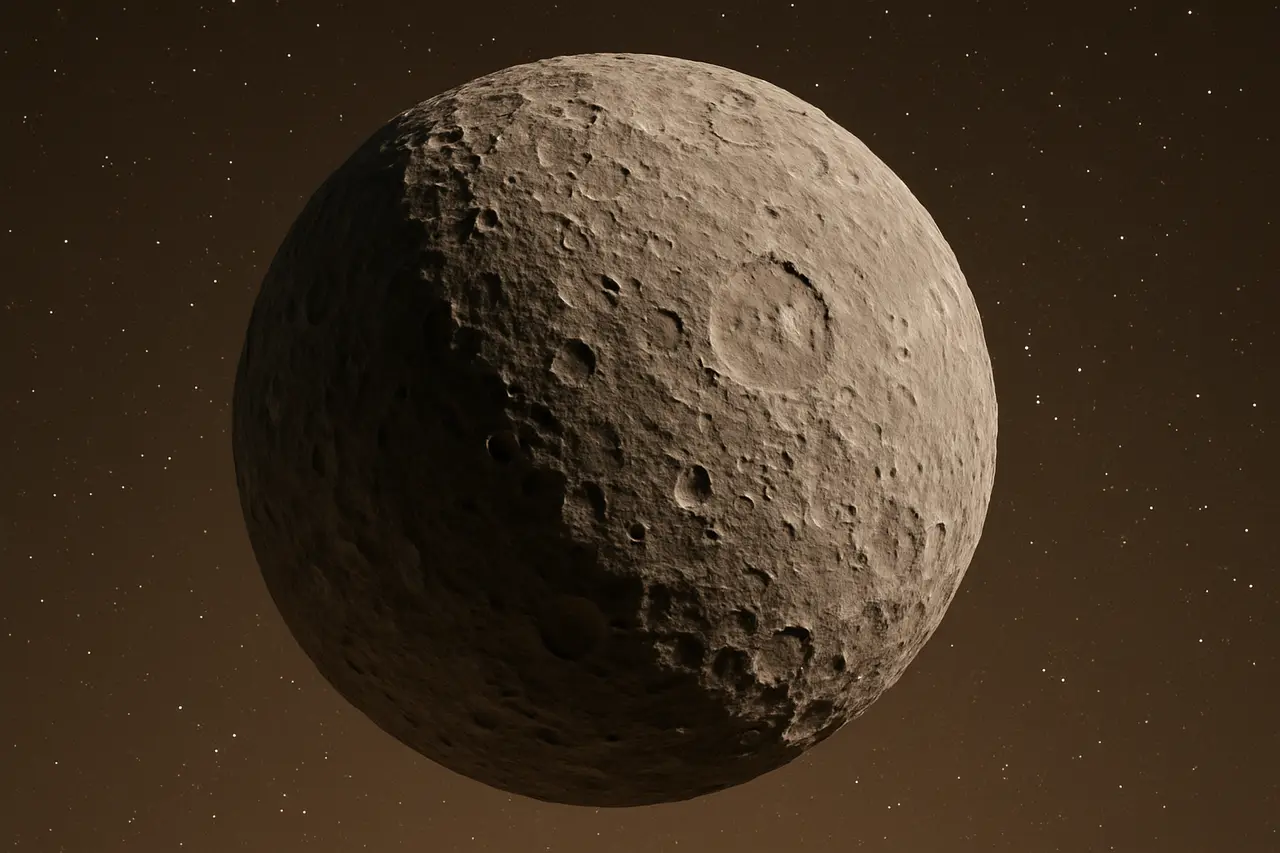
A mid-sized comet at roughly 10 billion kg is comparable to the mass of a large mountain, yet it is only a tiny fraction of the Moon, which is over 10 trillion times heavier.
Frequently asked questions
Why is a comet's weight so hard to measure?
Comets are small, distant, and irregularly shaped, so their mass is usually estimated indirectly from how they tug on spacecraft or shift their own orbit. These methods give approximate values rather than exact figures.
How much does Comet 67P weigh?
Comet 67P/Churyumov-Gerasimenko has a mass of about 10 billion kilograms, measured by the Rosetta spacecraft that orbited it. That is roughly the mass of a small mountain.
Do comets lose weight over time?
Yes. Every time a comet swings close to the Sun, solar heat vaporizes its ice and releases dust, so it loses mass with each orbit. Over thousands of passes a comet can shrink dramatically.