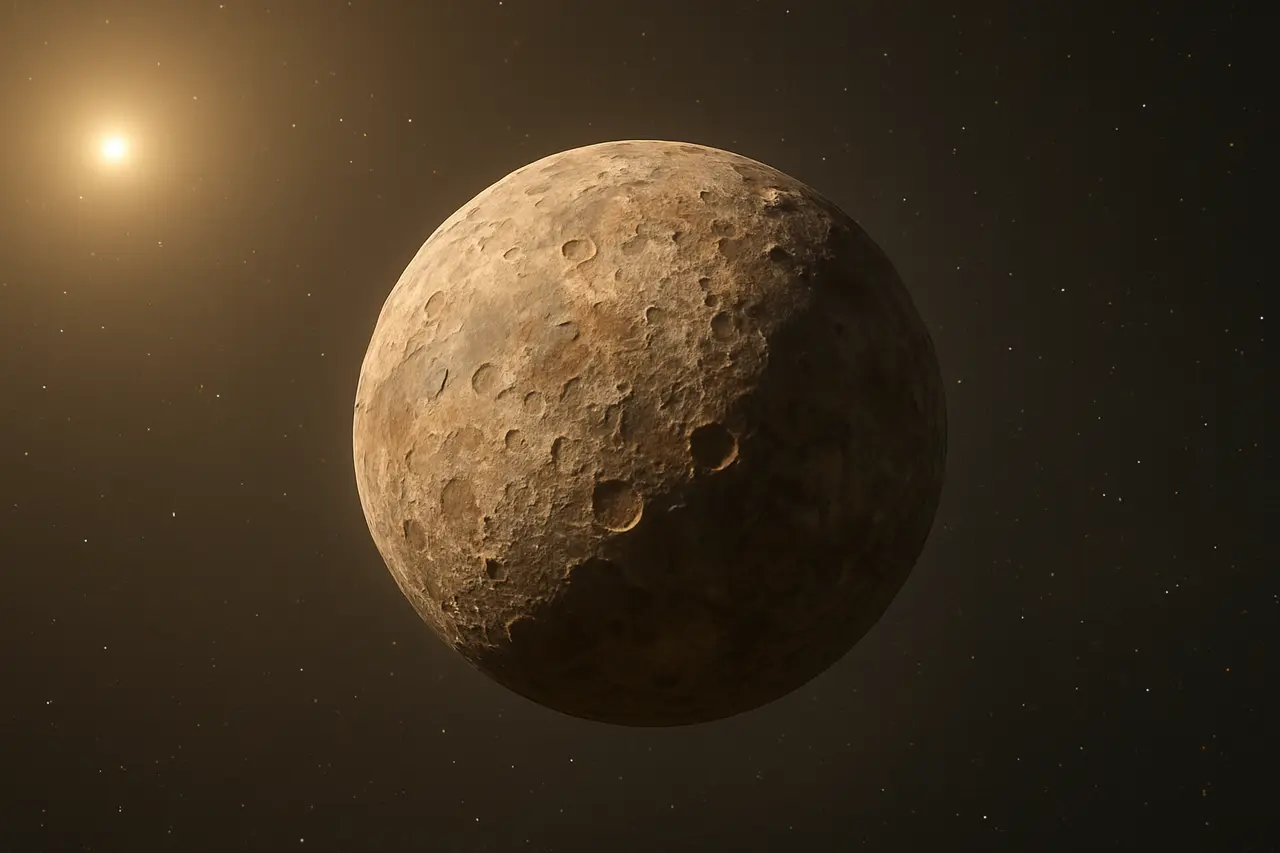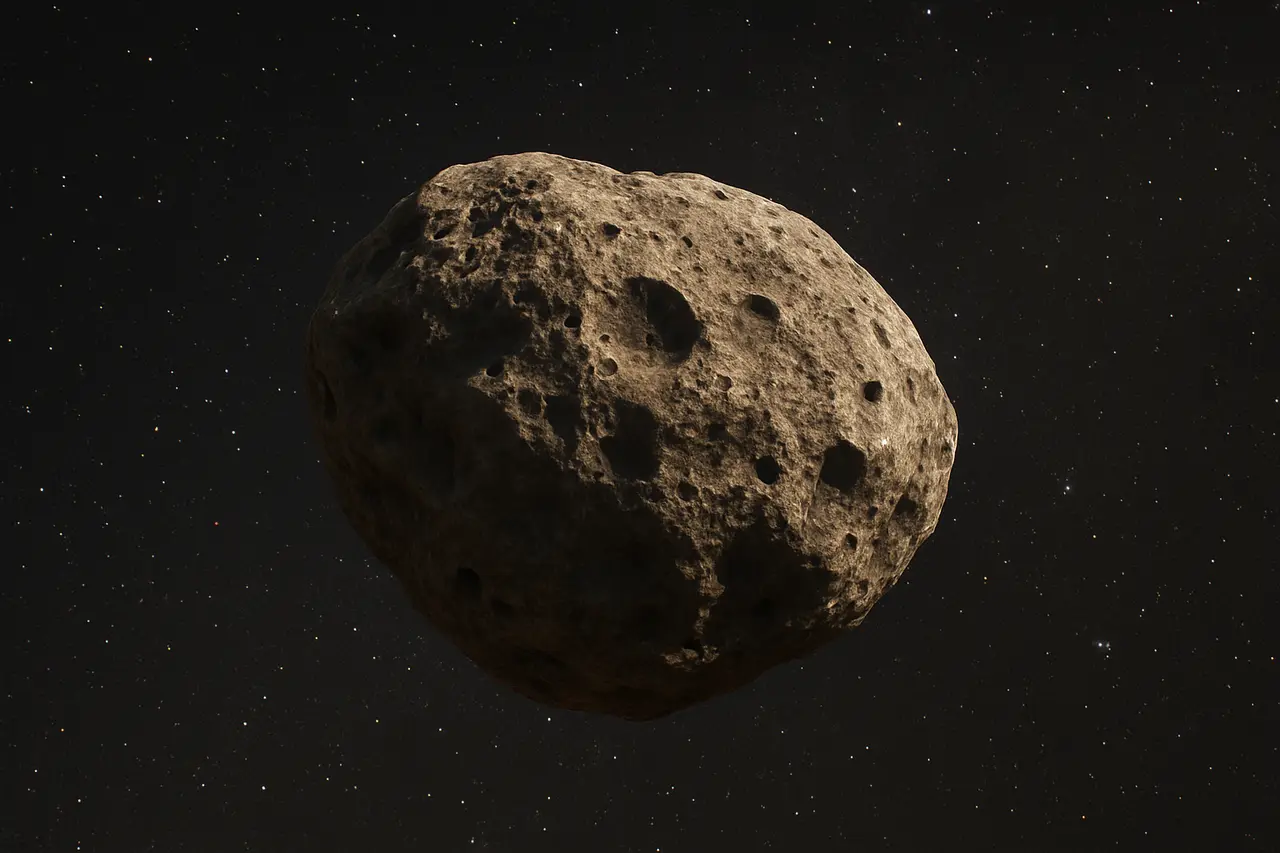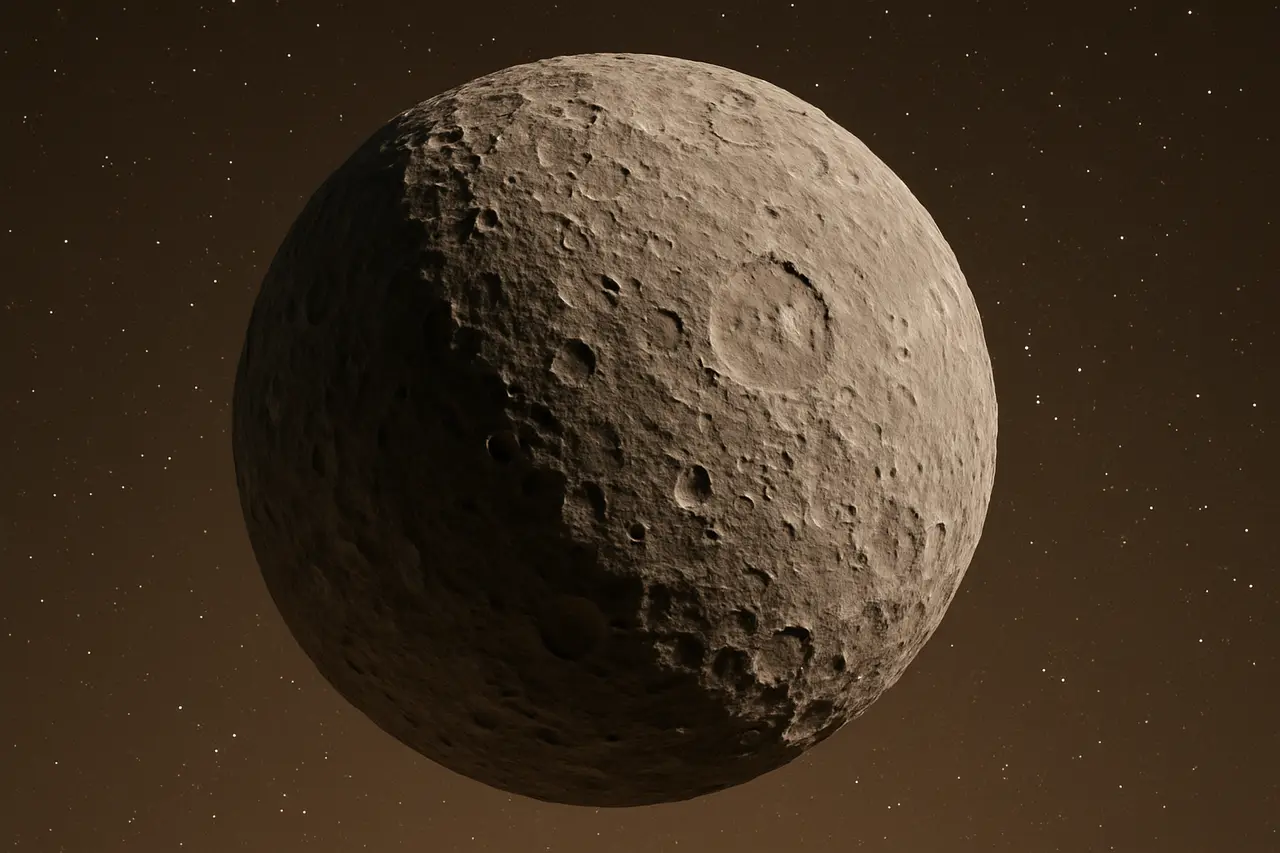
The short answer: Ceres has a mass of about 9.39 × 10²⁰ kg (roughly 2.07 × 10²¹ lb), which is around 0.00015 times the mass of Earth.
Ceres weight by type
Ceres is the largest object in the asteroid belt between Mars and Jupiter and is classified as a dwarf planet, with a diameter of about 940 kilometers.
| Comparison | Relative mass |
|---|---|
| Ceres mass | about 9.39 × 10²⁰ kg |
| Share of asteroid belt | roughly one-third of total |
| Compared to the Moon | about 1.3% of the Moon |
| Compared to Earth | about 0.00015 of Earth |
What affects Ceres weight
- Diameter. At about 940 km across, Ceres is large enough to hold a substantial mass.
- Composition. Ceres is a mix of rock and water ice, giving it a moderate density of around 2.16 g/cm³.
- Internal structure. A rocky core under an icy mantle shapes how its mass is distributed.
- Water content. A large fraction of ice keeps its overall density and mass lower than a purely rocky body.
- Measurement source. NASA's Dawn spacecraft measured Ceres directly, giving a well-constrained mass.
How Ceres weight compares
Ceres holds roughly a third of all the mass in the asteroid belt, yet it is still only about 1.3% as heavy as Earth's Moon.
Frequently asked questions
Is Ceres a planet or an asteroid?
Ceres is classified as a dwarf planet, but it also sits in the asteroid belt and is the largest object there. It shares features of both categories.
How was the mass of Ceres measured?
NASA's Dawn spacecraft orbited Ceres and measured its gravitational pull, yielding a precise mass of about 9.39 × 10²⁰ kilograms. Earlier estimates came from its effect on nearby asteroids.
How does Ceres compare to Earth's Moon?
Ceres weighs only about 1.3% as much as the Moon. Despite being the biggest asteroid, it is far smaller and lighter than our natural satellite.