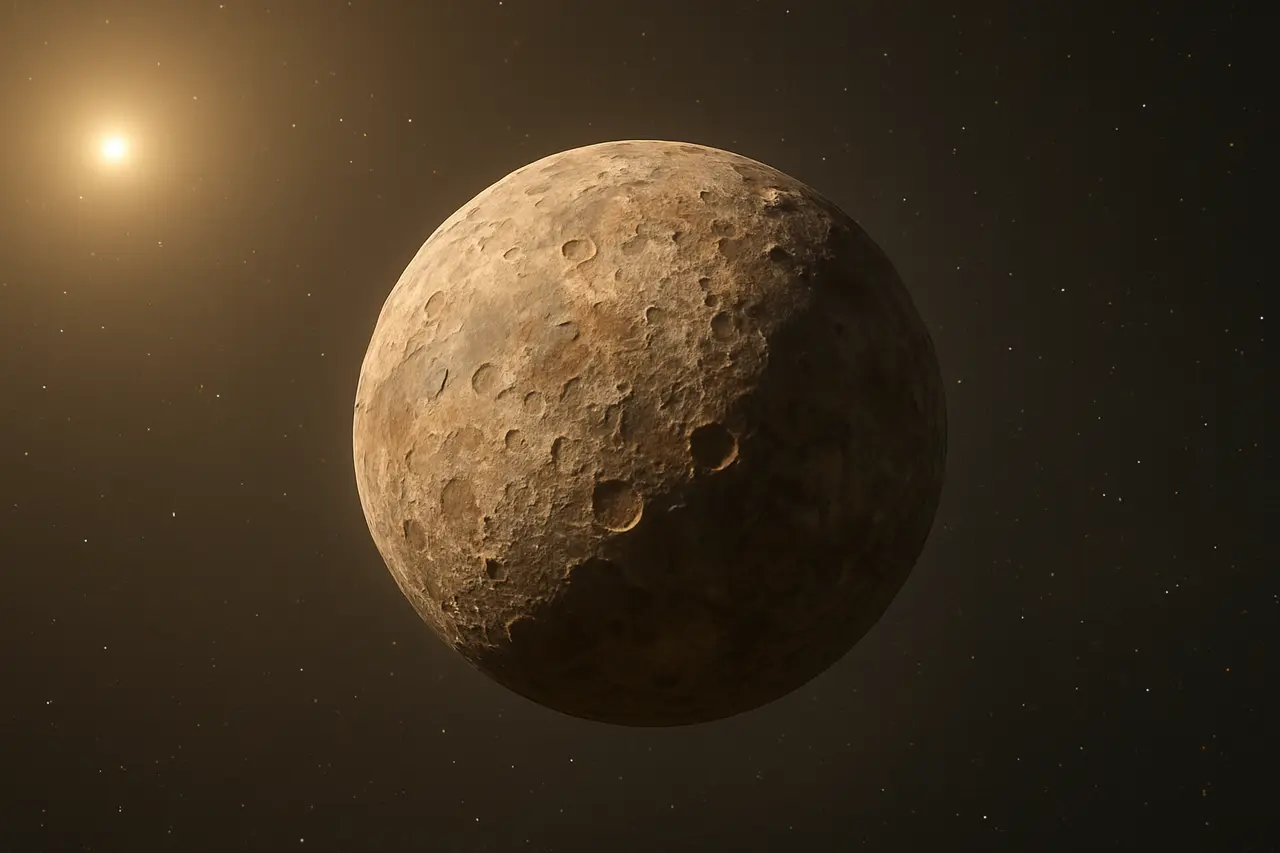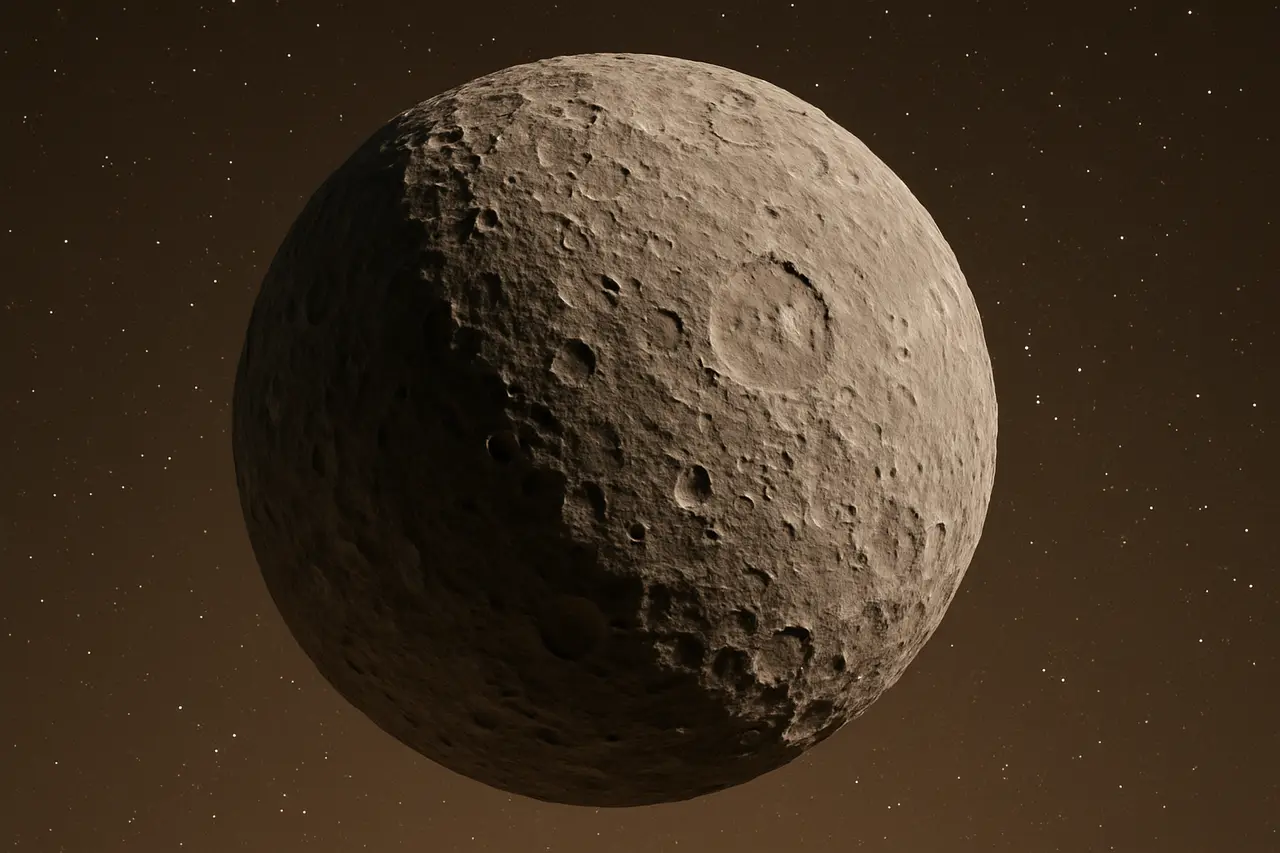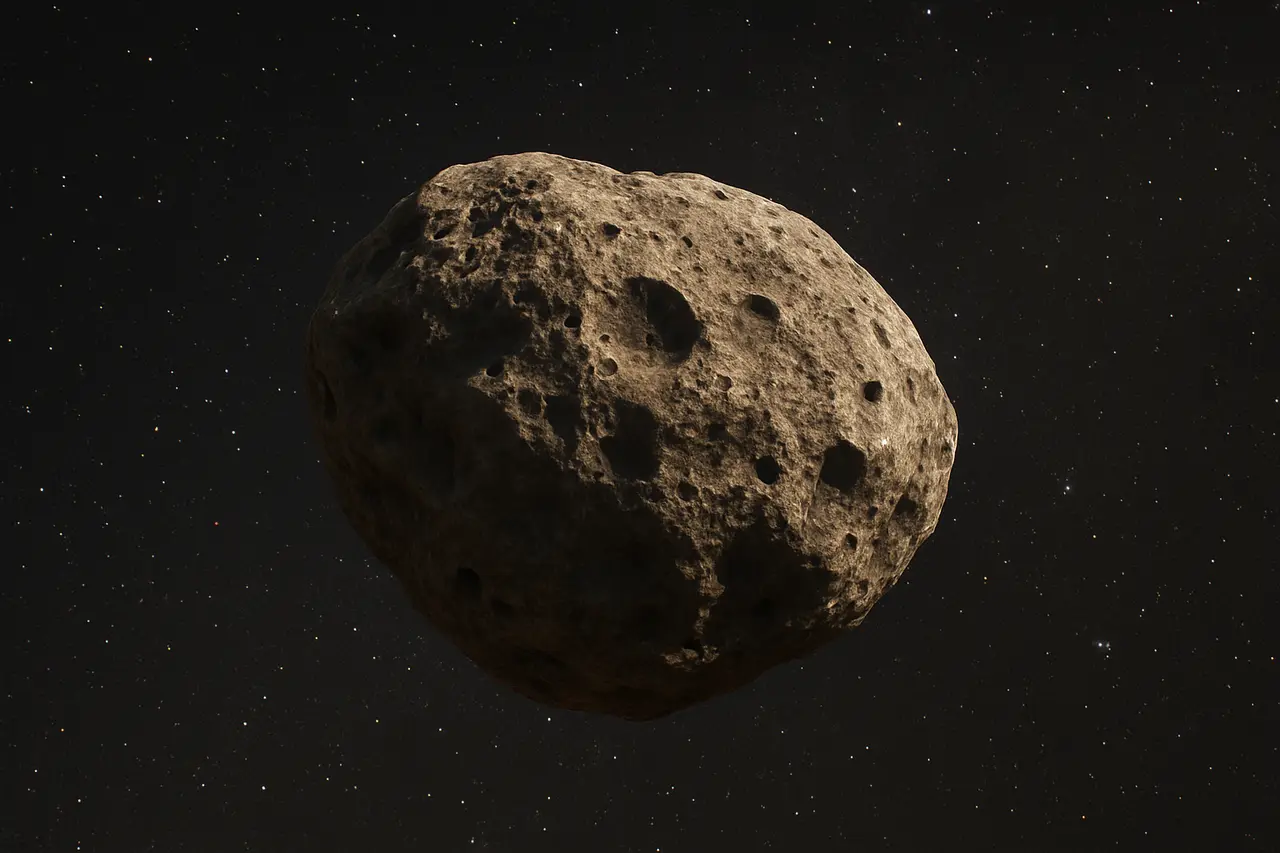
The short answer: Asteroids range enormously in weight, from a few tons for small rocks up to about 9.4 × 10²⁰ kg (roughly 2 × 10²¹ lb) for Ceres, the largest object in the asteroid belt.
Asteroid weight by type
Asteroids are rocky bodies that orbit the Sun, mostly in the belt between Mars and Jupiter. Their masses span from boulder-sized rocks to dwarf-planet-class giants.
| Asteroid (size class) | Approximate mass |
|---|---|
| Small near-Earth rock (~10 m) | a few thousand tons |
| Bennu (~490 m) | about 7.3 × 10¹⁰ kg |
| Vesta (~525 km) | about 2.6 × 10²⁰ kg |
| Ceres (largest, ~940 km) | about 9.4 × 10²⁰ kg |
What affects asteroid weight
- Size. Diameter is the dominant factor, since mass rises steeply as an asteroid grows.
- Composition. Metal-rich asteroids are far denser and heavier than carbon-rich or rubble-pile ones.
- Porosity. Many asteroids are loose "rubble piles" with empty space inside, lowering their mass.
- Shape. Irregular shapes make volume and therefore mass harder to pin down.
- Measurement method. Masses come from spacecraft, moons, or gravitational nudges, so estimates vary.
How asteroid weight compares
A small 10-meter asteroid weighs about as much as a few hundred cars, while giant Ceres holds roughly a third of the entire asteroid belt's mass.
Frequently asked questions
What is the heaviest asteroid?
Ceres is the most massive asteroid at about 9.4 × 10²⁰ kilograms, and it is also classified as a dwarf planet. It accounts for a large share of the asteroid belt's total mass.
How much does a typical small asteroid weigh?
A small near-Earth asteroid a few meters across may weigh only a few thousand tons. Mass climbs rapidly with size, so a kilometer-wide asteroid can weigh billions of tons.
How are asteroid masses measured?
Scientists weigh asteroids by tracking how they tug on passing spacecraft, by observing their moons, or by measuring their gravitational influence on other objects. Spacecraft missions give the most accurate figures.