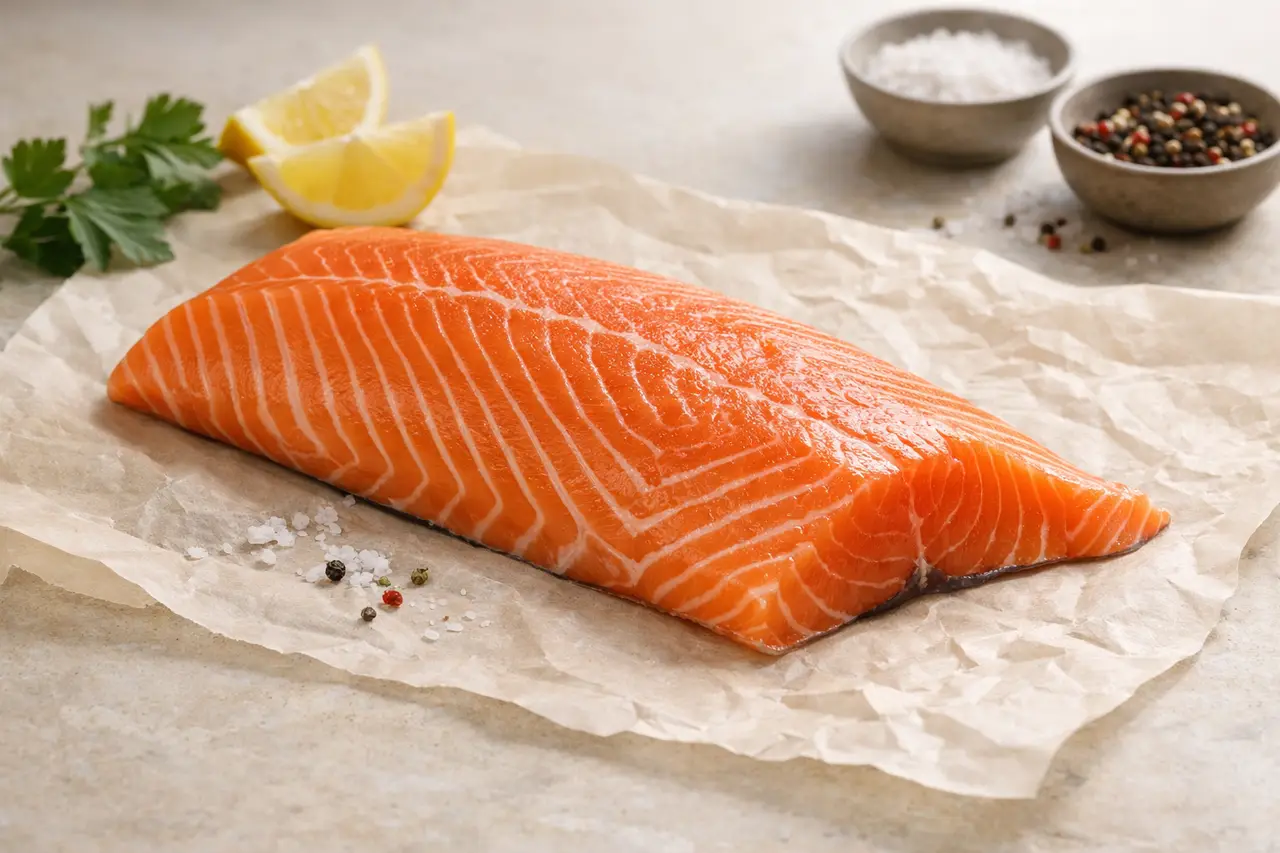
The short answer: A salmon fillet portion typically weighs about 170 to 225 grams (6 to 8 ounces). Salmon is dense and oily, so it feels heavier than many white fish portions.
Salmon fillet weight by type
Salmon fillet weight depends on whether it is a single portion or a whole side, and on how it is trimmed.
| Type (example) | Typical weight |
|---|---|
| Small portion fillet | 110 to 170 g (4 to 6 oz) |
| Standard portion fillet | 170 to 225 g (6 to 8 oz) |
| Large portion fillet | 225 to 340 g (8 to 12 oz) |
| Whole side of salmon | 900 to 1,800 g (2 to 4 lb) |
What affects salmon fillet weight
- Portion size. A single fillet is far lighter than a whole side of salmon.
- Raw vs. cooked. Salmon loses roughly a fifth of its weight when cooked.
- Skin and bones. Skin-on, bone-in fillets weigh more than trimmed ones.
- Cut location. Thicker center cuts weigh more than thin tail pieces.
- Fish size. Larger salmon yield bigger, heavier fillets.
How salmon fillet weight compares
A standard salmon fillet weighs about the same as a medium apple, while a whole side is roughly as heavy as a small bag of sugar.
Frequently asked questions
What is a standard salmon fillet serving?
A typical serving is about 170 grams (6 ounces) raw, which cooks down to roughly 135 to 150 grams.
How much does a salmon fillet weigh cooked?
Salmon loses roughly 20 percent of its weight when cooked, so a 200 gram raw fillet ends up around 160 grams.
How much does a whole side of salmon weigh?
A whole side of salmon typically weighs about 900 to 1,800 grams (2 to 4 pounds), depending on the size of the fish.