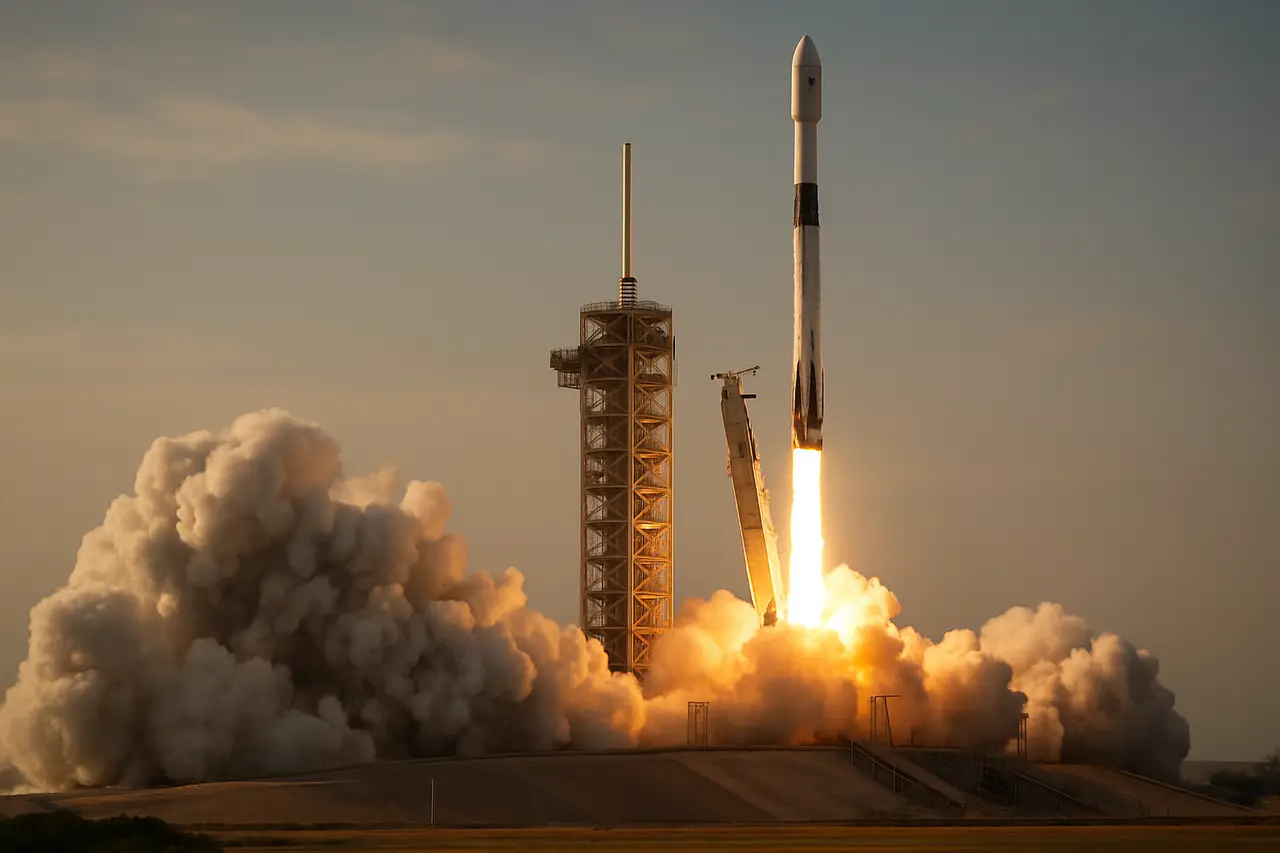
The short answer: The Falcon 9 weighs about 549,054 kg (1,210,000 pounds) at liftoff, the vast majority of which is propellant.
Rocket weight by type
Almost all of the Falcon 9's liftoff weight is fuel and oxidizer, with the structure and payload making up a small share. The table breaks down the rocket.
| Component (example) | Typical weight |
|---|---|
| Propellant (RP-1 and LOX) | The large majority of liftoff mass |
| First stage (dry) | Roughly 25,000 to 28,000 kg |
| Second stage (dry) | A few thousand kilograms |
| Full rocket at liftoff | About 549,054 kg (1.21 million lb) |
What affects rocket weight
- Propellant. Kerosene (RP-1) and liquid oxygen make up the overwhelming majority of the liftoff weight.
- Two stages. The rocket's two stages each carry their own fuel and structure.
- Payload. The mass of satellites or cargo on top adds to the total liftoff weight.
- Reusability hardware. Landing legs, grid fins, and reserve fuel add weight to the first stage.
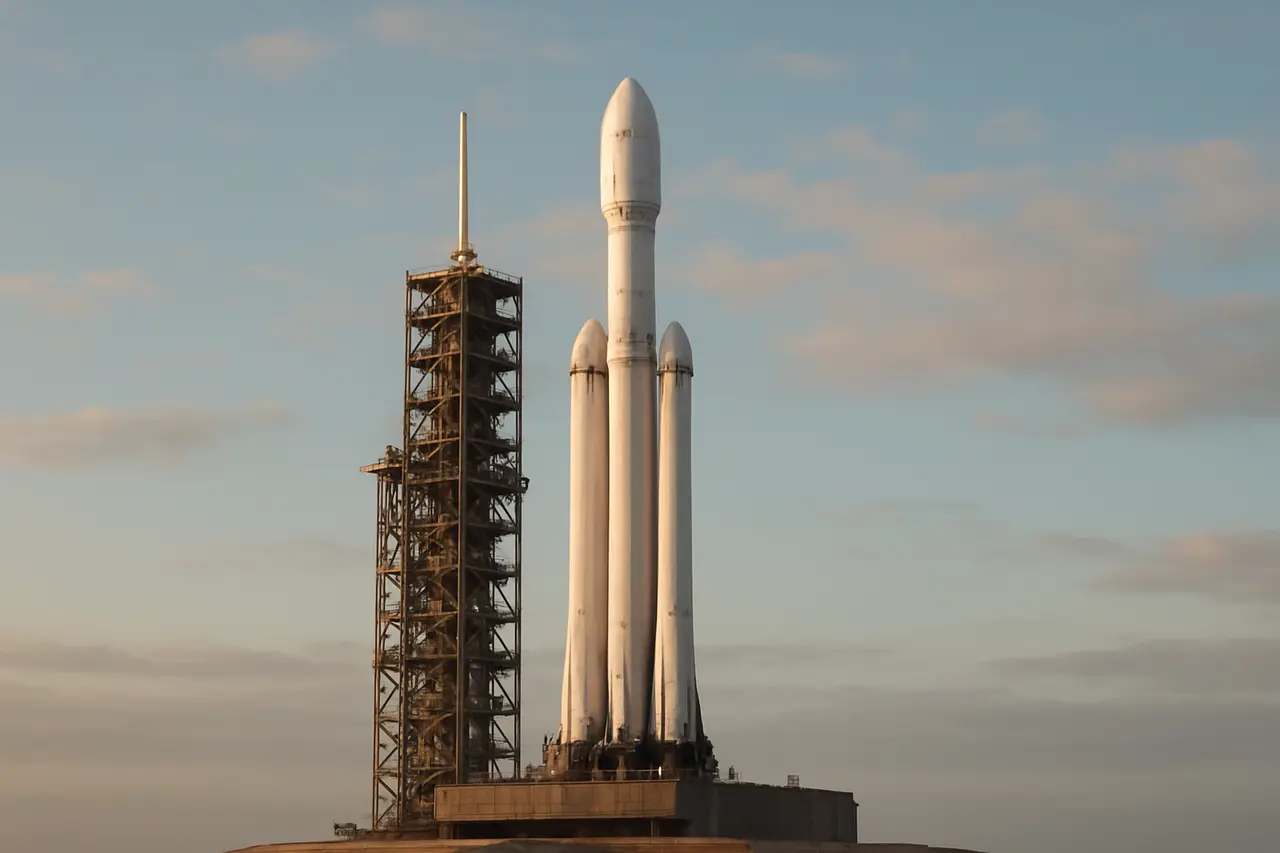
- Configuration. The figure refers to a single Falcon 9; the Falcon Heavy with three cores is far heavier.
- Wet versus dry mass. The empty rocket weighs only a small fraction of its fully fueled weight.
How rocket weight compares
At about 549,000 kg fully fueled, the Falcon 9 weighs roughly as much as 400 average cars, or a fully loaded Boeing 747.
Frequently asked questions
How much does the Falcon 9 weigh?
It weighs about 549,054 kg, or roughly 1,210,000 pounds, at liftoff. The vast majority of this is propellant.
How much does the Falcon 9 weigh empty?
The dry mass is far lower, with the first stage alone around 25,000 to 28,000 kg. Almost all of the liftoff weight is fuel and oxidizer.
Is the Falcon Heavy heavier than the Falcon 9?
Yes, by a large margin. The Falcon Heavy uses three Falcon 9 cores, giving it a liftoff weight of roughly 1,420,000 kg.