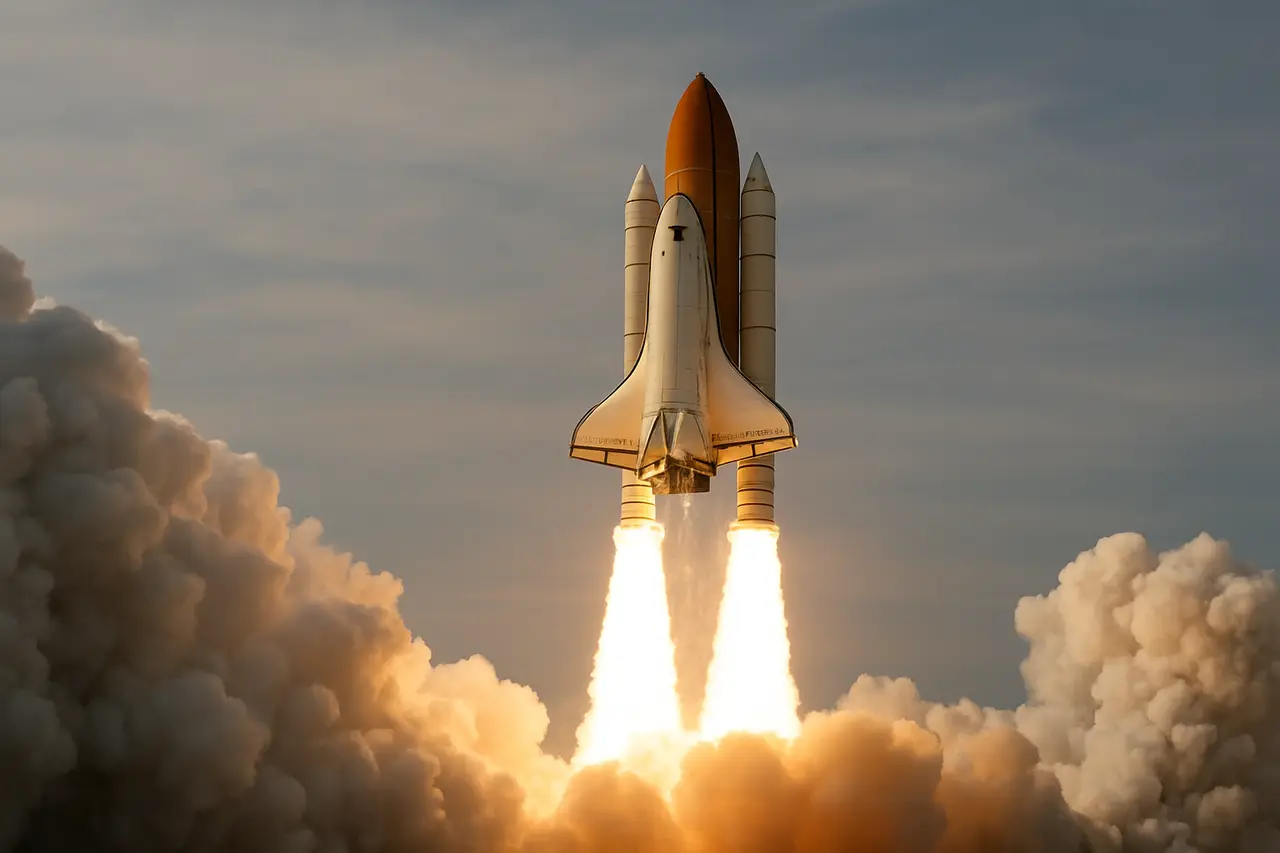
The short answer: A full Space Shuttle stack weighed about 2,030,000 kg (4,470,000 pounds) at launch, including the orbiter, external tank, and solid rocket boosters.
Space shuttle weight by type
The Space Shuttle's launch weight was spread across three main elements, with fuel dominating the total. The table breaks down the stack.
| Component (example) | Typical weight |
|---|---|
| Orbiter (empty) | About 78,000 kg (172,000 lb) |
| External fuel tank (full) | About 760,000 kg (1.68 million lb) |
| Two solid rocket boosters | About 1,180,000 kg total |
| Full launch stack | About 2,030,000 kg (4.47 million lb) |
What affects space shuttle weight
- Propellant. The full external tank and solid boosters held the great majority of the launch weight.
- Solid rocket boosters. The two boosters were extremely heavy when loaded with solid propellant.
- Orbiter payload. Cargo carried in the bay added to the orbiter's weight at launch.
- Fuel burn. The stack lost most of its weight within minutes as propellant was consumed.
- Landing weight. The empty orbiter that glided back to Earth weighed only a small fraction of the launch stack.
- Configuration. Exact weight varied between missions depending on payload and tank version.
How space shuttle weight compares
At launch the full stack weighed about 2,030,000 kg, roughly as much as 1,500 cars, while the orbiter alone weighed about as much as a loaded airliner.
Frequently asked questions
How much did the Space Shuttle weigh?
The full launch stack weighed about 2,030,000 kg, or roughly 4,470,000 pounds. This included the orbiter, external tank, and two solid rocket boosters.
How much did the orbiter weigh by itself?
The orbiter weighed roughly 78,000 kg empty, or about 172,000 pounds. Most of the stack's launch weight was fuel, not the orbiter.
Why did the Shuttle's weight change during launch?
It burned through enormous amounts of propellant within minutes of liftoff. The boosters and empty tank were also jettisoned during ascent.