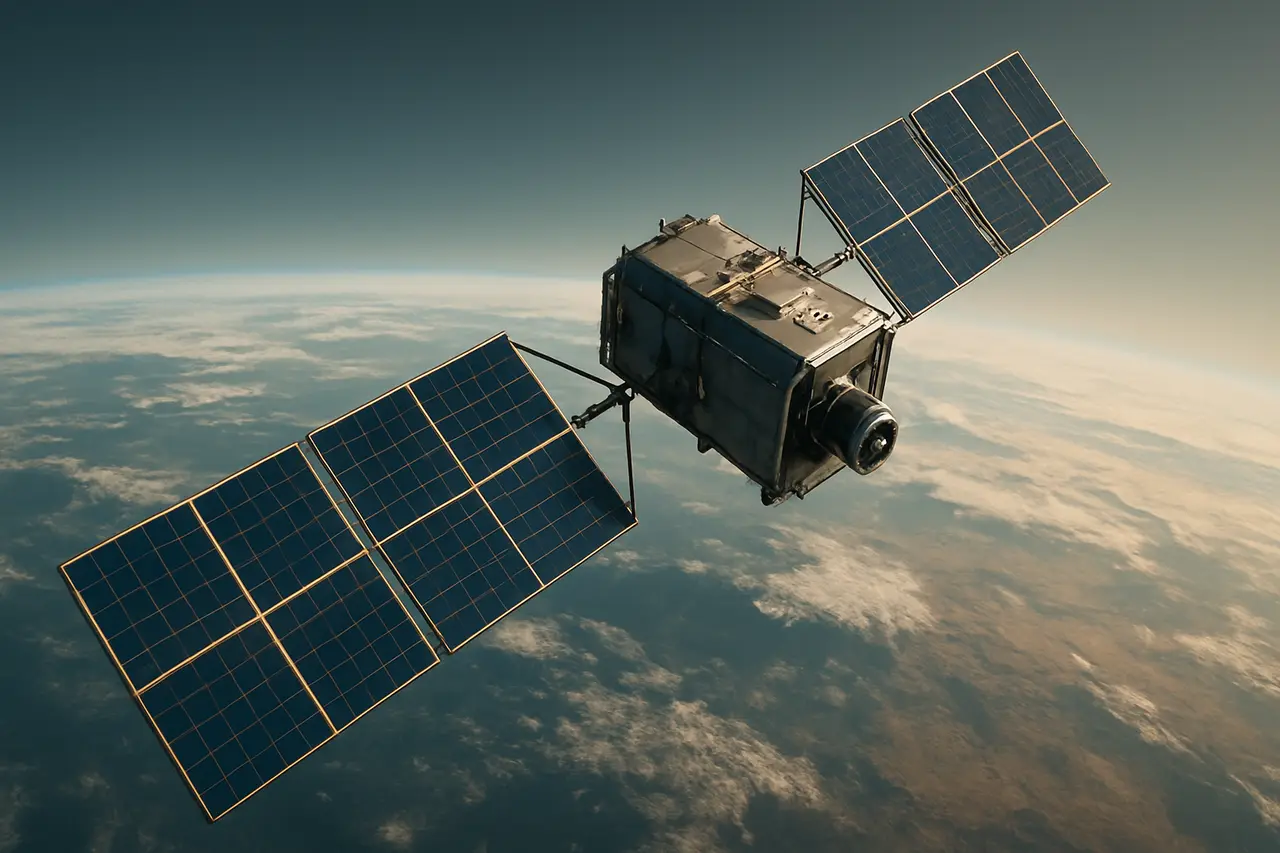
The short answer: Satellites range from about 1 kg for tiny CubeSats to roughly 6,000 kg (13,000 pounds) or more for large communication satellites.
Satellite weight by type
Satellite weight depends heavily on the mission, from pocket-sized research craft to bus-sized broadcasting platforms. The table compares common categories.
| Satellite type (example) | Typical weight |
|---|---|
| CubeSat / nanosatellite | About 1 to 10 kg |
| Small Earth-observation satellite | Roughly 100 to 500 kg |
| Communications satellite (LEO) | Several hundred kilograms |
| Large geostationary satellite | Up to 6,000 kg or more |
What affects satellite weight
- Mission size. Larger payloads and instruments require a bigger, heavier satellite bus.
- Propellant. Station-keeping fuel can add hundreds of kilograms to a large geostationary satellite.
- Orbit. Geostationary satellites tend to be much heavier than small low-Earth-orbit craft.
- Power systems. Large solar arrays and batteries for high-power satellites add significant weight.
- Antennas and instruments. Communication dishes and sensors contribute to overall mass.
- Design era. Modern miniaturization lets many tasks be done with far lighter satellites than before.
How satellite weight compares
A CubeSat weighs about the same as a bag of sugar, while a large geostationary satellite at 6,000 kg weighs roughly as much as four small cars.
Frequently asked questions
How much does a satellite weigh?
It can range from about 1 kg for a CubeSat to 6,000 kg or more for a large geostationary satellite. The weight depends mainly on the mission and orbit.
How much does a CubeSat weigh?
A standard single-unit CubeSat weighs roughly 1 to 2 kg. Larger multi-unit CubeSats can weigh up to about 10 kg.
What is the heaviest type of satellite?
Large geostationary communications satellites are among the heaviest, often exceeding 6,000 kg at launch. Much of this weight is propellant for staying in orbit.