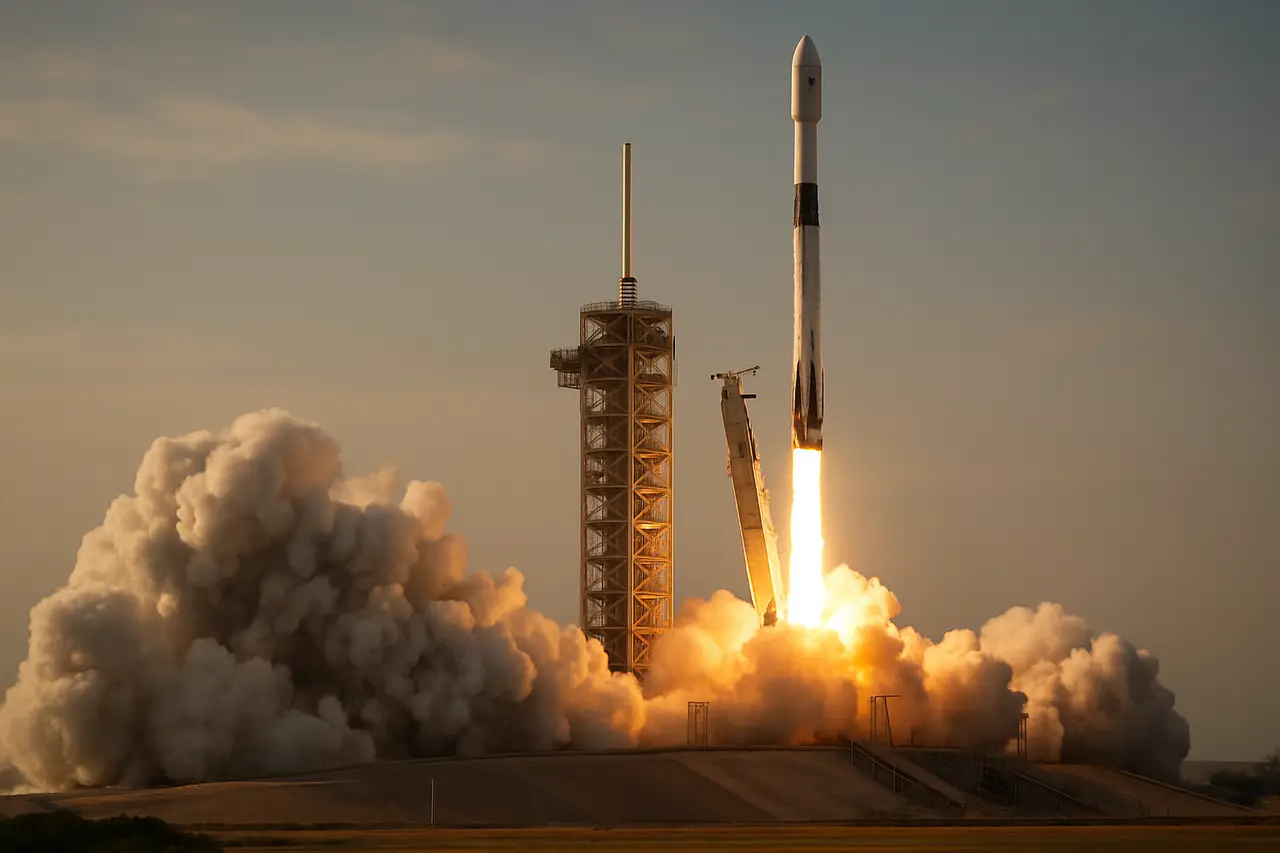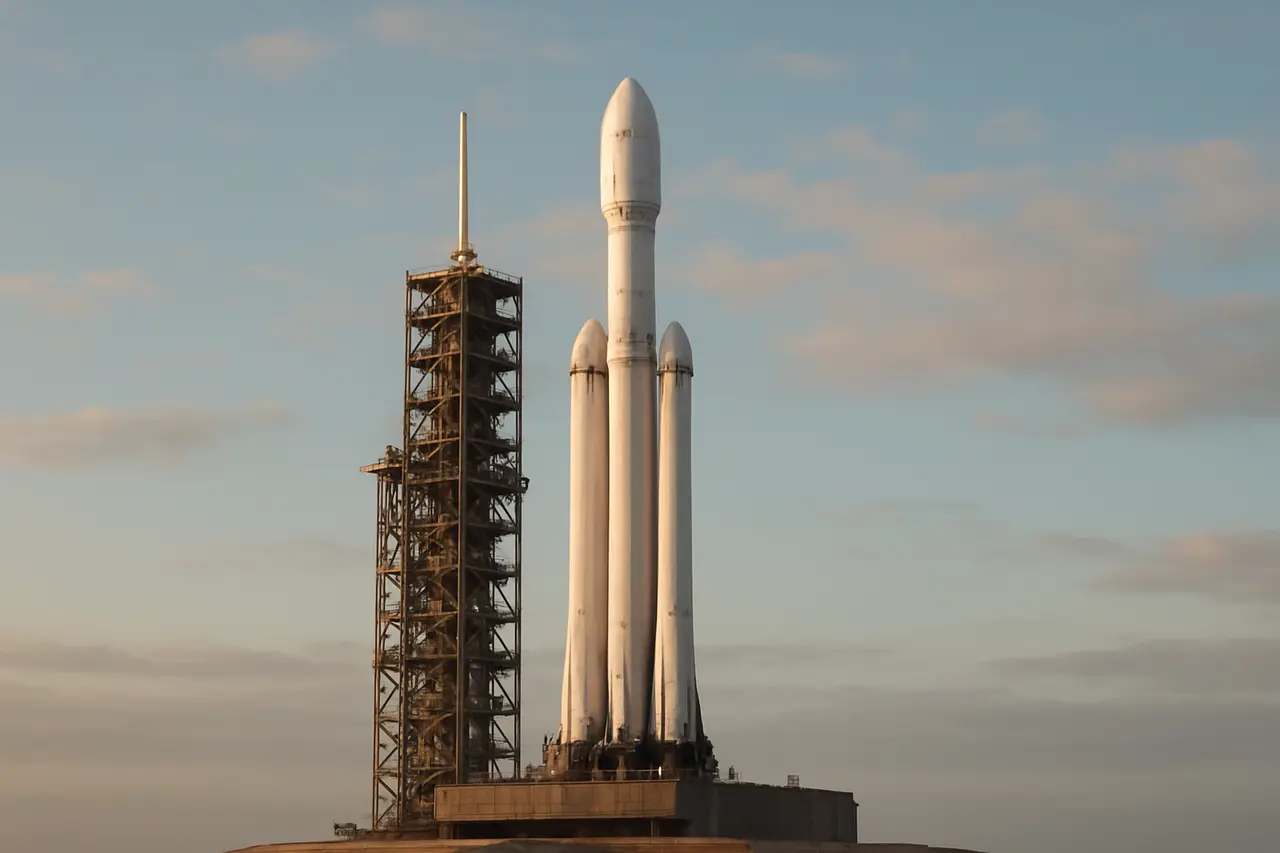
The short answer: Rocket weights vary enormously, from a few hundred kilograms for small sounding rockets to about 549,000 kg (1.2 million pounds) for a Falcon 9, and far more for heavy launchers.
Rocket weight by type
A rocket's weight depends almost entirely on its size and fuel load, since propellant makes up the majority of liftoff mass. The table compares common classes.
| Rocket type (example) | Typical liftoff weight |
|---|---|
| Small sounding rocket | A few hundred kilograms |
| Falcon 9 (orbital) | About 549,000 kg (1.2 million lb) |
| Saturn V (super heavy) | About 2,800,000 kg (6.2 million lb) |
| SpaceX Starship (stacked) | About 5,000,000 kg (11 million lb) |
What affects rocket weight
- Propellant load. Fuel and oxidizer make up the great majority of a rocket's liftoff weight.
- Payload. The mass carried to orbit adds to total weight and drives the rocket's size.
- Number of stages. Multi-stage rockets carry more structure and fuel, increasing total mass.
- Mission type. Orbital and interplanetary rockets are far heavier than suborbital research rockets.
- Reusability. Reusable designs carry extra fuel and hardware for landing, adding some weight.
- Wet versus dry mass. Fully fueled (wet) weight is many times the empty (dry) weight.
How rocket weight compares
A fueled Falcon 9 at about 549,000 kg weighs roughly as much as 400 cars, while a Saturn V weighed about as much as 1,800 cars at launch.
Frequently asked questions
How much does a rocket weigh?
It ranges from a few hundred kilograms for small sounding rockets to millions of kilograms for heavy launchers. A Falcon 9, for example, weighs about 549,000 kg fully fueled.
What was the heaviest rocket ever flown?
Historically the Saturn V was the heaviest at about 2,800 metric tons fully fueled. SpaceX's stacked Starship is heavier still at roughly 5,000 metric tons.
Why are rockets so heavy?
Most of a rocket's weight is propellant, because reaching orbit requires enormous amounts of fuel and oxidizer. The structure and payload are a small fraction of the total.