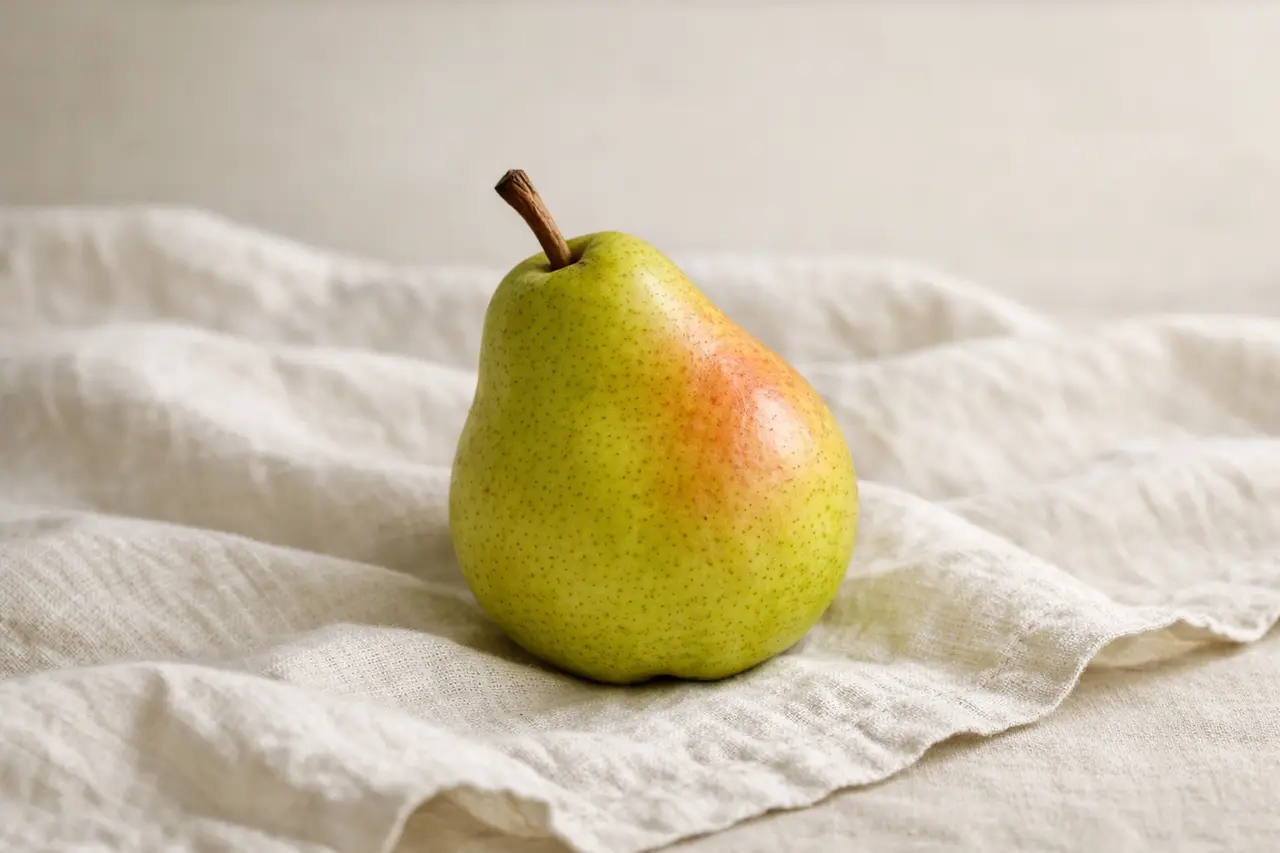
The short answer: A medium pear typically weighs about 170 to 230 grams (6 to 8 ounces). Smaller varieties run lighter, while large long-necked pears can exceed this range.
Pear weight by type
Pear weight varies mainly by variety and size, since some cultivars are compact and round while others grow large and long.
| Type (example) | Typical weight |
|---|---|
| Small (Forelle, Seckel) | 80 to 140 g (3 to 5 oz) |
| Medium (Bartlett, Anjou) | 170 to 230 g (6 to 8 oz) |
| Large (Bosc, Comice) | 230 to 300 g (8 to 11 oz) |
| Extra-large baking pear | 300 to 400 g (11 to 14 oz) |
What affects pear weight
- Variety. Compact pears like Seckel weigh far less than large Comice or Bosc pears.
- Ripeness. Pears soften and lose a little moisture as they ripen off the tree.
- Growing conditions. Water, soil, and thinning affect how large each fruit grows.
- Core and stem. The inedible core and stem make up a small share of total weight.
- Measurement state. Whole, cored, peeled, or sliced pears all weigh slightly differently.
How pear weight compares
A typical medium pear weighs about the same as a baseball, or roughly as much as a standard deck of cards plus a little extra.
Frequently asked questions
How much does a Bartlett pear weigh?
A medium Bartlett pear usually weighs about 170 to 200 grams (6 to 7 ounces). Larger ones can reach around 230 grams.
How many pears are in a pound?
Since a medium pear weighs roughly 170 to 230 grams, you typically get about two to three pears per pound (454 grams).
Does peeling a pear change its weight much?
Peeling removes only the thin skin, so a peeled pear weighs just slightly less than a whole one. Removing the core has a similarly small effect.