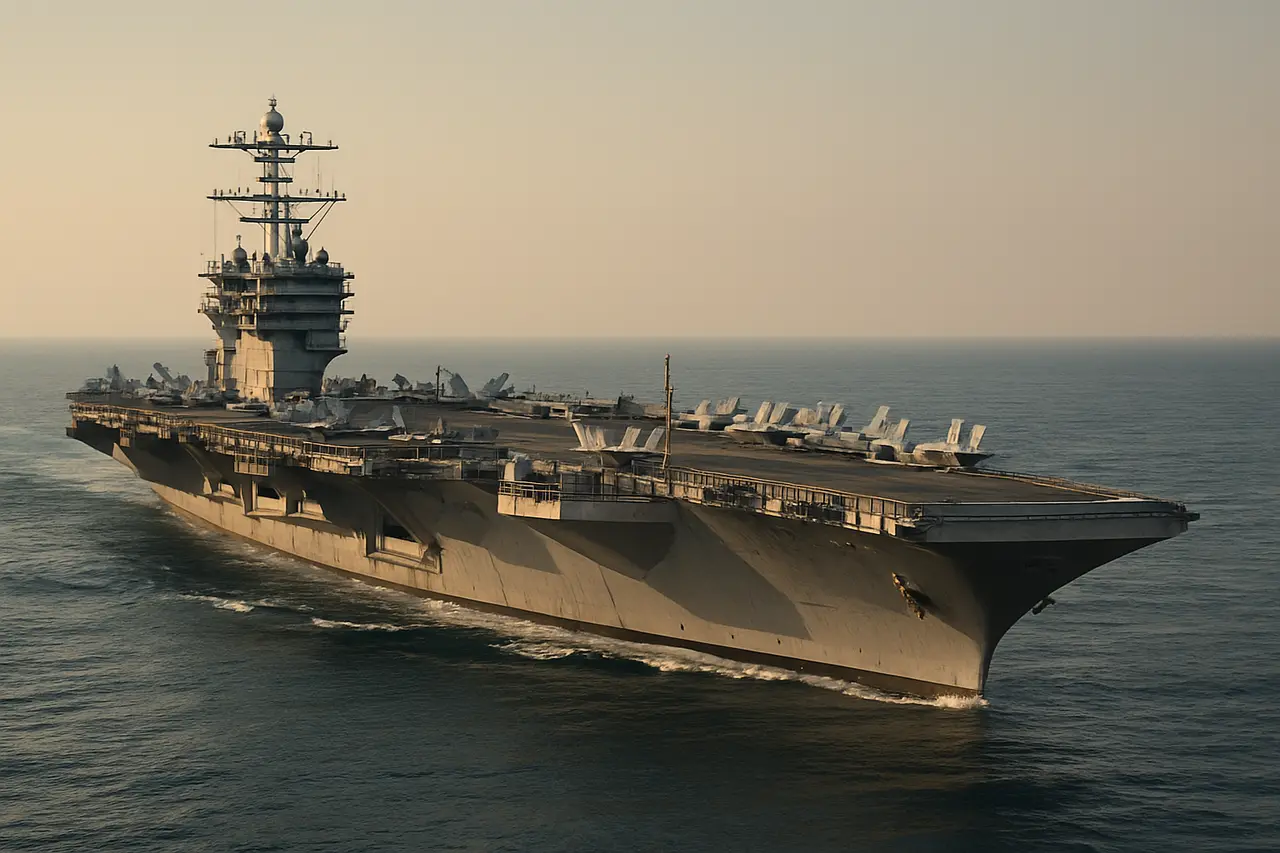
The short answer: An aircraft carrier typically weighs between 40,000 and 100,000 US tons (about 36,000 to 91,000 metric tonnes), depending on its class.
Aircraft carrier weight by type
Aircraft carriers are among the largest warships ever built, and their weight scales with size and power source. The table compares common classes.
| Carrier type (example) | Typical displacement |
|---|---|
| Light or escort carrier | Roughly 20,000 to 40,000 tons |
| Conventional fleet carrier | About 60,000 to 80,000 tons |
| Nuclear supercarrier | Around 100,000 tons |
| Largest US carriers | Up to about 100,000+ tons |
What affects aircraft carrier weight
- Carrier class. Supercarriers are far heavier than light or escort carriers.
- Power source. Nuclear-powered carriers carry heavy reactors and tend to be the largest.
- Aircraft and fuel. The air wing, jet fuel, and munitions add substantial weight when loaded.
- Armor and structure. Thick steel decks and hull plating contribute to the overall mass.
- Crew and supplies. Several thousand crew and their provisions add to operating weight.
- Measurement basis. Carriers are described by displacement, which can be quoted empty or fully loaded.
How aircraft carrier weight compares
A nuclear supercarrier at around 100,000 tons weighs roughly as much as 15,000 African elephants, or close to 75,000 cars.
Frequently asked questions
How much does an aircraft carrier weigh?
It typically weighs between 40,000 and 100,000 tons, depending on the class. The largest nuclear supercarriers reach around 100,000 tons.
What is the heaviest aircraft carrier?
The US Gerald R. Ford and Nimitz-class supercarriers are the heaviest, displacing around 100,000 tons fully loaded. They are nuclear-powered.
Why are aircraft carriers so heavy?
They carry dozens of aircraft, large fuel and munitions stores, thick steel structure, and thousands of crew. All of this adds up to an enormous displacement.