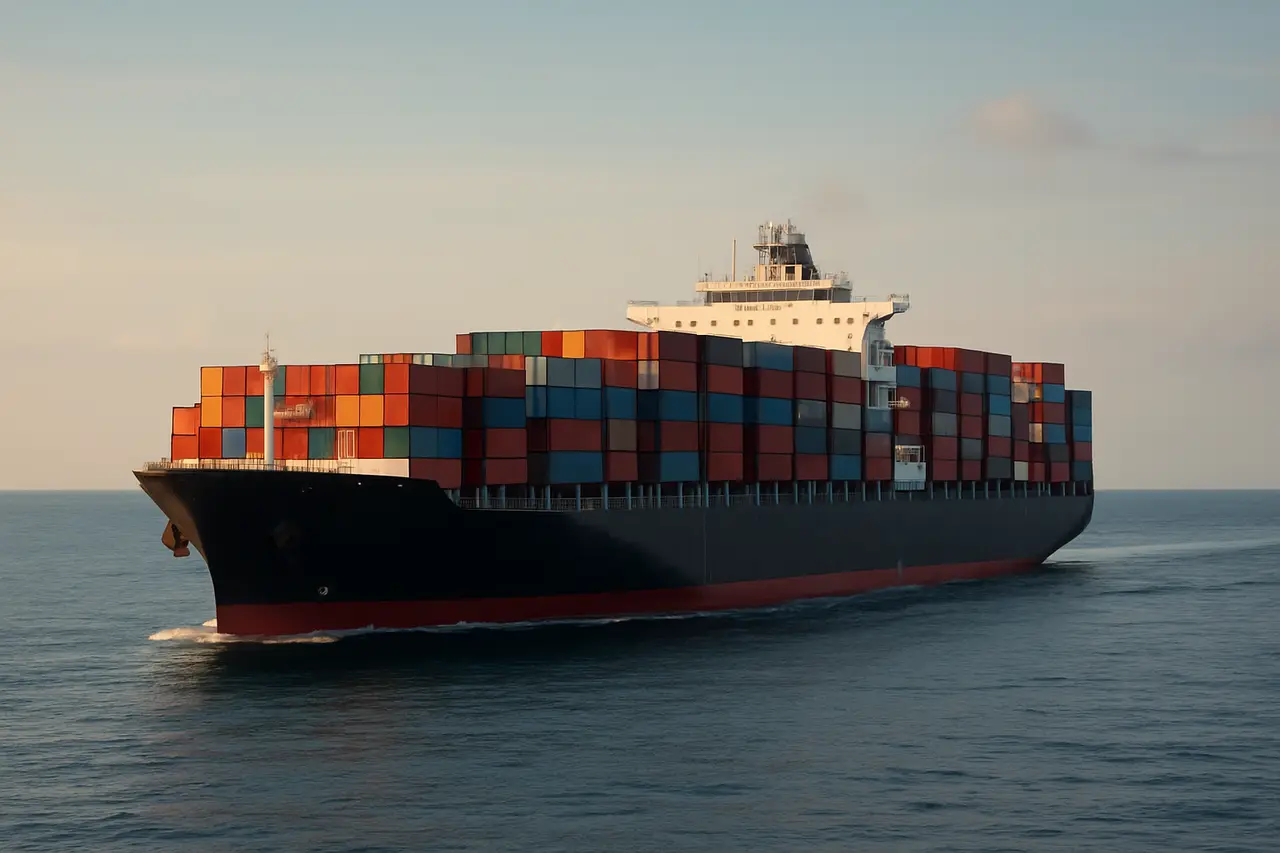
The short answer: A typical large cargo ship weighs between 50,000 and 200,000 metric tons (about 55,000 to 220,000 US tons) when loaded, depending on its size.
Cargo ship weight by type
Cargo ship weight depends on the vessel's size and how much cargo it carries, since freight makes up much of the loaded total. The table compares common classes.
| Cargo ship type (example) | Typical loaded weight |
|---|---|
| Small feeder ship | Roughly 10,000 to 30,000 metric tons |
| Panamax container ship | Around 60,000 to 80,000 metric tons |
| Large bulk carrier | Up to about 150,000 metric tons |
| Ultra-large container ship | Up to about 200,000 metric tons |
What affects cargo ship weight
- Cargo load. The weight of containers, bulk goods, or fuel can make up a large share of the loaded total.
- Ship size. Larger vessels have heavier steel hulls and far greater cargo capacity.
- Loaded versus empty. An empty ship can weigh a fraction of its fully laden displacement.
- Ship type. Bulk carriers, tankers, and container ships have different structures and weights.
- Fuel and ballast. Bunker fuel and ballast water add significant weight during a voyage.
- How weight is measured. Deadweight tonnage and displacement describe different things and can be confused.
How cargo ship weight compares
A fully loaded large cargo ship at 200,000 metric tons weighs roughly as much as two large aircraft carriers, or over 30,000 African elephants.
Frequently asked questions
How much does a cargo ship weigh?
A typical large cargo ship weighs between 50,000 and 200,000 metric tons when loaded. The exact figure depends on the vessel's size and cargo.
How much can the biggest cargo ships carry?
The largest container ships can carry over 20,000 containers. Fully loaded, they can reach around 200,000 metric tons.
What is the difference between displacement and deadweight tonnage?
Displacement is the total weight of the ship and everything aboard, while deadweight tonnage is the weight of cargo, fuel, and supplies it can carry. The two figures are often confused.