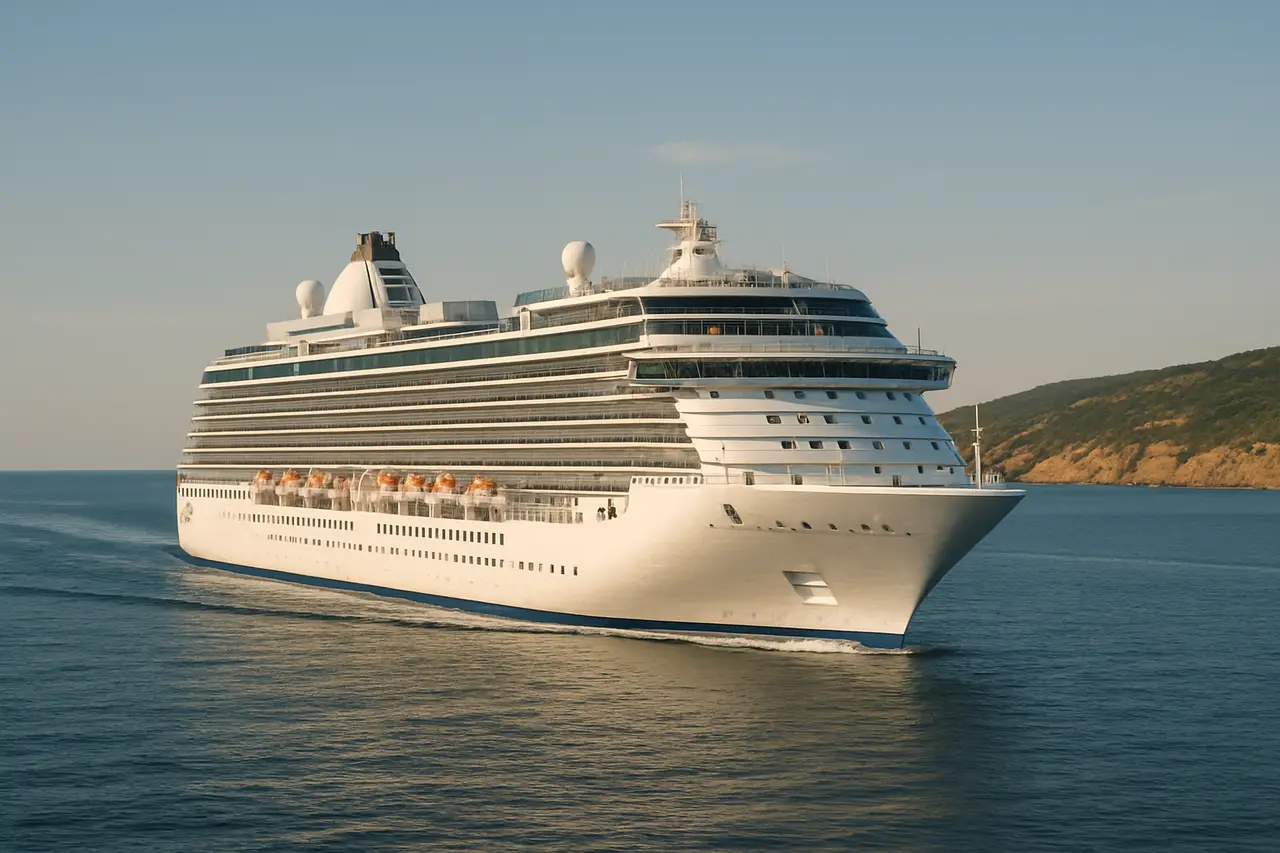
The short answer: A typical large cruise ship weighs between 70,000 and 225,000 metric tons (about 77,000 to 248,000 US tons), depending on its size.
Cruise ship weight by type
Cruise ships are among the largest moving structures on the ocean, and their weight scales with size and onboard amenities. The table compares common classes.
| Cruise ship type (example) | Typical weight |
|---|---|
| Small or boutique cruise ship | Roughly 20,000 to 50,000 metric tons |
| Mid-size cruise ship | Around 70,000 to 100,000 metric tons |
| Large cruise ship | About 120,000 to 180,000 metric tons |
| Largest cruise ships | Up to about 225,000 metric tons |
What affects cruise ship weight
- Ship size. Larger ships carry more decks, cabins, and amenities, all of which add weight.
- Onboard facilities. Pools, theaters, restaurants, and equipment contribute significant mass.
- Passengers and crew. Thousands of people plus their luggage add to the loaded weight.
- Fuel and water. Large fuel tanks and fresh water stores add weight during a voyage.
- Gross tonnage confusion. Cruise ships are often quoted in gross tonnage, a volume measure, not actual weight.
- Empty versus loaded. A fully provisioned, fully booked ship weighs more than an empty one.
How cruise ship weight compares
The largest cruise ships at around 225,000 metric tons weigh roughly as much as two large aircraft carriers, or several hundred thousand cars combined.
Frequently asked questions
How much does a cruise ship weigh?
A typical large cruise ship weighs between 70,000 and 225,000 metric tons. The figure depends on the ship's size and how much it is carrying.
What does gross tonnage mean for cruise ships?
Gross tonnage is a measure of a ship's internal volume, not its actual weight. Cruise ships are commonly quoted in gross tonnage, which can be confused with mass.
What is the heaviest cruise ship?
The largest modern cruise ships can reach around 225,000 metric tons. They are among the biggest moving structures ever built.