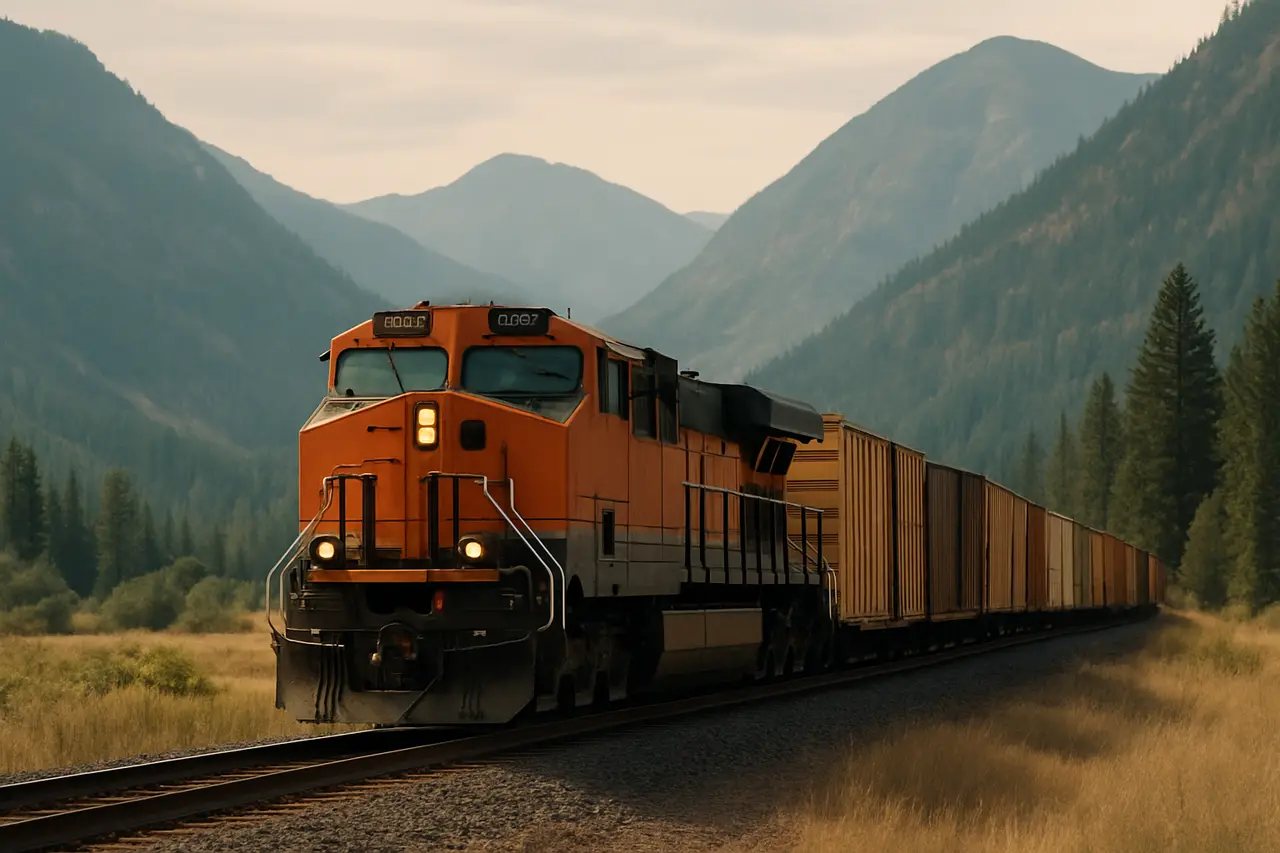
The short answer: A typical freight train weighs between 3,000 and 18,000 metric tons (about 6.6 to 39.7 million pounds), while passenger trains usually range from 200 to 1,000 metric tons.
Train weight by type
Train weight varies enormously with type, length, and cargo, since the locomotives and loaded cars dominate the total. The table compares common categories.
| Train type (example) | Typical weight |
|---|---|
| Single locomotive | Roughly 100 to 200 metric tons |
| Passenger train | About 200 to 1,000 metric tons |
| Typical freight train | About 3,000 to 18,000 metric tons |
| Heaviest ore trains | Up to around 20,000 metric tons or more |
What affects train weight
- Cargo load. For freight trains, the weight of the goods carried makes up most of the total.
- Train length. More cars mean more weight, and freight trains can be several kilometers long.
- Number of locomotives. Heavy trains use multiple powerful locomotives, each weighing over 100 tons.
- Train type. Freight trains are far heavier than passenger trains, which carry lighter loads.
- Car design. Bulk ore and coal cars are heavier than passenger coaches.
- Loaded versus empty. An empty freight train weighs a fraction of its loaded weight.
How train weight compares
A heavy freight train at 18,000 metric tons weighs roughly as much as 3,000 African elephants, or a small cargo ship.
Frequently asked questions
How much does a train weigh?
A typical freight train weighs between 3,000 and 18,000 metric tons, while passenger trains usually weigh 200 to 1,000 metric tons. The figure depends heavily on the train's type and cargo.
What is the heaviest train ever?
The heaviest trains are mining ore trains, which can exceed 20,000 metric tons. They use multiple locomotives and hundreds of loaded cars.
How much does a single locomotive weigh?
A typical freight locomotive weighs roughly 100 to 200 metric tons. Heavy trains often use several locomotives together.