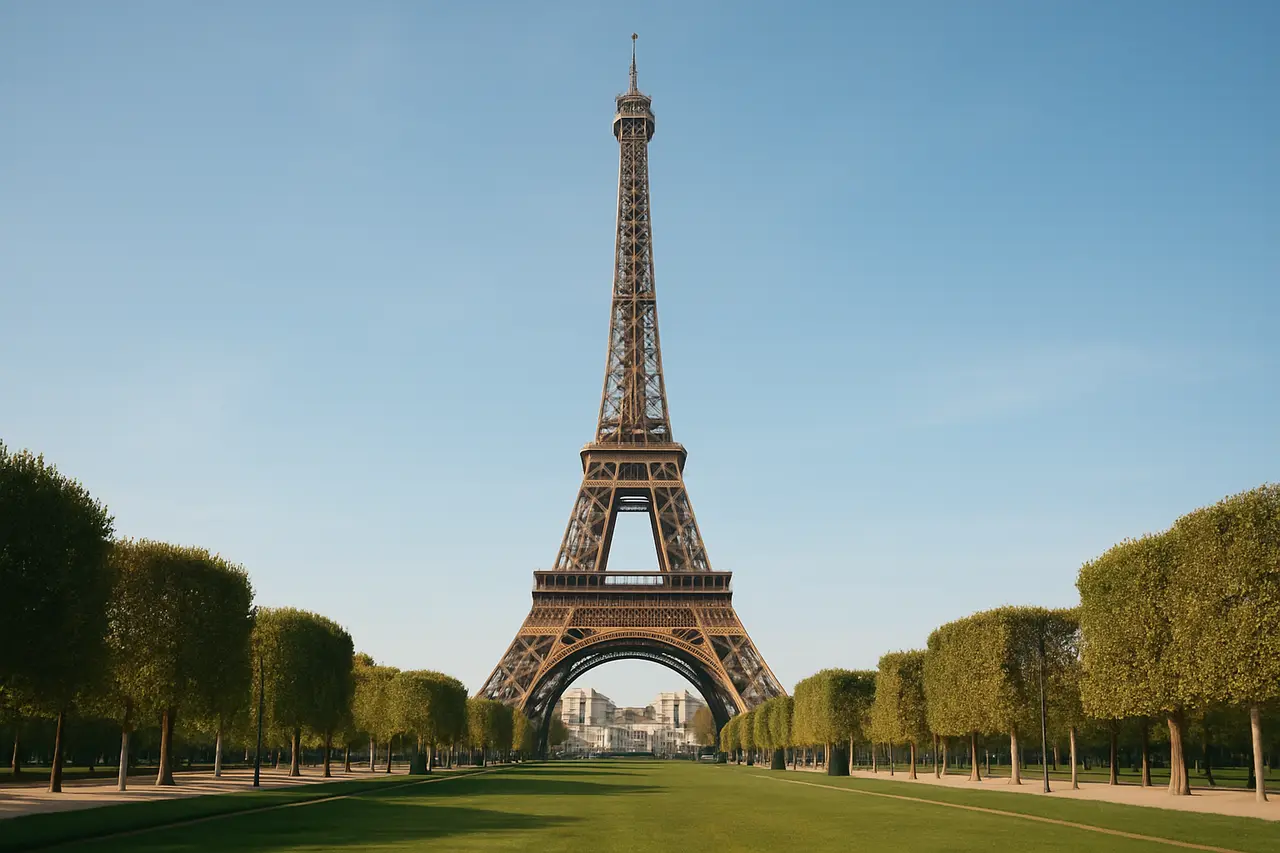
The short answer: The Eiffel Tower weighs approximately 10,100 metric tons (about 11,150 US tons).
Eiffel Tower weight by type
Constructed from wrought iron and completed in 1889, the Eiffel Tower was the tallest man-made structure in the world for 41 years.
| Feature | Detail |
|---|---|
| Total weight | about 10,100 metric tons |
| Iron framework | about 7,300 metric tons |
| Height | about 330 meters |
| Main material | wrought iron |
What affects Eiffel Tower weight
- Wrought iron framework. The iron lattice makes up the bulk of the tower's weight.
- Open lattice design. The airy structure keeps weight low for the tower's height.
- Paint and fittings. Layers of protective paint and hardware add a small amount.
- Foundations. The masonry and concrete bases anchor the four legs and add weight.
- Observation decks. The platforms and equipment contribute additional mass.
How Eiffel Tower weight compares
At about 10,100 metric tons, the Eiffel Tower weighs roughly as much as 1,500 elephants, or around 7,000 mid-sized cars.
Frequently asked questions
What is the Eiffel Tower made of?
The Eiffel Tower is built from wrought iron, with its lattice framework weighing about 7,300 metric tons. The total weight including all components is about 10,100 metric tons.
Why is the Eiffel Tower relatively light?
Its open lattice design uses iron efficiently and leaves much of the structure as empty space, distributing weight without solid mass. This is why it weighs only about 10,100 metric tons despite its height.
How tall is the Eiffel Tower?
The Eiffel Tower stands about 330 meters tall, including its antennas. It was the tallest man-made structure in the world for 41 years after its completion in 1889.