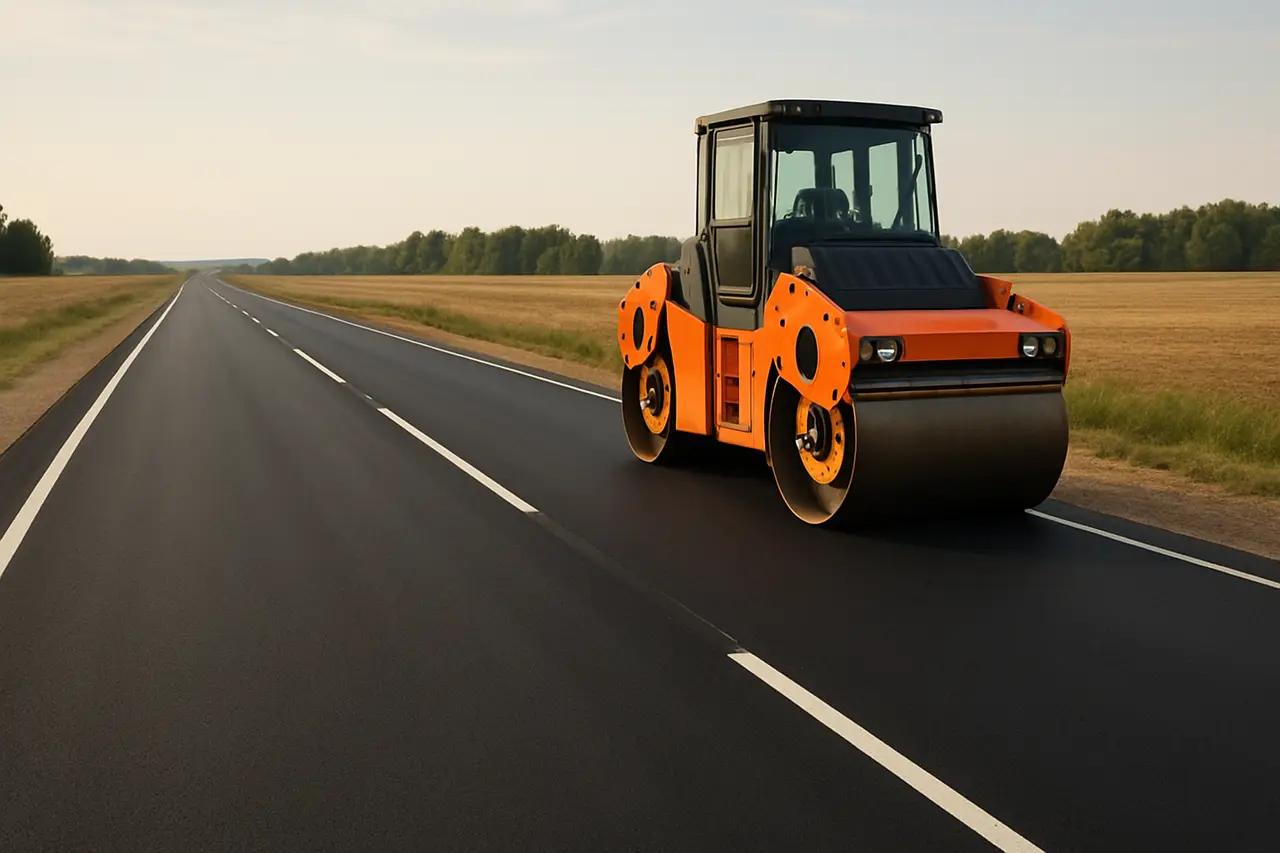
The short answer: A standard two-lane asphalt road weighs roughly 10,000 tons (about 9,070 metric tonnes) per mile, depending on its width and thickness.
Road weight by type
A road's weight comes from its dense layered structure of asphalt, aggregate, and base material, which adds up quickly over each mile.
| Type (example) | Typical weight per mile |
|---|---|
| Single-lane rural road | about 5,000 tons |
| Two-lane asphalt road | about 10,000 tons |
| Four-lane highway | about 20,000 tons or more |
| Thick concrete highway | 20,000+ tons |
What affects road weight
- Width. More lanes mean proportionally more material and weight.
- Thickness. Thicker asphalt and base layers add substantial weight.
- Material. Asphalt averages about 2,400 kg/m³, while concrete is even denser.
- Base and sub-base. Compacted gravel layers beneath the surface add significant mass.
- Traffic load rating. Roads built for heavy trucks use thicker, heavier layers.
How road weight compares
A single mile of two-lane road at about 10,000 tons weighs roughly as much as a large suspension bridge, or about 7,000 mid-sized cars.
Frequently asked questions
Why does a road weigh so much?
Roads are built from dense, thick layers of asphalt or concrete over a compacted aggregate base. Even though each layer is only inches deep, the material spread across a mile adds up to thousands of tons.
Do concrete or asphalt roads weigh more?
Concrete is denser than asphalt and is often laid in thick slabs, so concrete roads usually weigh more per mile. Asphalt is lighter but is frequently rebuilt in thinner layers.
How is the weight of a road calculated?
Engineers calculate road weight by multiplying the volume of each layer by its material density. The asphalt surface, base, and sub-base are each estimated and summed.