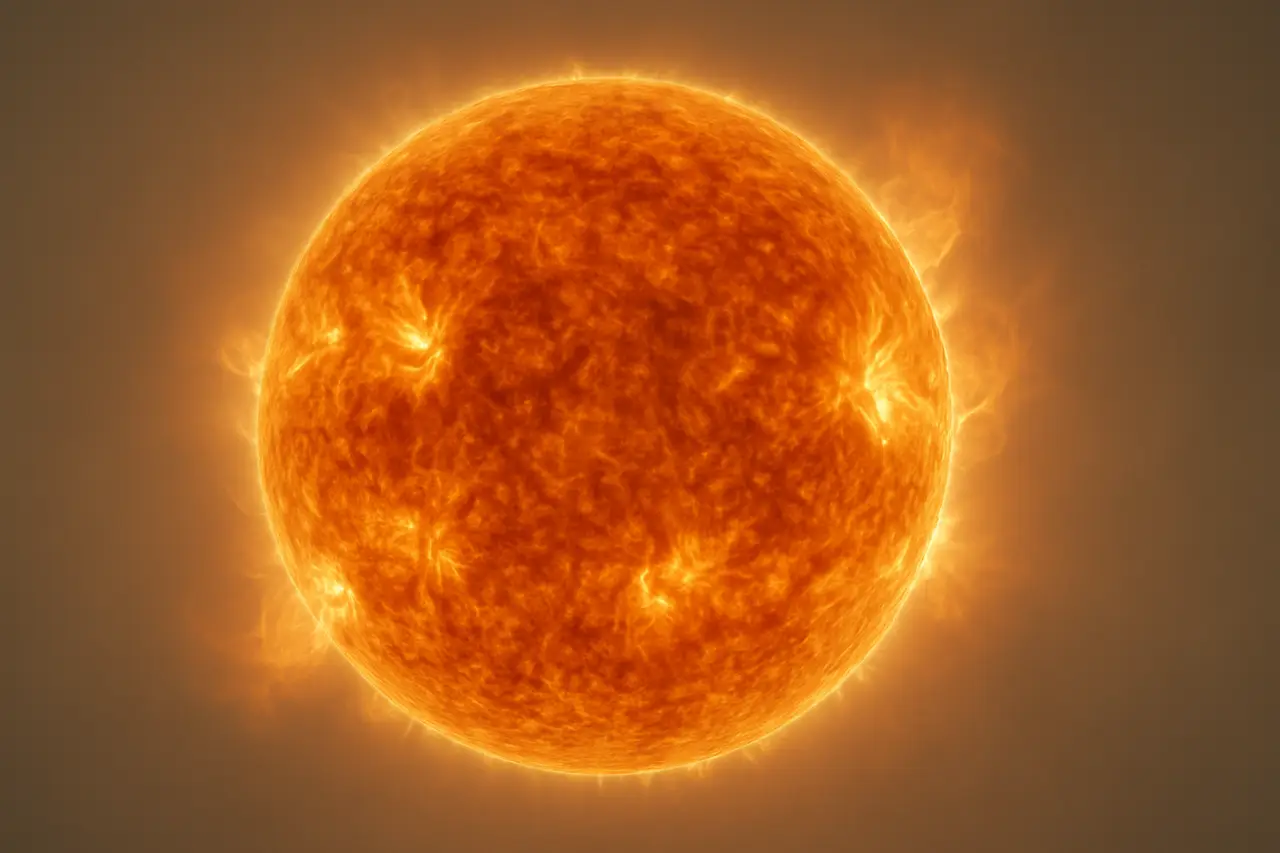
The short answer: The Sun has a mass of about 1.99 × 1030 kg (roughly 4.4 × 1030 lb), which is about 333,000 times the mass of Earth.
Sun weight by type
The Sun is the star at the center of our solar system and contains nearly all of the solar system's total mass, mostly in the form of hydrogen and helium.
| Comparison | Relative mass |
|---|---|
| Sun mass | about 1.99 × 10³⁰ kg |
| Compared to Earth | about 333,000 times |
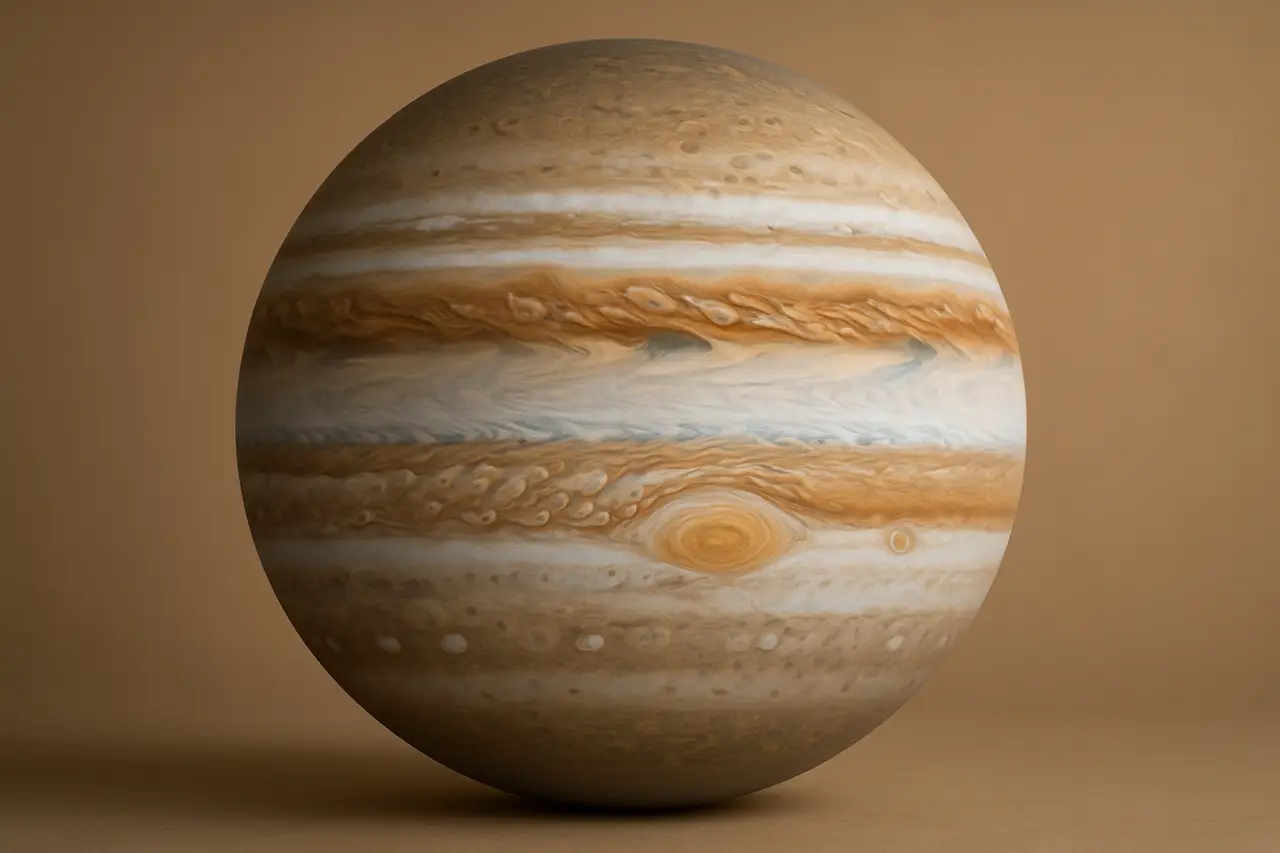
| Compared to Jupiter | about 1,050 times |
| Share of solar system | about 99.86% |
What affects Sun weight
- Hydrogen and helium. The Sun is roughly three-quarters hydrogen and a quarter helium by mass.
- Immense volume. Its vast size allows it to hold an enormous quantity of material.
- High core density. Crushing pressure makes the core extremely dense, concentrating mass.
- Gravitational dominance. Its mass produces the gravity that holds the entire solar system together.
- Measurement via orbits. The Sun's mass is calculated from how the planets orbit around it.
How Sun weight compares
The Sun is about 333,000 times heavier than Earth and over 1,000 times more massive than Jupiter, holding roughly 99.86% of all the mass in the solar system.
Frequently asked questions
How much of the solar system's mass is the Sun?
The Sun makes up about 99.86% of the total mass of the solar system. Everything else, including all the planets, moons, and asteroids, accounts for less than 0.2%.
How is the Sun's mass measured?
Scientists calculate the Sun's mass from the orbits of the planets, using the speed and distance of their paths to determine the gravitational pull of the Sun. This gives a value of about 1.99 × 10³⁰ kilograms.
Is the Sun losing mass?
Yes. The Sun loses mass continuously by converting hydrogen into energy through fusion and by shedding particles in the solar wind. The loss is enormous in human terms but tiny compared to its total mass.