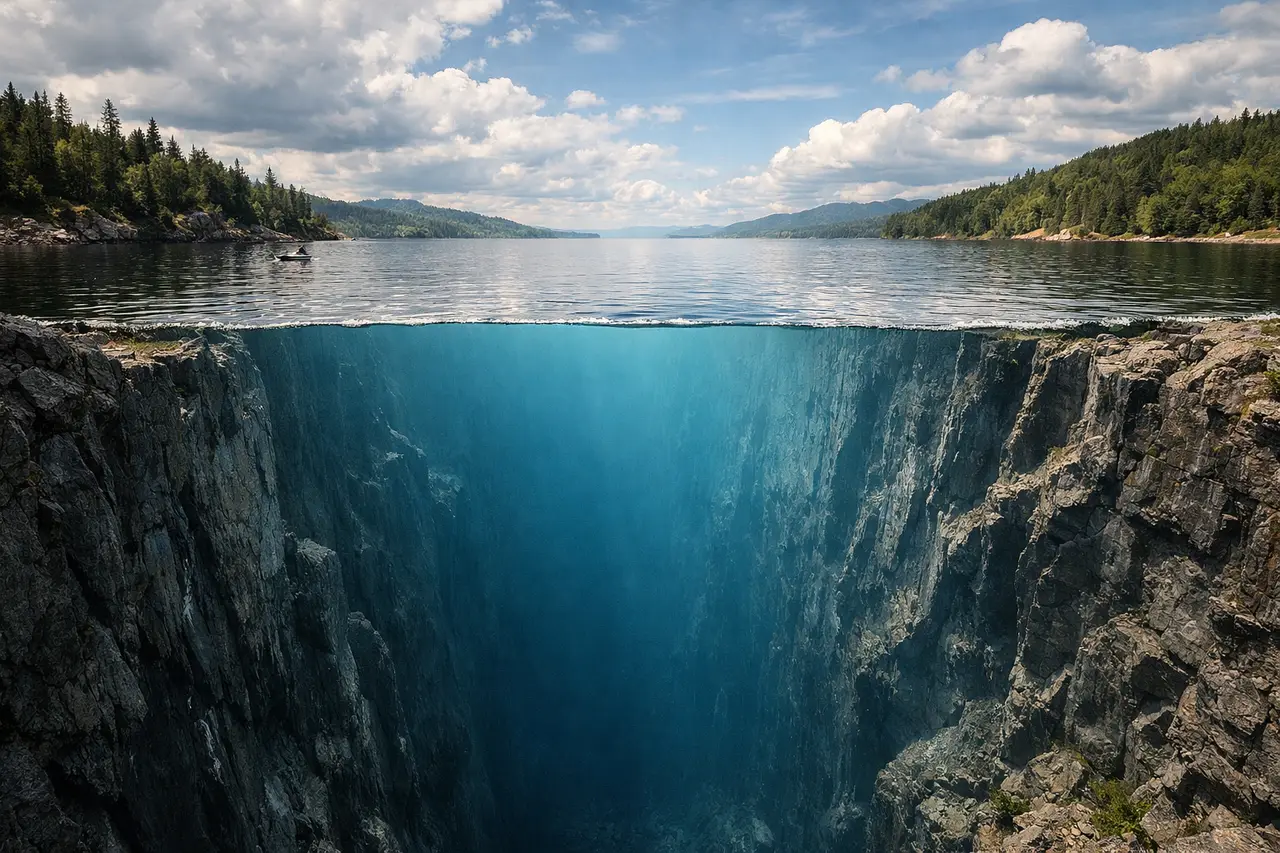
The short answer: A lake's weight depends entirely on its volume; fresh water weighs about 1,000 kilograms per cubic meter (one metric ton per m³), so a small lake may weigh millions of tons and a Great Lake quadrillions of kilograms.
Lake weight by type
A lake's weight is found by multiplying its water volume by the density of water. Because volumes range from tiny ponds to vast inland seas, the totals span an enormous range.
| Lake size (example) | Rough water weight |
|---|---|
| Small pond | thousands of tons |
| Mid-sized lake | millions of tons |
| Large freshwater lake | billions of tons |
| A Great Lake | quadrillions of kilograms |
What affects lake weight
- Volume. Surface area times average depth sets how much water there is.
- Depth. A deep lake holds far more water than a shallow one of the same area.
- Water density. Fresh water weighs about 1,000 kg per cubic meter.
- Salinity. Salty lakes are denser and weigh slightly more per cubic meter.
- Seasonal level. Water levels rise and fall with rainfall and evaporation.
How lake weight compares
Even a modest lake can weigh millions of tons, while one of the Great Lakes holds enough water to outweigh billions of large ships combined.
Frequently asked questions
How do you calculate a lake's weight?
Multiply the lake's water volume by the density of water, about 1,000 kilograms per cubic meter. The volume comes from the lake's surface area and average depth.
Why are lakes easier to weigh than storms?
A lake's water stays in one well-defined basin, so its volume can be measured directly. Storms move and change constantly, making their water content far harder to pin down.
Do salty lakes weigh more than freshwater ones?
Per cubic meter, yes, because dissolved salt makes the water denser. For the same volume, a salt lake weighs slightly more than a freshwater lake.