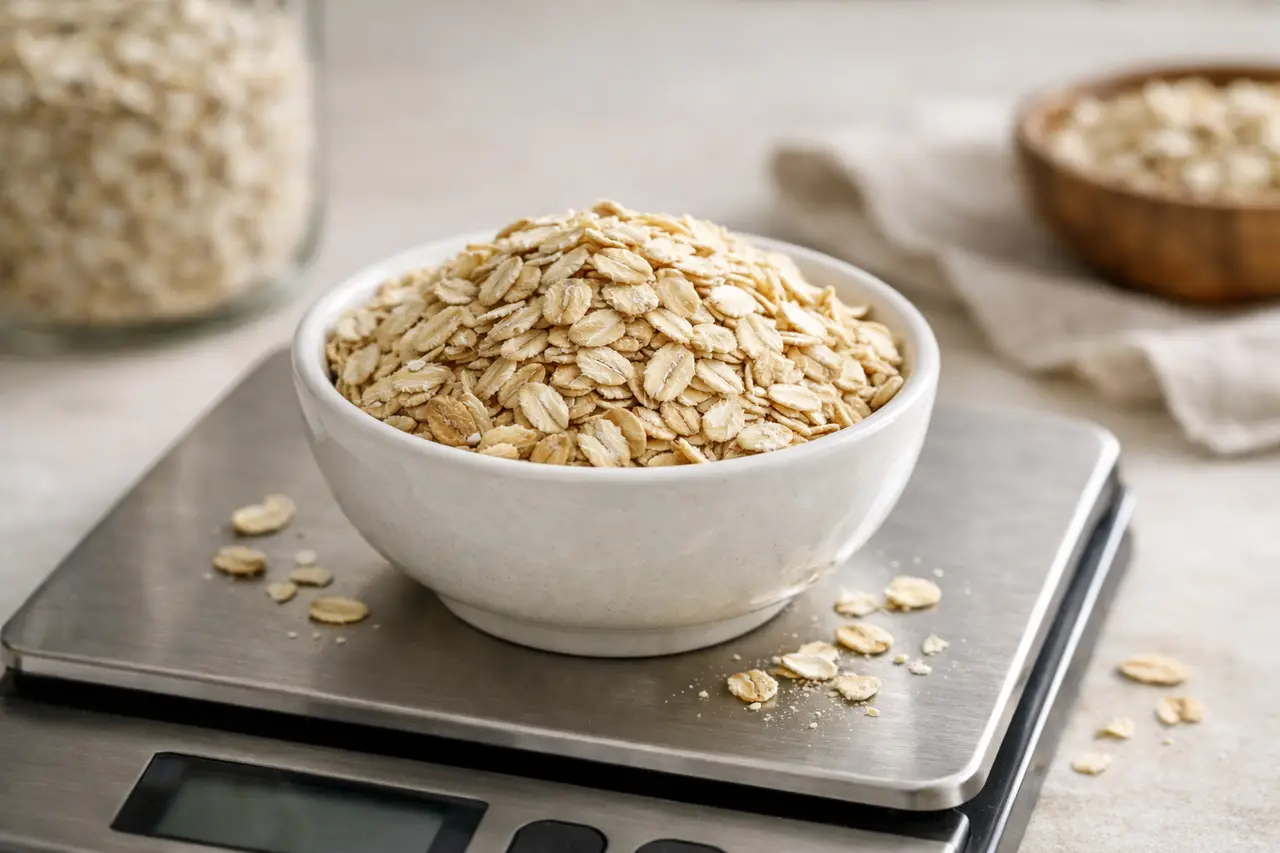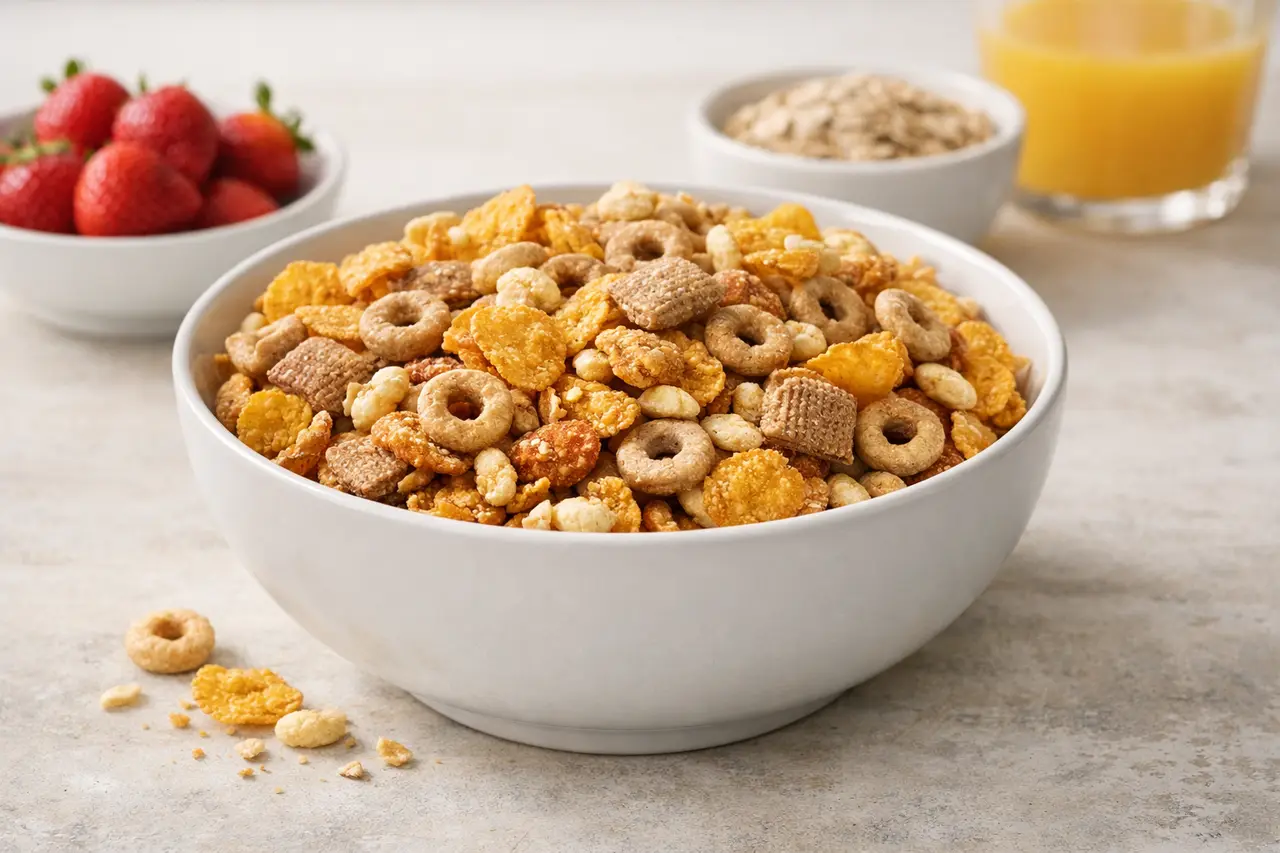
The short answer: A bowl of dry cereal typically weighs about 30 to 60 grams (1 to 2 ounces). Light flakes and puffs are full of air, so they look like a lot for the weight.
Bowl of cereal weight by type
A bowl of cereal weighs surprisingly little when dry, since the weight depends heavily on the cereal type and whether milk is added.
| Type (example) | Typical weight |
|---|---|
| Puffed / airy cereal (dry) | 25 to 35 g (0.9 to 1.2 oz) |
| Flakes (dry) | 30 to 45 g (1 to 1.6 oz) |
| Dense muesli / granola (dry) | 55 to 80 g (2 to 2.8 oz) |
| Bowl with milk added | 200 to 300 g (7 to 11 oz) |
What affects bowl of cereal weight
- Cereal type. Airy puffs weigh far less than dense granola for the same bowl volume.
- Serving size. A heaped bowl can hold double a single labeled portion.
- Milk. Adding milk often more than doubles the bowl's total weight.
- Bowl size. A large bowl naturally holds more cereal.
- Density. Sugar coatings and clusters make some cereals heavier per cup.
How bowl of cereal weight compares
A serving of dry cereal weighs about the same as a slice of bread, while the same bowl with milk is roughly as heavy as a small can of soup.
Frequently asked questions
What is a standard serving of cereal?
A labeled serving is usually about 30 to 40 grams of dry cereal, though many people pour noticeably more into a bowl.
How much does cereal with milk weigh?
A typical bowl of cereal with milk weighs around 200 to 300 grams, with the milk making up most of that weight.
Why does cereal weigh so little?
Most breakfast cereals are puffed or flaked and full of trapped air, so a large-looking bowl actually holds very little by weight.