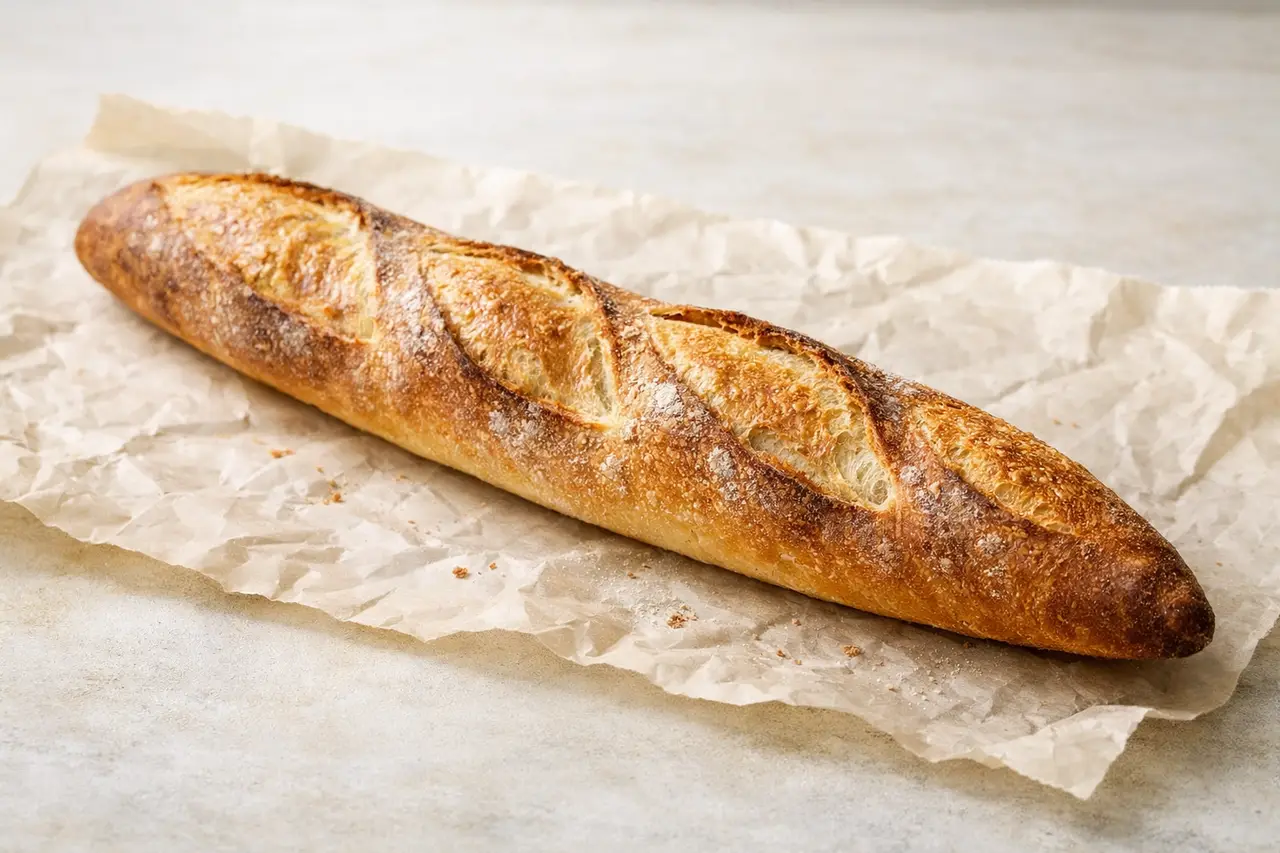
The short answer: A baguette typically weighs about 250 to 350 grams (9 to 12 oz). Its airy crumb makes it lighter than its long shape suggests.
Baguette weight by type
Baguette weight depends on the style and size. The traditional French baguette has a regulated typical weight.
| Type (example) | Typical weight |
|---|---|
| Traditional French baguette | 250-300 g (9-11 oz) |
| Standard supermarket baguette | 250-350 g (9-12 oz) |
| Ficelle (thin baguette) | 100-150 g (3.5-5.3 oz) |
| Demi-baguette (half) | 125-175 g (4.4-6.2 oz) |
| Large rustic baguette | 350-450 g (12-16 oz) |
What affects baguette weight
- Size. Longer and thicker baguettes weigh more.
- Hydration. Wetter dough yields a denser, slightly heavier loaf.
- Crumb structure. A more open, airy crumb weighs less for its volume.
- Recipe. Whole-grain or enriched doughs can be heavier.
- Baking time. Longer baking drives off more moisture, reducing weight.
- Freshness. Baguettes lose moisture and weight as they go stale.
How baguette weight compares
A typical 300 gram baguette weighs about the same as a medium apple and an orange together, or roughly a can of soup.
Frequently asked questions
How much does a French baguette weigh?
A traditional French baguette typically weighs around 250 to 300 grams (about 9 to 11 oz).
Why is a baguette so light for its size?
Much of a baguette's volume is airy crumb, so it weighs less than a denser loaf of the same length.
How much does half a baguette weigh?
A demi-baguette (half) typically weighs around 125 to 175 grams (about 4.4 to 6.2 oz).