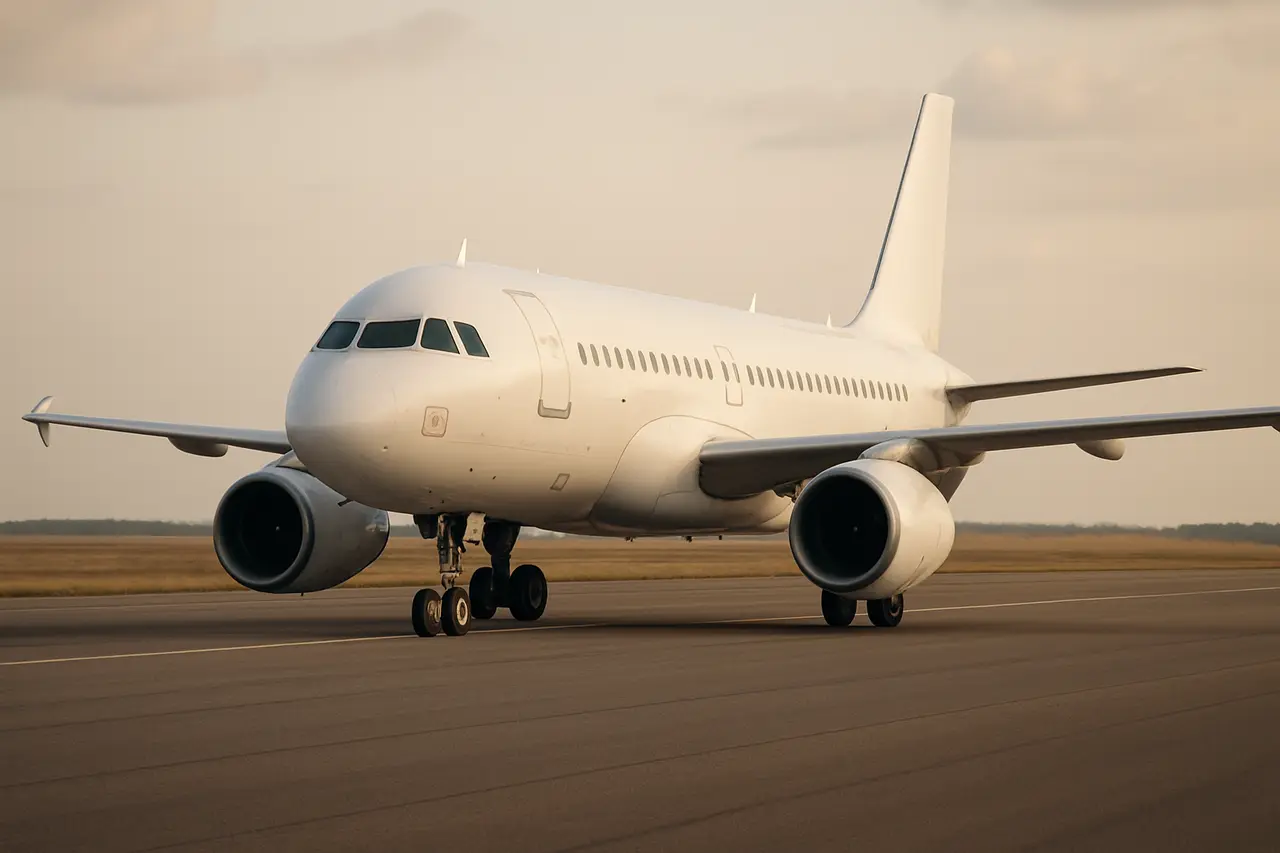
The short answer: A Boeing 737 weighs around 41,000 kg (90,000 pounds) empty, while a larger Boeing 747 can weigh up to about 183,500 kg (405,000 pounds) empty.
Airplane weight by type
Airplane weight varies enormously from small private planes to wide-body jets, and rises sharply once fuel and passengers are added. The table compares common types.
| Airplane type (example) | Typical empty weight |
|---|---|
| Small private plane (Cessna 172) | About 750 kg (1,650 lb) |
| Regional jet | Roughly 20,000 to 30,000 kg |
| Boeing 737 | Around 41,000 kg (90,000 lb) |
| Boeing 747 | Up to about 183,500 kg (405,000 lb) |
What affects airplane weight
- Aircraft size. Larger aircraft have heavier airframes and far greater capacity.
- Empty versus loaded. Fuel, passengers, and cargo can add tens of thousands of kilograms to a large jet.
- Fuel load. Long-haul flights require huge fuel quantities that greatly increase takeoff weight.
- Materials. Modern composites can make some aircraft lighter than older all-metal designs.
- Aircraft type. Private planes, regional jets, and wide-bodies differ by orders of magnitude in weight.
- Operating versus maximum weight. The maximum takeoff weight is far higher than the empty weight.
How airplane weight compares
An empty Boeing 747 at around 183,500 kg weighs roughly as much as 130 average cars, while a small Cessna weighs about as much as a single car.
Frequently asked questions
How much does an airplane weigh?
It varies widely, from about 750 kg for a small Cessna to over 180,000 kg empty for a Boeing 747. A common Boeing 737 weighs around 41,000 kg empty.
How much heavier is a plane at takeoff?
Fuel, passengers, and cargo can add tens of thousands of kilograms. A large jet's maximum takeoff weight can be roughly double its empty weight.
What is the heaviest passenger airplane?
The Airbus A380 is the heaviest passenger aircraft, with a maximum takeoff weight around 575,000 kg. Its empty weight alone is roughly 277,000 kg.