The short answer: A rockslide can weigh from thousands of tons to billions of tons, since rock weighs about 2,400 to 2,800 kilograms per cubic meter and slide volumes vary widely.
Rockslide weight by type
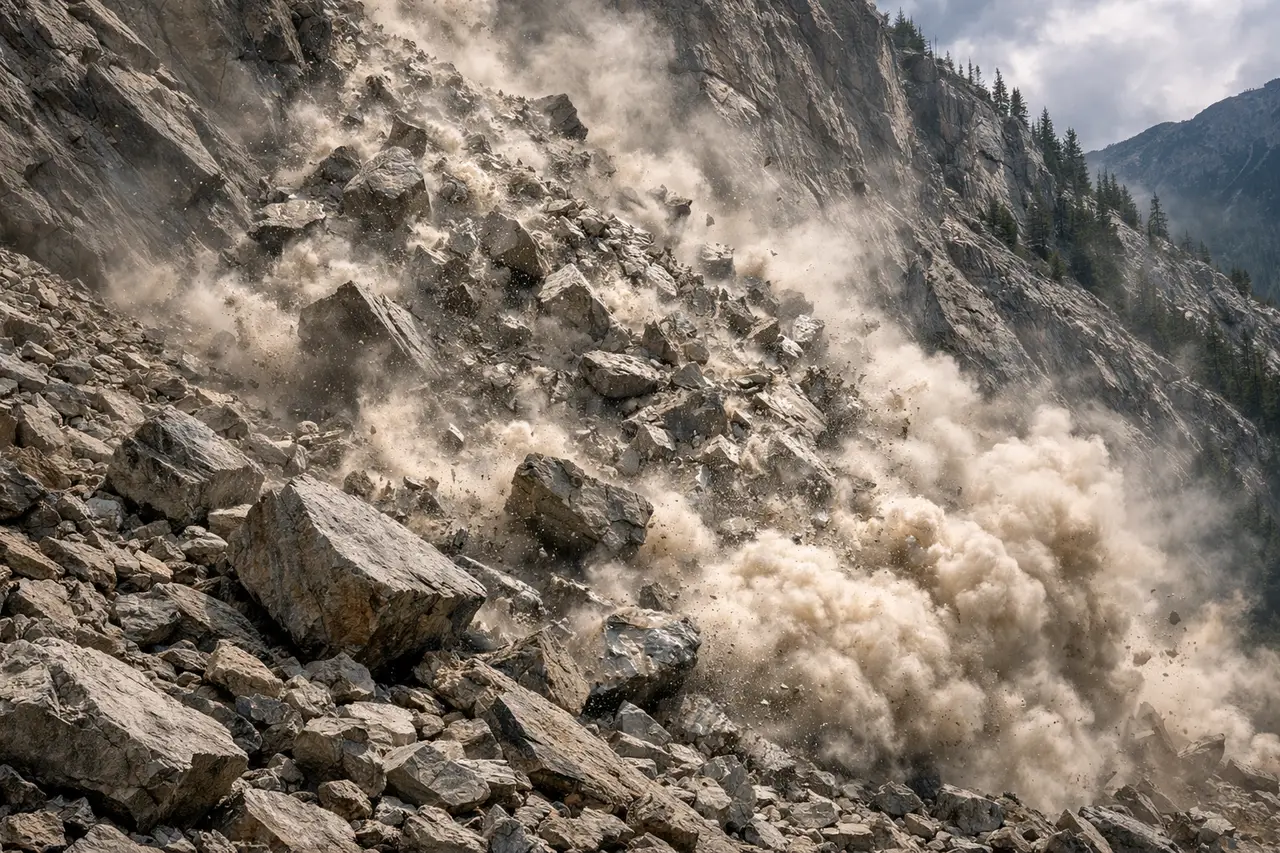
A rockslide is the rapid downhill movement of a mass of rock. Because rock is dense, even a compact slide adds up to a heavy total very quickly.
| Rockslide scale (example) | Rough weight |
|---|---|
| Small rockfall | thousands of tons |
| Moderate rockslide | tens to hundreds of thousands of tons |
| Large cliff collapse | millions of tons |
| Massive mountain failure | billions of tons |
What affects rockslide weight
- Volume. The amount of rock that breaks loose drives the total weight.
- Rock density. Rock typically weighs 2,400 to 2,800 kg per cubic meter.
- Rock type. Dense rock like granite weighs more than lighter sandstone.
- Slope size. Larger, steeper cliffs can release far more material.
- Fragmentation. Rock can shatter during the slide but keeps its total mass.
How rockslide weight compares
Because rock is so dense, even a modest rockslide can weigh as much as thousands of cars, and the largest collapses rival small mountains in mass.
Frequently asked questions
Why do rockslides get heavy so fast?
Rock is dense, weighing roughly 2,400 to 2,800 kilograms per cubic meter. So even a relatively small volume of rock adds up to thousands of tons.
How is a rockslide's weight estimated?
Geologists estimate the volume of displaced rock and multiply by the rock's density. The result gives an approximate total mass.
Does shattering change how much a rockslide weighs?
No, breaking apart spreads the mass into smaller pieces but does not change the total weight. The combined rock still weighs the same.