The short answer: A meteor's weight varies enormously, from tiny dust grains to large rocks; a stony meteoroid about 1 meter across often weighs roughly 3,000 to 4,000 kilograms (about 3.3 to 4.4 US tons) before entering the atmosphere.
Meteor weight by type
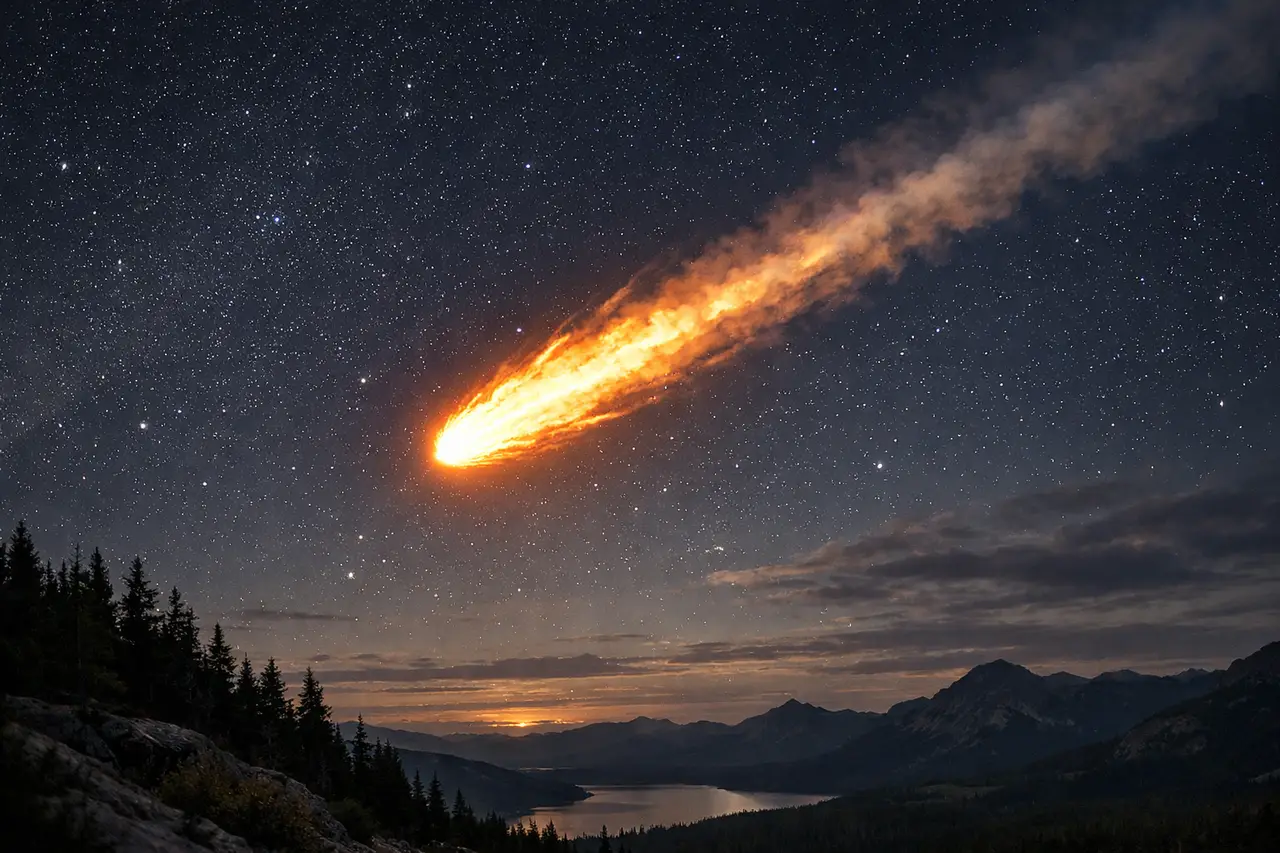
A meteor is the streak of light seen when a space rock burns up in the atmosphere. The weight depends entirely on the size and composition of the object, which spans from dust to boulders.
| Meteoroid size (example) | Rough weight before entry |
|---|---|
| Dust-grain micrometeoroid | fractions of a gram |
| Pea-sized object | a few grams |
| Fist-sized rock | around 1–2 kg |
| 1-meter stony meteoroid | about 3,000–4,000 kg |
What affects meteor weight
- Size. Diameter is the biggest factor in a meteoroid's mass.
- Composition. Iron meteoroids are far denser and heavier than stony ones.
- Atmospheric burn. Much of the original mass vaporizes during entry.
- Density. Loosely packed objects weigh less than solid ones of equal size.
- Fragmentation. Breaking apart spreads the mass among many smaller pieces.
How meteor weight compares
Most meteors you see at night come from grains lighter than a snowflake, yet a meter-wide meteoroid can weigh as much as a small car before it burns up.
Frequently asked questions
Why are most visible meteors so small?
The bright streaks we see usually come from tiny particles, sometimes no bigger than grains of sand, burning up high in the atmosphere. Larger objects are far rarer.
What is the difference between a meteor and a meteorite?
A meteor is the light streak in the sky, while a meteorite is the rock that survives and lands on the ground. The meteorite usually weighs much less than the original meteoroid because of burn-up.
Do iron meteoroids weigh more than stony ones?
Yes, iron meteoroids are much denser, so for the same size they weigh considerably more. Composition is a key factor in estimating mass.