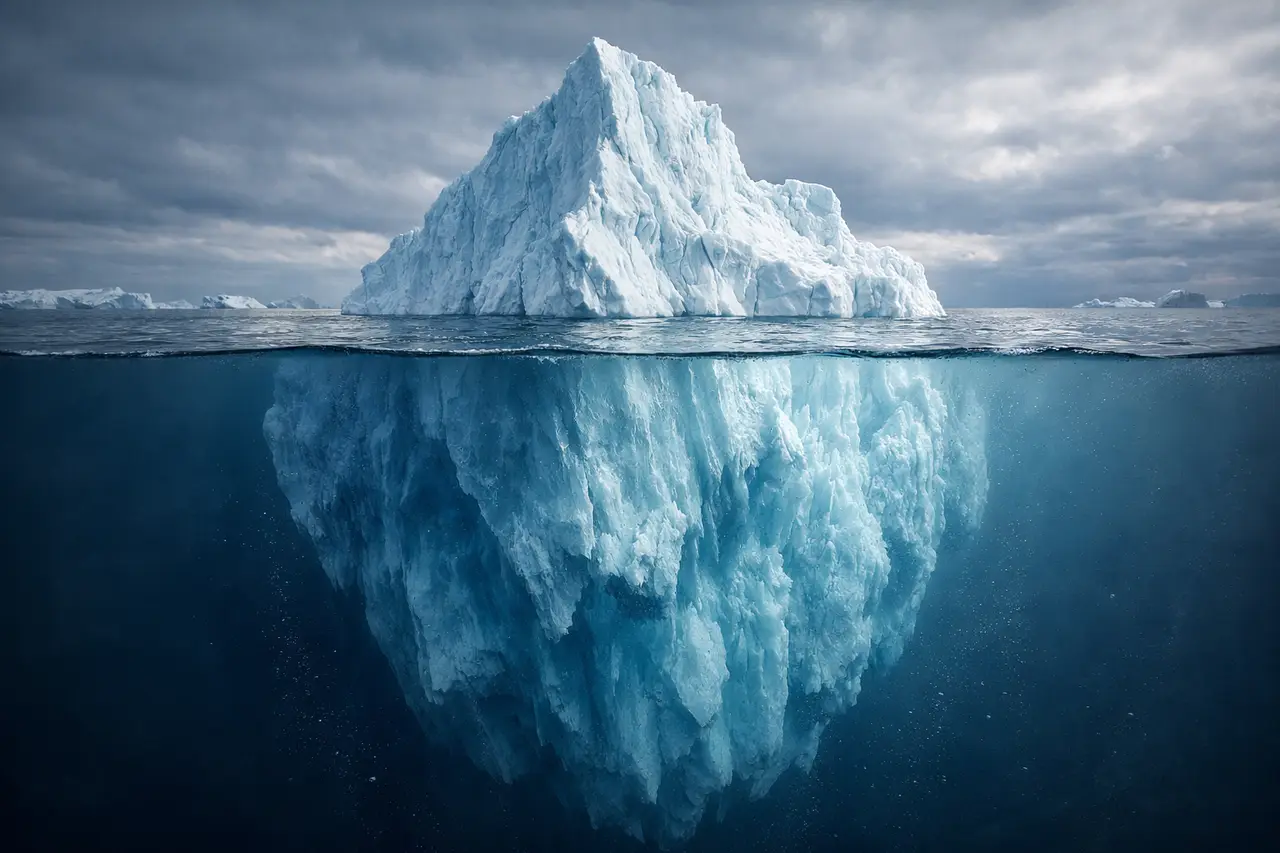
The short answer: A glacier can weigh anywhere from millions to trillions of metric tons, since ice weighs about 917 kilograms per cubic meter and glaciers range from valley-sized to continental ice sheets.
Glacier weight by type
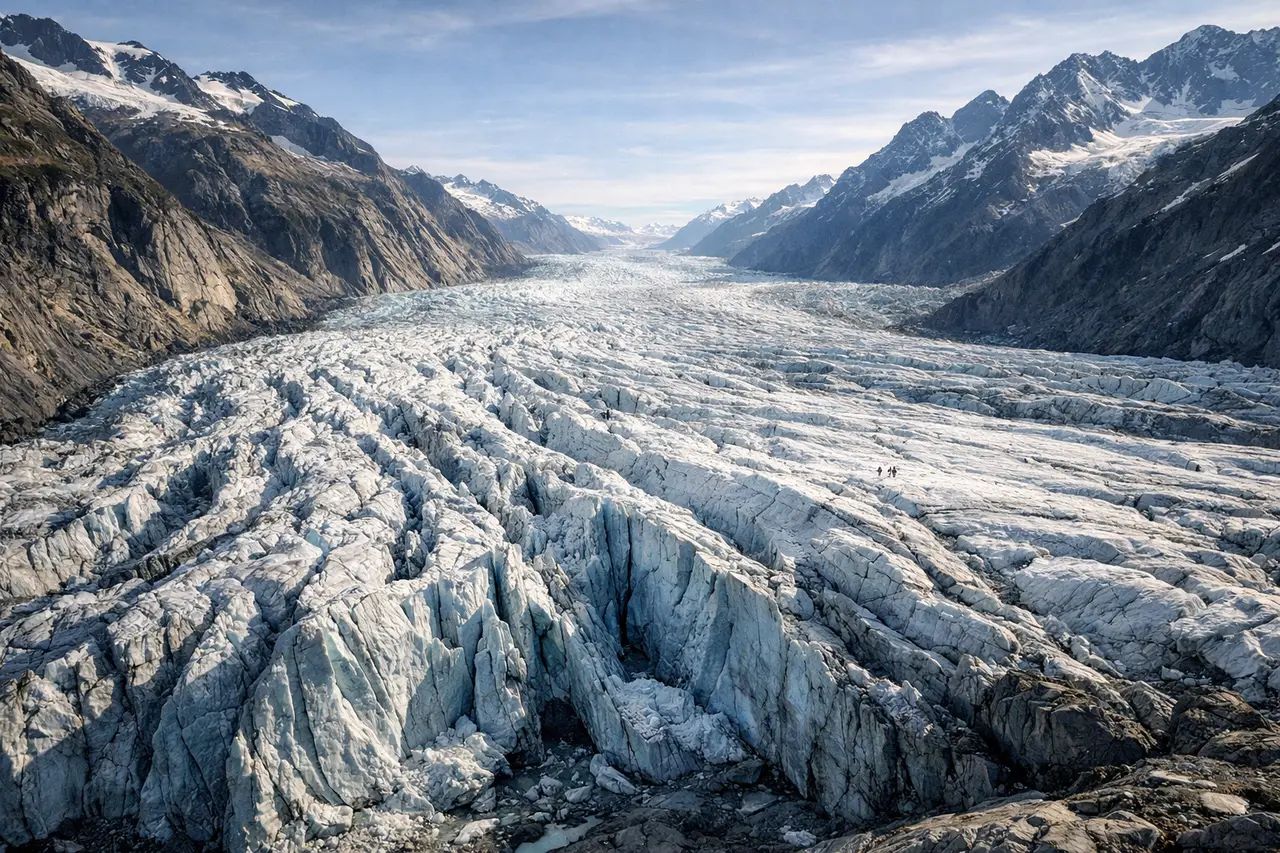
A glacier is a large, slow-moving mass of ice formed from compacted snow. Its weight depends almost entirely on its volume, which can span an astonishing range.
| Glacier scale (example) | Rough weight |
|---|---|
| Small valley glacier | millions of tons |
| Large mountain glacier | billions of tons |
| Major outlet glacier | hundreds of billions of tons |
| Continental ice sheet | trillions of tons |
What affects glacier weight
- Volume. Length, width, and thickness together set the total ice mass.
- Ice density. Glacier ice weighs about 917 kg per cubic meter.
- Thickness. Deep glaciers hundreds of meters thick add enormous mass.
- Trapped debris. Rock and sediment frozen into the ice add extra weight.
- Compaction. Older, more compressed ice is denser than fresh snow.
How glacier weight compares
Even a modest valley glacier can weigh millions of tons, comparable to dozens of large dams, while ice sheets outweigh anything else on land.
Frequently asked questions
How do scientists weigh a glacier?
They estimate its volume from surface area and ice thickness, then multiply by the density of glacier ice. The result gives an approximate total mass.
Why do glaciers move if they are so heavy?
Their immense weight causes the ice to deform and slowly flow downhill under gravity. This is why glaciers creep forward despite being solid ice.
Does a glacier get lighter when it melts?
Yes, as ice melts and flows away as water, the glacier loses mass. Long-term melting reduces a glacier's total weight significantly.