The short answer: Mount Everest is estimated to weigh on the order of roughly 357 trillion kilograms (about 3.57 × 10^14 kg), based on its enormous volume of rock and ice. The figure is a rough estimate.
Mount Everest weight by type
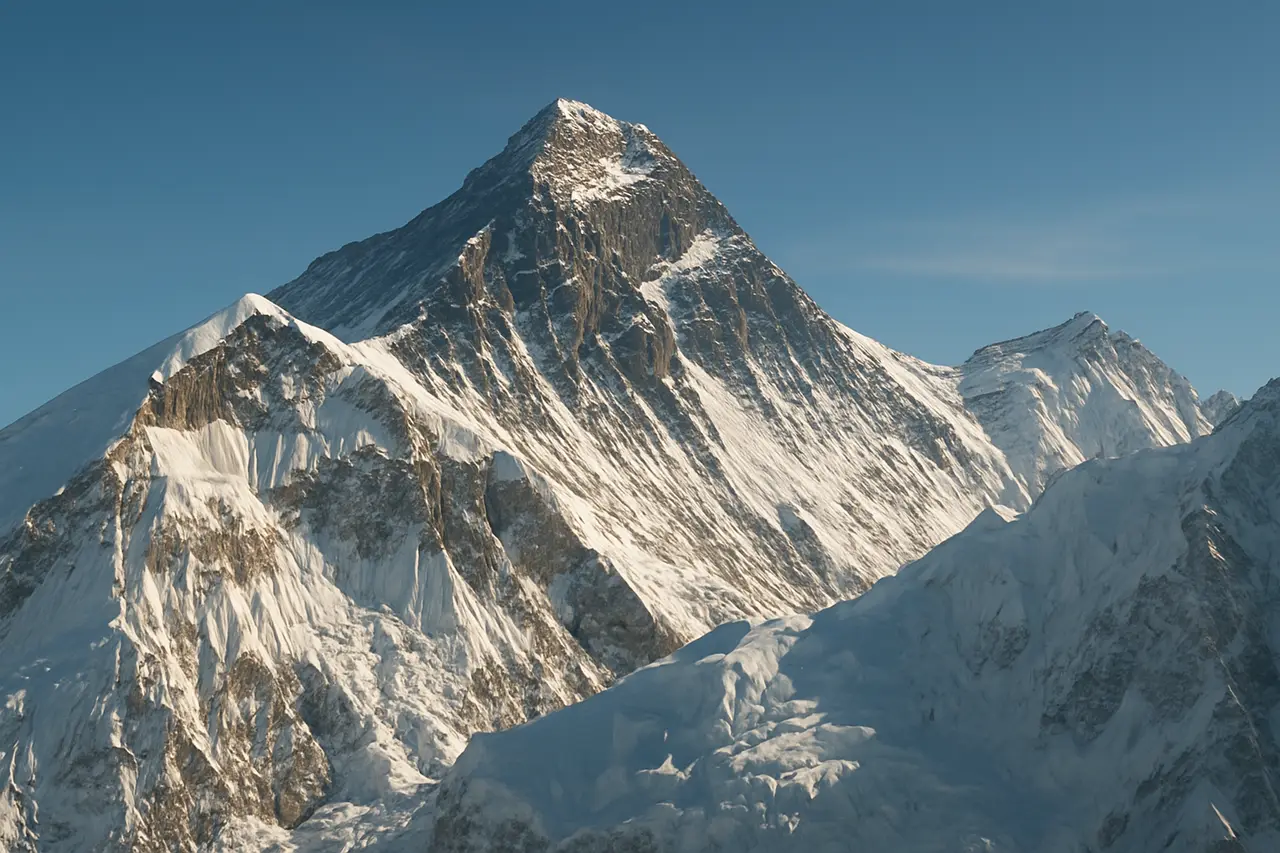
Mount Everest, in the Himalayas, is the highest mountain on Earth. Its estimated weight is calculated from its vast volume and the density of its rock and ice.
| Aspect | Approximate figure |
|---|---|
| Summit height | 8,849 m (29,032 ft) |
| Rank by height | highest on Earth |
| Estimated mass | around 3.57 × 10^14 kg |
| Primary material | rock, with snow and ice |
| Confidence level | rough order-of-magnitude estimate |
What affects Mount Everest weight
- Volume. Everest's great height and massive base set the amount of rock involved.
- Rock density. The density of its rock layers determines mass per cubic meter.
- Base definition. Where the base is drawn dramatically changes the volume counted.
- Shape. The mountain's bulky form holds an immense amount of material.
- Snow and ice. Permanent glaciers and ice add some weight.
- Estimation method. The figure is approximate, based on geometry and density.
How Mount Everest weight compares
Everest's mass is on a planetary scale, vastly exceeding anything humans have built; the combined weight of all the world's structures is negligible beside it.
Frequently asked questions
How much does Mount Everest weigh?
Mount Everest is estimated to weigh on the order of 357 trillion kilograms (about 3.57 × 10^14 kg). This is a rough estimate from its volume and rock density.
Why does Everest grow each year?
Tectonic plate movement pushes the Himalayas upward by a few millimeters per year, so Everest very slowly increases in height over time.
How is Everest's weight estimated?
Scientists estimate the mountain's volume and multiply by the average density of its rock and ice. Because the base has no clear edge, the result is an approximation.