The short answer: A typical boulder weighs between about 500 kg and 10 metric tons (1,100 to 22,000 lb), depending on its size and the type of rock.
Boulder weight by type
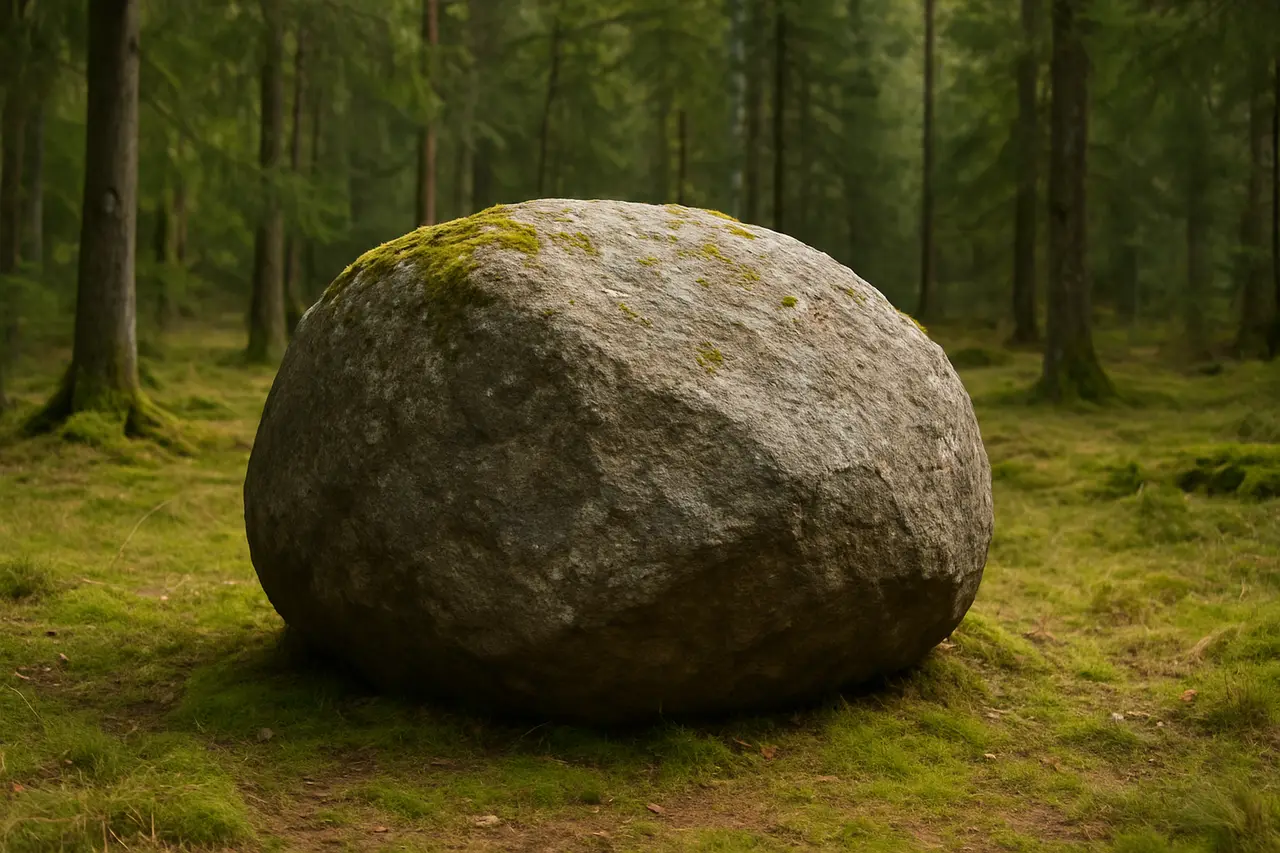
A boulder is a large rock too big to move by hand. Its weight depends on its volume and the density of the rock it is made from.
| Size (example) | Approximate weight |
|---|---|
| Small boulder (~0.5 m across) | about 150-300 kg |
| Medium boulder (~1 m across) | about 1-3 metric tons |
| Large boulder (~2 m across) | about 10-20 metric tons |
| Very large boulder (~3 m across) | 30 metric tons or more |
| Granite vs sandstone (same size) | granite is noticeably heavier |
What affects boulder weight
- Size (volume). Weight rises sharply with diameter, since volume grows with the cube.
- Rock type. Dense rock like granite weighs more than sandstone of the same size.
- Shape. Rounded boulders pack more mass than irregular, hollow-looking ones.
- Density. Mineral content determines how heavy each cubic meter is.
- Moisture and cracks. Water-filled pores add a little weight; cracks reduce solid mass.
- Weathering. Eroded, porous rock weighs less than fresh solid rock.
How boulder weight compares
A medium 1-meter granite boulder at around 2 tons weighs about as much as a small car, while a large boulder can outweigh several cars combined.
Frequently asked questions
How much does a boulder weigh?
A typical boulder weighs anywhere from about 500 kg to 10 metric tons, depending on its size and rock type. Larger boulders can weigh much more.
How do you estimate a boulder's weight?
You estimate its volume from its dimensions and multiply by the rock's density. Granite is around 2,700 kg per cubic meter, so a 1-meter cube weighs roughly 2-3 tons.
Why are some boulders heavier than others of the same size?
Different rocks have different densities. A granite boulder is heavier than a sandstone or volcanic boulder of the same dimensions.