The short answer: Kangchenjunga is estimated to weigh around 1.1 trillion kilograms (about 2.4 trillion lb), derived from its vast volume and rock density. The figure is a rough estimate.
Kangchenjunga weight by type
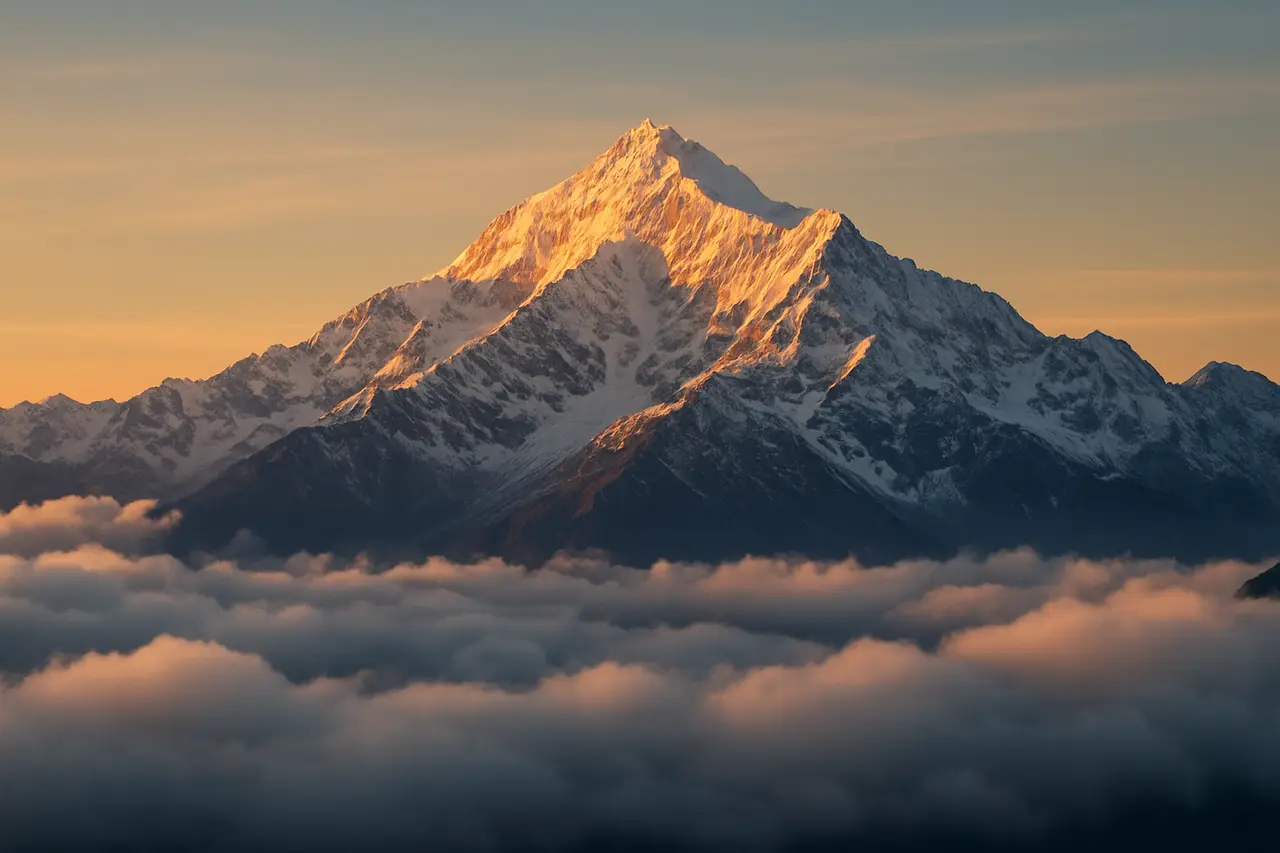
Kangchenjunga straddles the Nepal-India border and is the third-highest mountain in the world at 8,586 m (28,169 ft). Its estimated weight comes from its volume and the density of its rock.
| Aspect | Approximate figure |
|---|---|
| Summit height | 8,586 m (28,169 ft) |
| Rank by height | third-highest on Earth |
| Estimated mass | around 1.1 trillion kg |
| Primary material | rock, with snow and ice |
| Confidence level | rough order-of-magnitude estimate |
What affects Kangchenjunga weight
- Volume. The mountain's height and broad massif set the amount of rock involved.
- Rock density. The density of its rock determines mass per cubic meter.
- Base definition. Where the base is drawn changes the volume counted.
- Multiple peaks. Kangchenjunga's massif has several summits adding to its bulk.
- Snow and ice. Permanent glaciers and ice add some weight.
- Estimation method. The figure is approximate, based on geometry and density.
How Kangchenjunga weight compares
Kangchenjunga's mass is on a planetary scale, far exceeding any human-made object; even the heaviest structures ever built are a tiny fraction of its weight.
Frequently asked questions
How much does Kangchenjunga weigh?
Kangchenjunga is estimated to weigh around 1.1 trillion kilograms. This is a rough figure based on its volume and rock density.
How is the weight of Kangchenjunga estimated?
Scientists estimate the mountain's volume from its dimensions and multiply by the average rock density. The result is an approximation, not a precise measurement.
Where is Kangchenjunga located?
Kangchenjunga sits on the border between Nepal and India and is the third-highest mountain in the world at 8,586 meters.