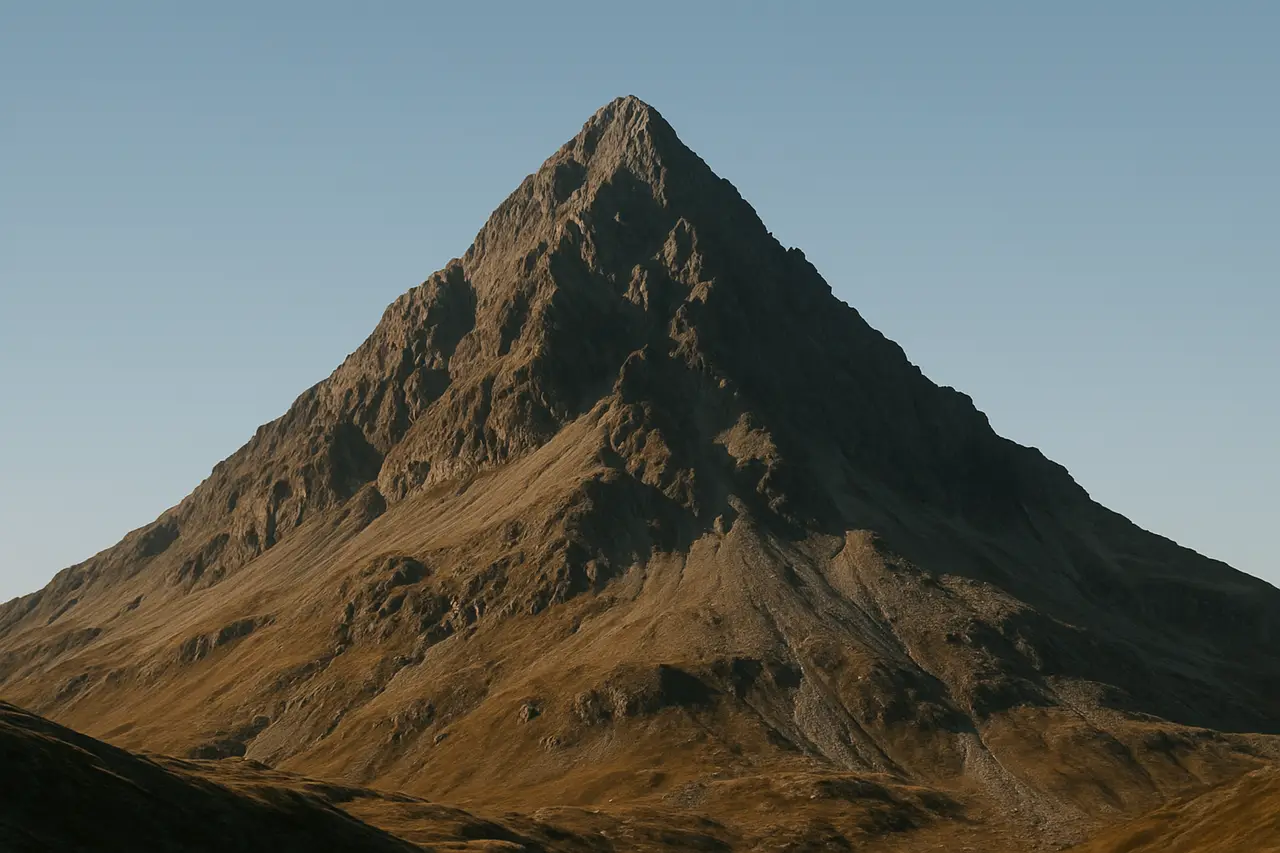
The short answer: A typical hill weighs between roughly 1 million and 100 million metric tons, varying with its volume and rock density. The figure is an estimate based on size.
Hill weight by type
A hill is an elevated landform smaller than a mountain, made of soil, rock, and vegetation. Its weight depends mainly on its volume and the density of the material inside.
| Hill size (example) | Approximate weight |
|---|---|
| Small mound / knoll | around 0.1-1 million metric tons |
| Modest hill (~50 m high) | around 1-10 million metric tons |
| Large hill (~100 m high) | around 10-100 million metric tons |
| Very large hill | approaching small-mountain figures |
| Rocky vs soil hill (same size) | rocky is heavier |
What affects hill weight
- Height and base area. Together these set the overall volume of the hill.
- Volume. Mass scales with the amount of material in the landform.
- Rock vs soil. Solid rock weighs more per cubic meter than loose soil.
- Density. The mineral makeup determines how heavy each cubic meter is.
- Moisture content. Water in soil and porous rock adds weight.
- Shape. A broad, rounded hill holds more material than a narrow one.
How hill weight compares
A large hill at tens of millions of tons weighs far more than every car in a major city combined; human-made objects don't come close at this scale.
Frequently asked questions
How much does a hill weigh?
A typical hill weighs roughly 1 million to 100 million metric tons, depending on its size and what it is made of. Larger hills weigh considerably more.
How is a hill's weight calculated?
You estimate the hill's volume from its height and base, then multiply by the average density of its soil and rock. The result is an approximation.
What's the difference between a hill and a mountain in weight?
Hills are smaller, so they weigh far less than mountains. A large mountain can weigh billions to trillions of tons, while hills are in the millions of tons range.