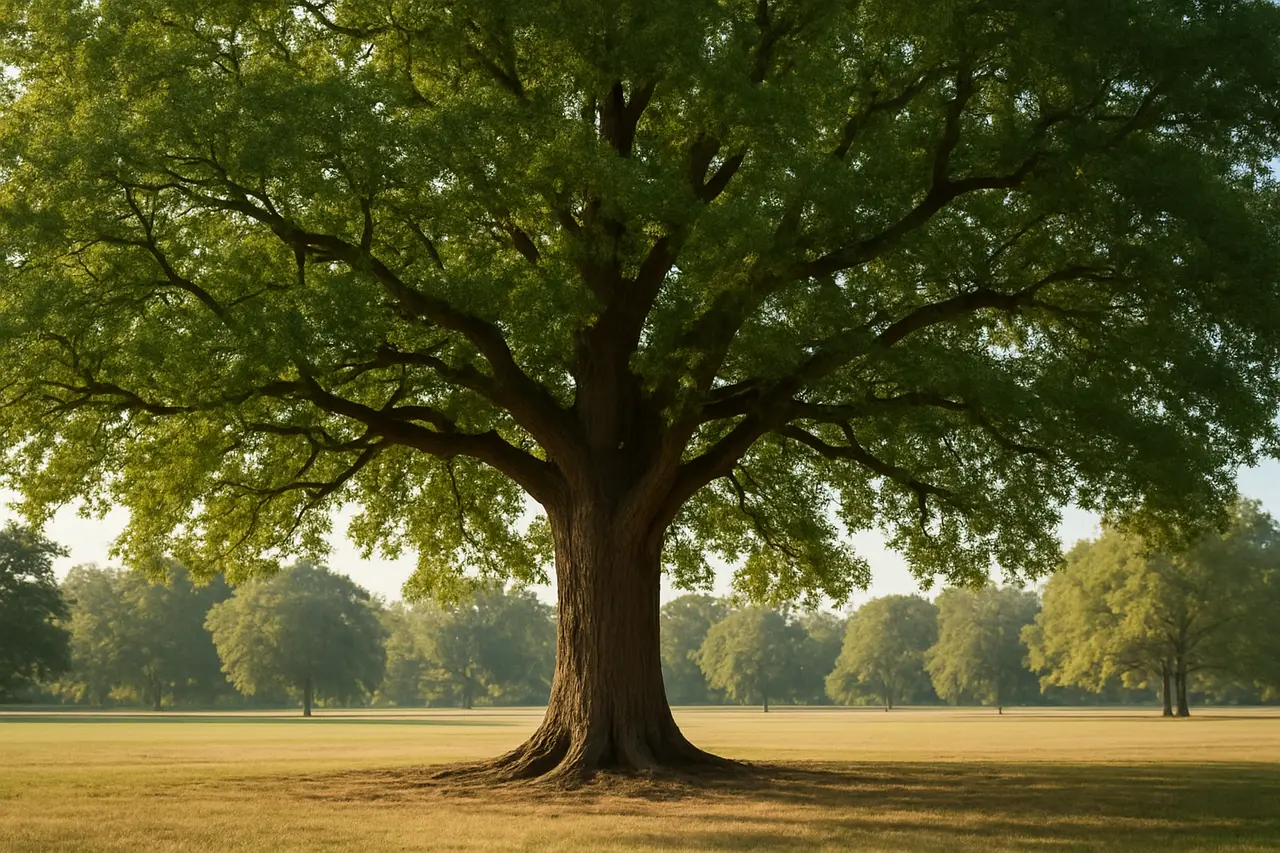
The short answer: An average mature tree weighs roughly 1 to 5 metric tons (about 900 to 4,500 kilograms), with a typical oak coming in around 2 tons, depending on species and size.
Tree weight by type
A tree's weight depends on its species, height, trunk diameter, and wood density. Most of the mass is in the trunk and branches, with water making up a large share of living wood.
| Tree type (example) | Rough mature weight |
|---|---|
| Small ornamental tree | a few hundred kg |
| Average oak tree | around 2 tons |
| Large mature hardwood | 3–5 tons |
| Giant species (e.g. redwood) | hundreds of tons |
What affects tree weight
- Species. Dense hardwoods weigh far more than lighter softwoods of the same size.
- Size. Taller trees with thicker trunks hold much more wood.
- Age. Older trees have accumulated more biomass over time.
- Wood density. Heavier wood means more weight per unit of volume.
- Water content. Living wood holds a lot of water, adding substantial weight.
How tree weight compares
A typical mature oak at around 2 tons weighs about the same as a small car, while giant species like redwoods can outweigh dozens of cars combined.
Frequently asked questions
What part of a tree weighs the most?
The trunk holds most of a tree's weight, followed by the larger branches. Roots and foliage add more depending on the species and what is counted.
Why do tree weights vary so much?
Weight depends on species, height, trunk diameter, and wood density, which all differ widely. A small ornamental tree and a giant redwood can differ by hundreds of tons.
Does a living tree weigh more than dry wood?
Yes, living wood holds a large amount of water, which adds significant weight. As wood dries out, it becomes considerably lighter.