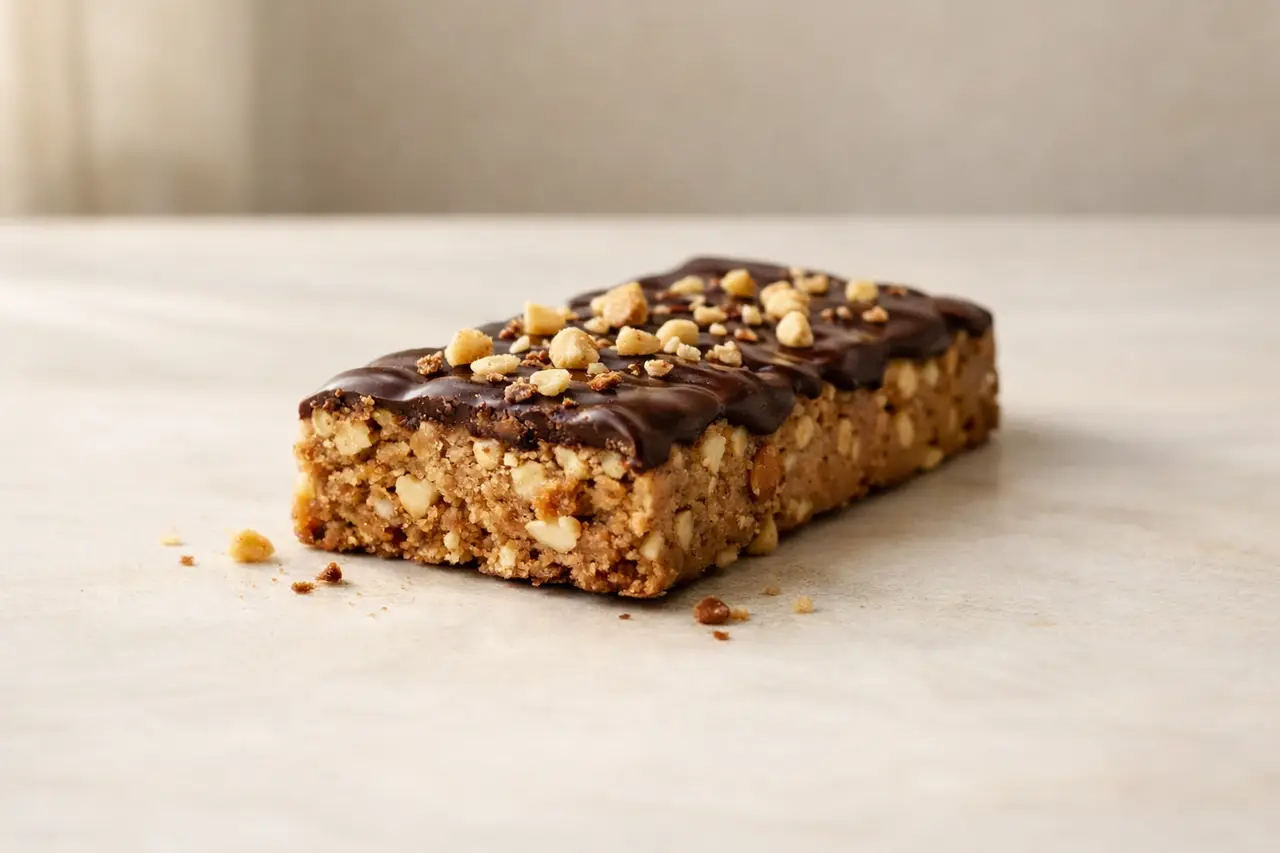
The short answer: A protein bar typically weighs about 45 to 70 grams (1.6 to 2.5 ounces), packing a lot of calories into a compact size.
Protein bar weight by type
Protein bars are dense and come in a fairly narrow weight range. Here are common types.
| Type (example) | Typical weight |
|---|---|
| Mini/snack protein bar | About 25-40 g (0.9-1.4 oz) |
| Standard protein bar | About 50-60 g (1.8-2.1 oz) |
| High-protein bar | About 60-70 g (2.1-2.5 oz) |
| Meal-replacement bar | About 80-100 g (2.8-3.5 oz) |
| Layered/coated bar | About 55-75 g (1.9-2.6 oz) |
What affects protein bar weight
- Size. Snack, standard, and meal-replacement bars differ in weight.
- Protein content. Higher-protein bars are denser and often heavier.
- Ingredients. Nuts, oats, and dried fruit add weight.
- Coating. A chocolate or yogurt coating adds grams.
- Density. Compact bars pack a lot of mass into a small size.
- Brand. Each brand makes bars to a specific net weight.
How protein bar weight compares
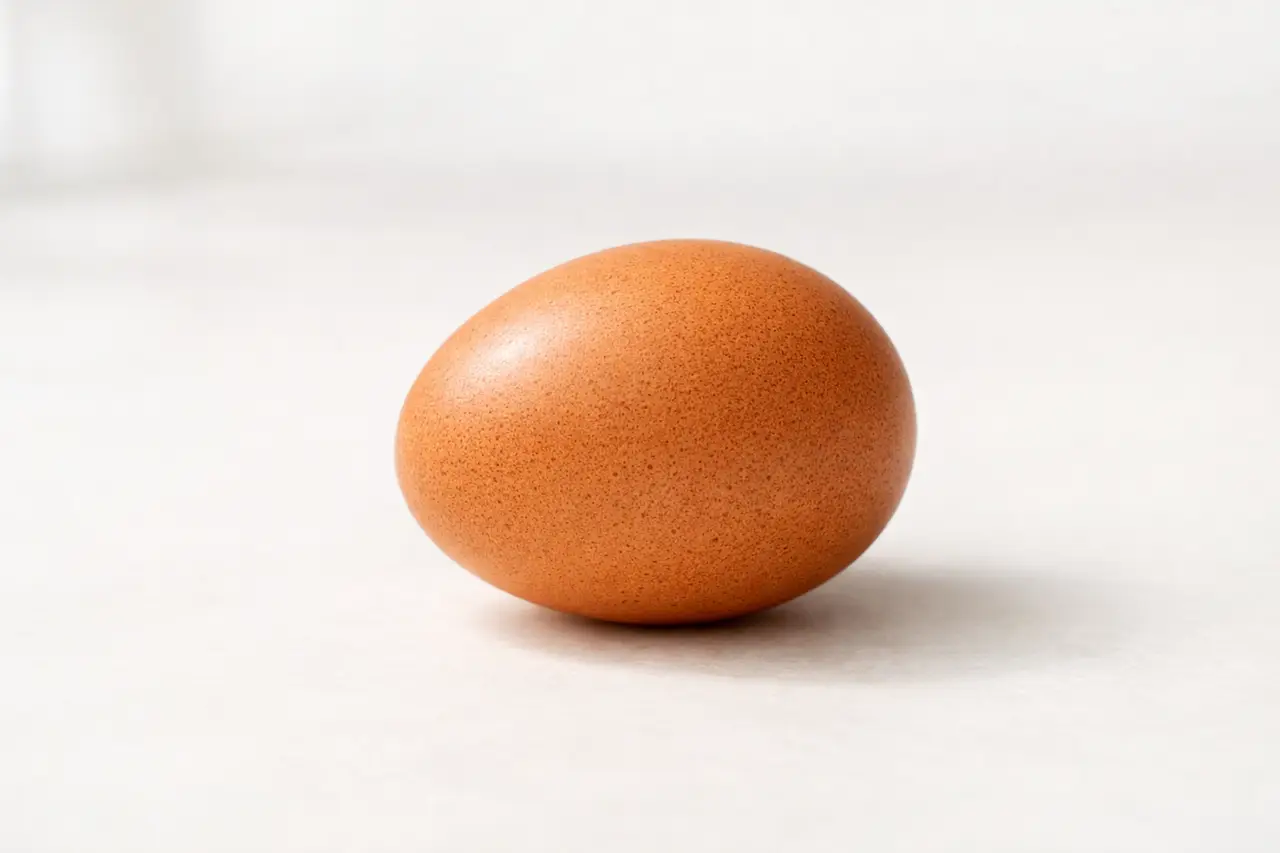
A standard protein bar weighs about the same as a medium egg or a small lemon.
Frequently asked questions
How much does a standard protein bar weigh?
A standard protein bar usually weighs about 50 to 60 grams (1.8 to 2.1 ounces).
Why do protein bars feel heavy for their size?
They are designed to pack protein and calories into a small, dense serving, so they weigh more than they look.
How much does a meal-replacement bar weigh?
A meal-replacement bar is larger, often about 80 to 100 grams (2.8 to 3.5 ounces).