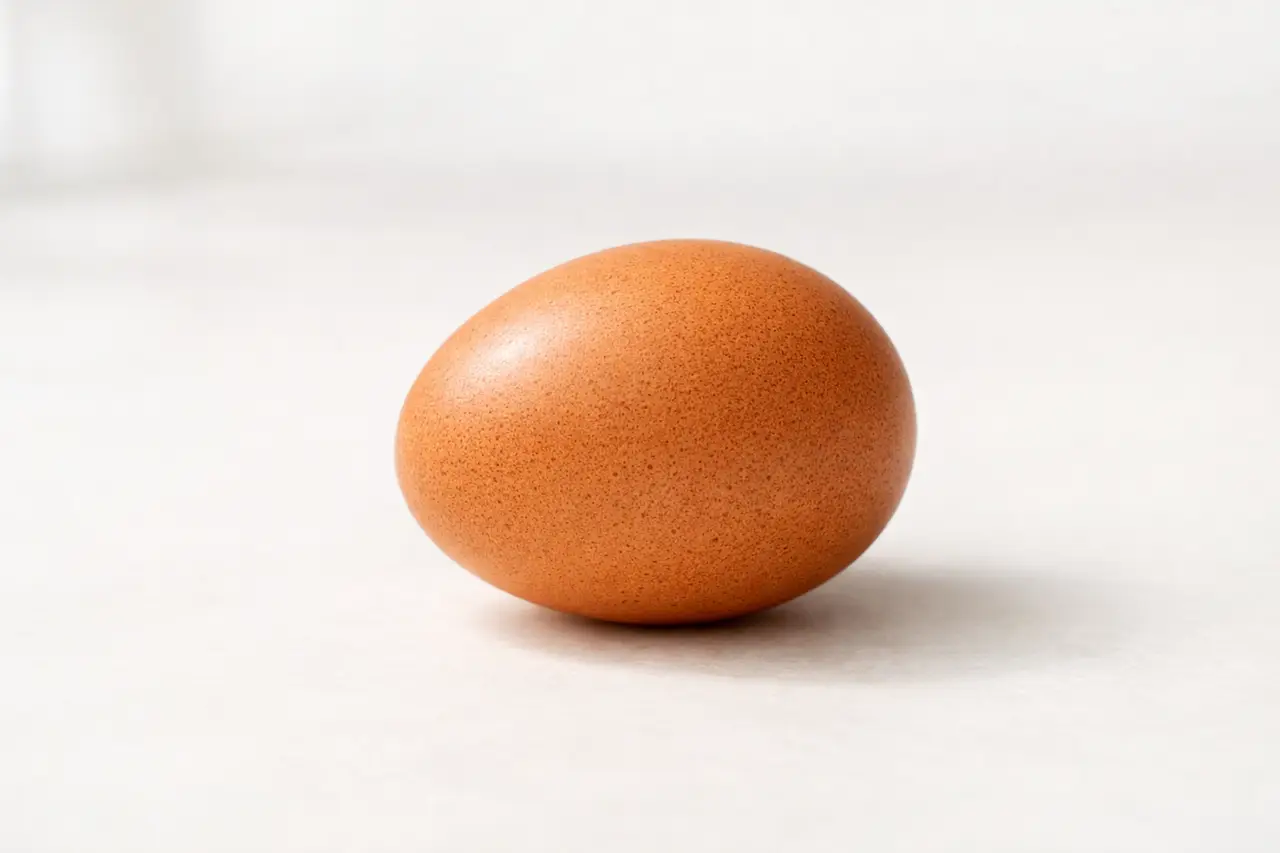
The short answer: A single egg typically weighs about 50 to 60 grams (1.8 to 2.1 ounces), with a large egg averaging around 55 grams.
Egg weight by type
Eggs are graded by weight, so a single egg falls into a fairly predictable range. Here are the common U.S. size grades and their typical weights.
| Type (example) | Typical weight |
|---|---|
| Medium egg | about 50 g (1.8 oz) |
| Large egg | about 55-57 g (2 oz) |
| Extra-large egg | about 60-63 g (2.1-2.2 oz) |
| Jumbo egg | about 70 g (2.5 oz) |
What affects egg weight
- Size grade. Eggs are sorted into medium, large, extra-large, and jumbo by minimum weight.
- Shell included. The shell is roughly 10 percent of the total weight.
- Hen age and breed. Older hens tend to lay larger, heavier eggs.
- Freshness. Eggs lose a little moisture and weight as they age.
- Shell color. Brown and white eggs of the same grade weigh about the same.
- Egg type. Duck and goose eggs are much heavier than chicken eggs.
How egg weight compares
A large egg weighs about the same as a golf ball plus a little (around 55 grams), or roughly the same as a small lemon.
Frequently asked questions
How much does a large egg weigh?
A large egg weighs about 55 to 57 grams (around 2 ounces), including the shell.
How much does an egg weigh without the shell?
The shell is roughly 10 percent of the weight, so a large egg's contents weigh about 50 grams.
How much does an egg white or yolk weigh?
In a large egg, the white weighs about 33 grams and the yolk about 17 grams.