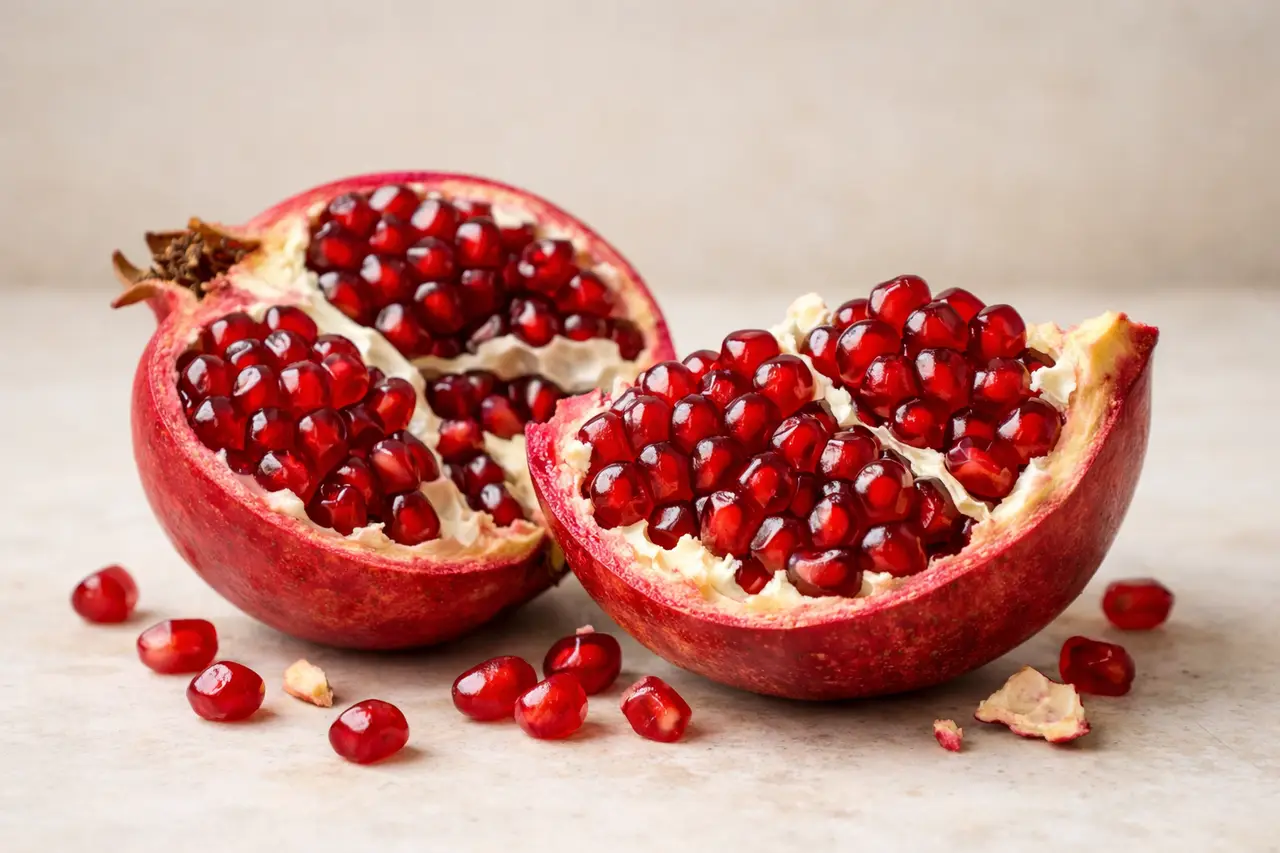
The short answer: A pomegranate typically weighs about 300 to 500 grams (11 to 18 ounces). The rind, membranes, seeds, and juice-filled arils all add to the total.
Pomegranate weight by type
Pomegranate weight depends on variety and size, with the thick rind and inner membranes making up a meaningful share of the fruit.
| Type (example) | Typical weight |
|---|---|
| Small | 200 to 300 g (7 to 11 oz) |
| Medium (Wonderful variety) | 300 to 500 g (11 to 18 oz) |
| Large | 500 to 700 g (18 to 25 oz) |
| Edible arils only (medium) | roughly 150 to 250 g (5 to 9 oz) |
What affects pomegranate weight
- Variety. The popular Wonderful pomegranate tends to be large, while other types run smaller.
- Rind and membrane. The thick peel and pith are inedible and add real weight.
- Ripeness. Ripe fruit packed with juicy arils feels heaviest.
- Growing conditions. Climate and irrigation influence fruit size.
- Whole vs. seeded. Just the arils weigh roughly half of the whole fruit.
How pomegranate weight compares
A medium pomegranate weighs about the same as a large orange, or roughly as much as a can of soda and a half.
Frequently asked questions
How many arils are in a pomegranate?
A medium pomegranate contains roughly 400 to 600 arils, which together weigh about 150 to 250 grams, or close to half the fruit's total weight.
How much juice does a pomegranate yield?
A medium pomegranate yields roughly 80 to 130 milliliters of juice, depending on ripeness and how the arils are pressed.
Why does a pomegranate feel so heavy?
The dense, juice-filled arils plus the thick rind and membranes all add up, making the whole fruit feel heavier than it looks.