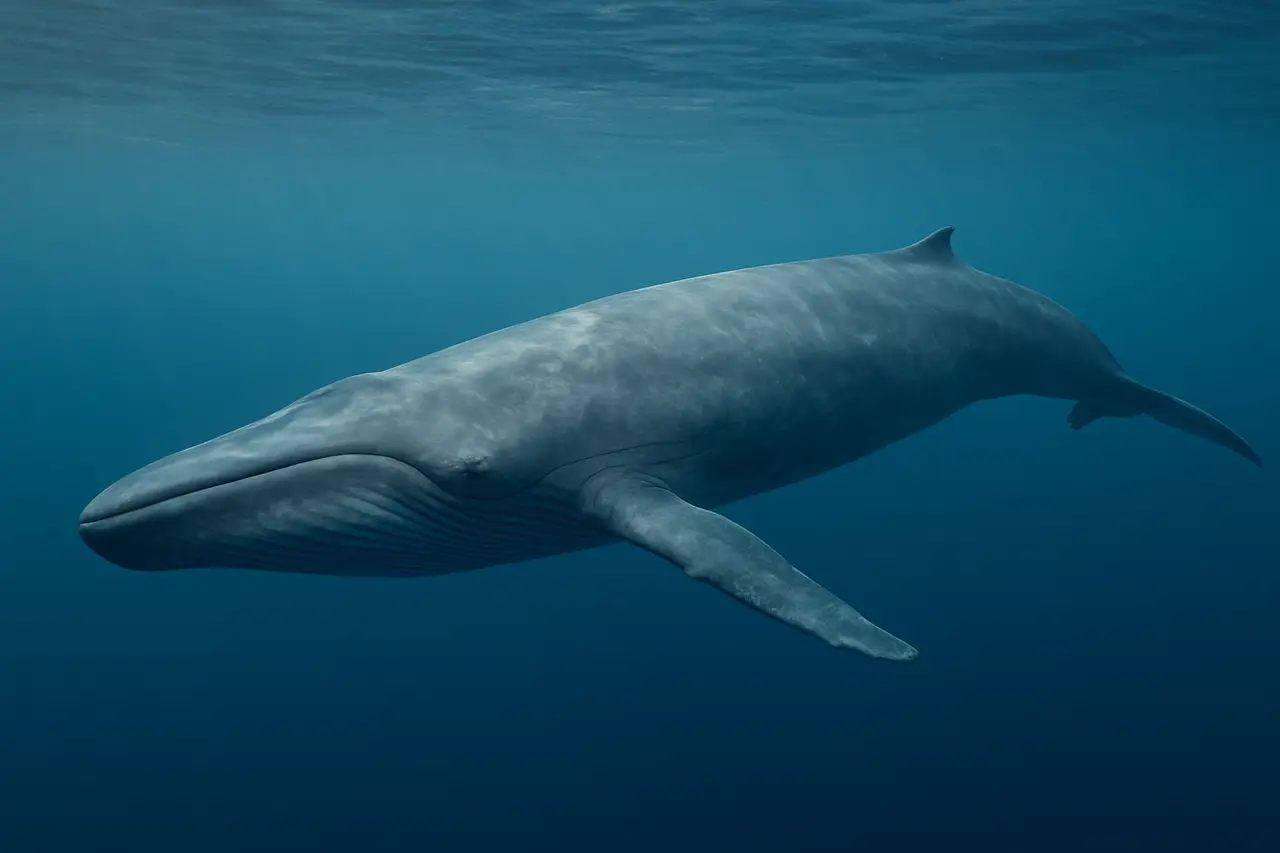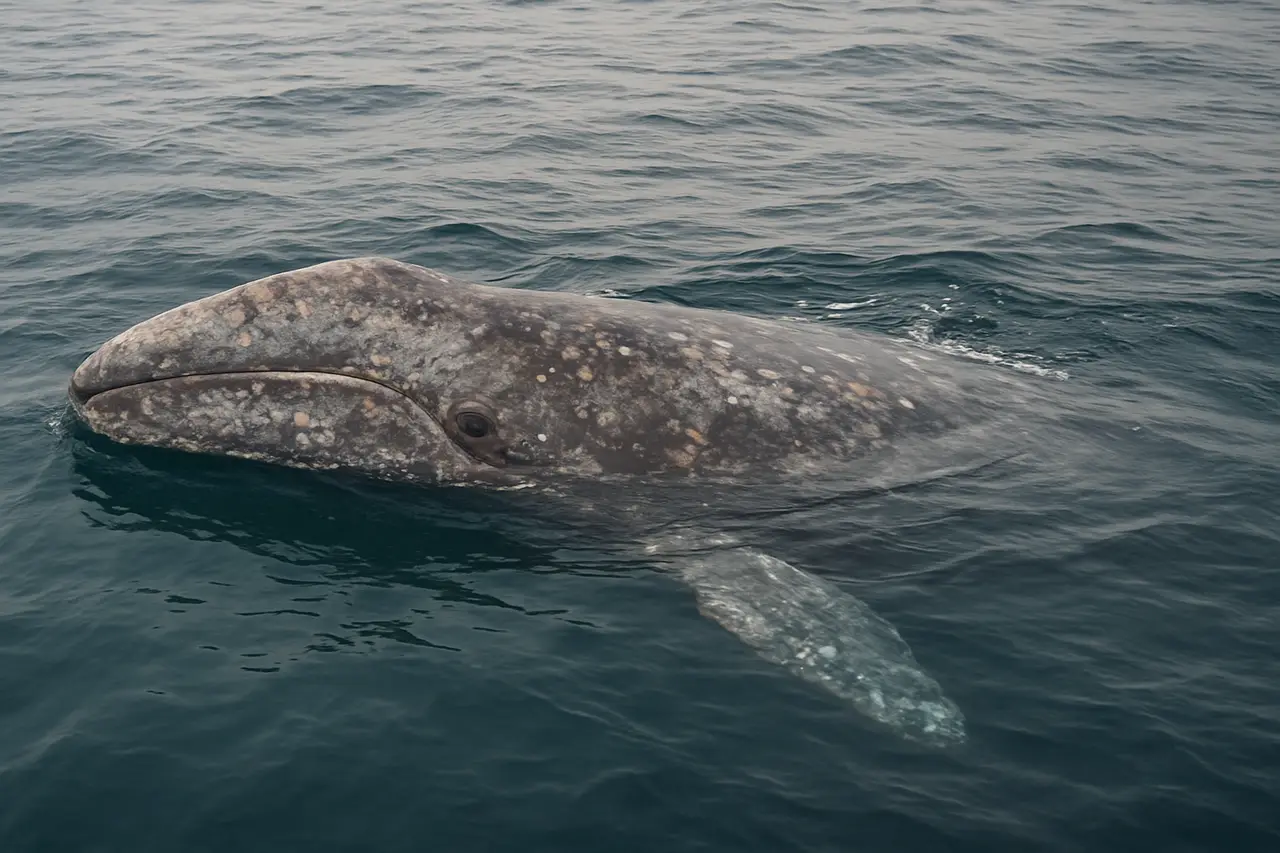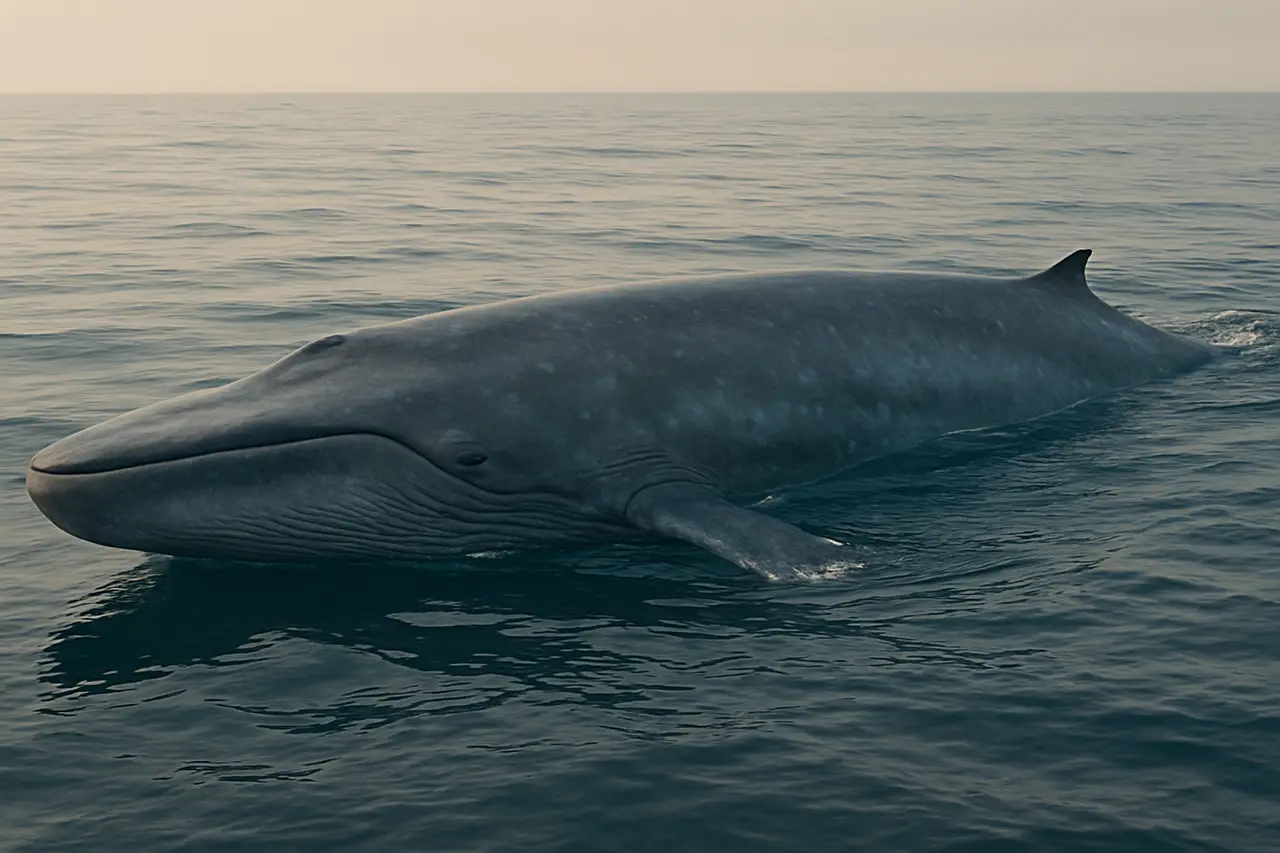
The short answer: An adult blue whale typically weighs about 100 to 150 metric tons (220,000 to 330,000 lb), making it the largest animal ever known.
Blue whale weight by type
Weight varies with subspecies, age, and sex. Here are typical figures.
| Type (example) | Typical weight |
|---|---|
| Newborn calf | About 2.5 to 3 metric tons (5,500 to 6,600 lb) |
| Adult male | About 100 to 130 metric tons (220,000 to 287,000 lb) |
| Adult female | About 110 to 150 metric tons (243,000 to 330,000 lb) |
| Largest recorded | Up to roughly 180 metric tons (400,000 lb) |
What affects blue whale weight
- Sex. Females are generally larger and heavier than males.
- Subspecies. Antarctic blue whales are the largest.
- Season. Whales gain weight heavily during feeding season.
- Age. Calves grow extremely fast in their first year.
- Region. Population and food supply affect typical adult mass.
How blue whale weight compares
A blue whale can weigh as much as about 25 to 30 adult elephants, or roughly the same as a fully loaded commercial jet.
Frequently asked questions
How much does a blue whale weigh compared to an elephant?
A blue whale weighs roughly 25 to 30 times as much as a large African elephant.
How heavy is a baby blue whale?
A newborn calf already weighs about 2.5 to 3 metric tons and gains around 90 kg per day.
Is the blue whale the heaviest animal ever?
Yes, the blue whale is the heaviest animal known to have existed, exceeding even the largest dinosaurs.