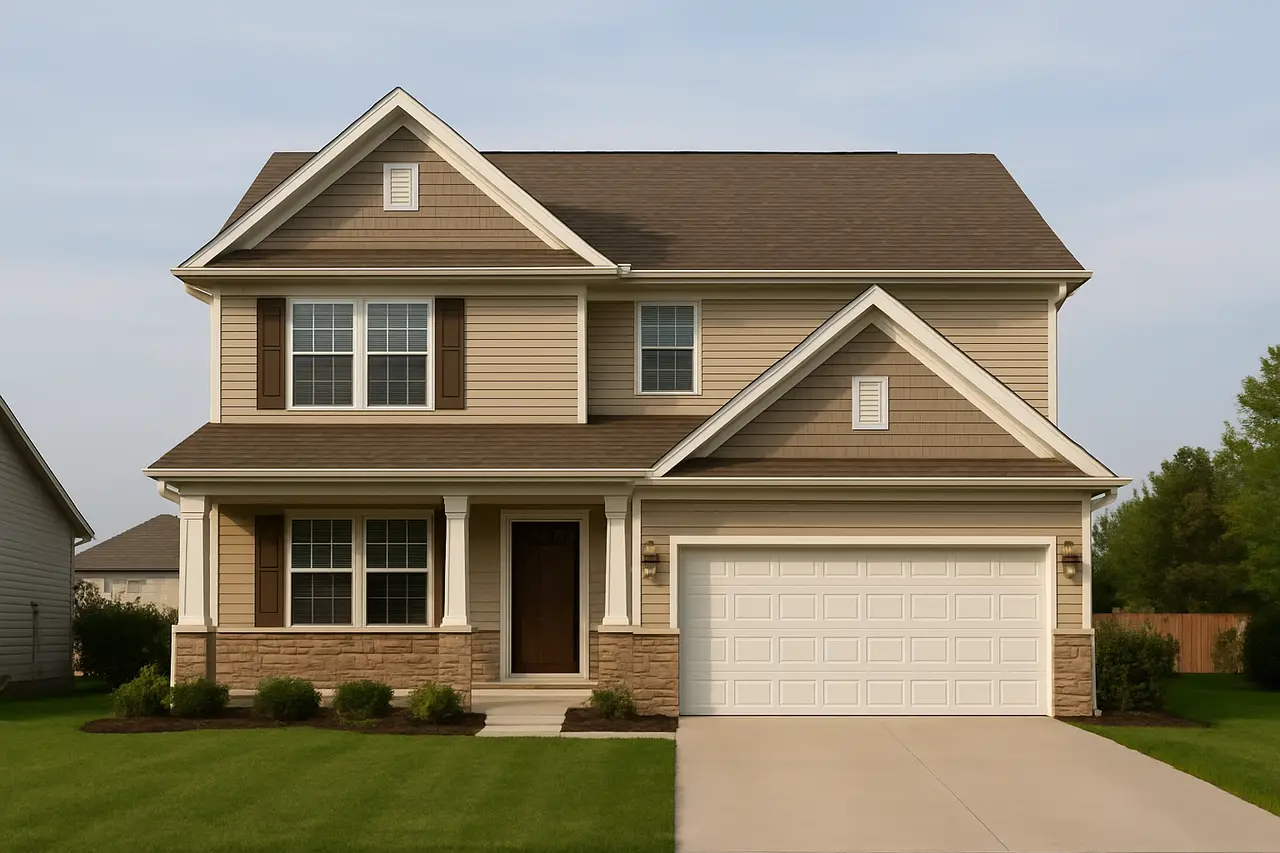
The short answer: An average single-family house weighs roughly 100 to 200 tons (about 90 to 180 metric tonnes), depending on its size and construction materials.
House weight by type
A house's weight depends mainly on its size and what it is built from, with brick and concrete homes weighing considerably more than wood-frame ones.
| Type (example) | Typical weight |
|---|---|
| Small wood-frame house | about 50 to 100 tons |
| Average single-family home | about 100 to 200 tons |
| Large brick or stone house | about 200 to 400 tons |
| Mobile or modular home | about 10 to 30 tons |
What affects house weight
- Square footage. Larger homes contain more material and weigh more.
- Construction material. Brick and concrete houses are much heavier than wood-frame ones.
- Number of stories. Multi-story homes add structural weight.
- Foundation type. A full concrete basement or slab adds significant weight.
- Roof and finishes. Tile roofs and stone finishes weigh far more than asphalt shingles and drywall.
How house weight compares
An average house at roughly 150 tons weighs about as much as 10 adult elephants, or around 100 mid-sized cars.
Frequently asked questions
Does a house's weight include the foundation?
Estimates can vary, but the structural weight usually counts the foundation, walls, floors, and roof. The foundation alone, especially a concrete slab or basement, can make up a large share of the total.
Why do brick houses weigh more than wood houses?
Brick and the concrete or block behind it are much denser than wood framing, so a masonry house contains far more mass for the same size. This is why brick homes can weigh roughly twice as much as wood-frame homes.
How is a house's weight estimated?
Builders estimate a house's weight by adding up the volume of each material and multiplying by its density. This dead-load figure helps engineers design adequate foundations.