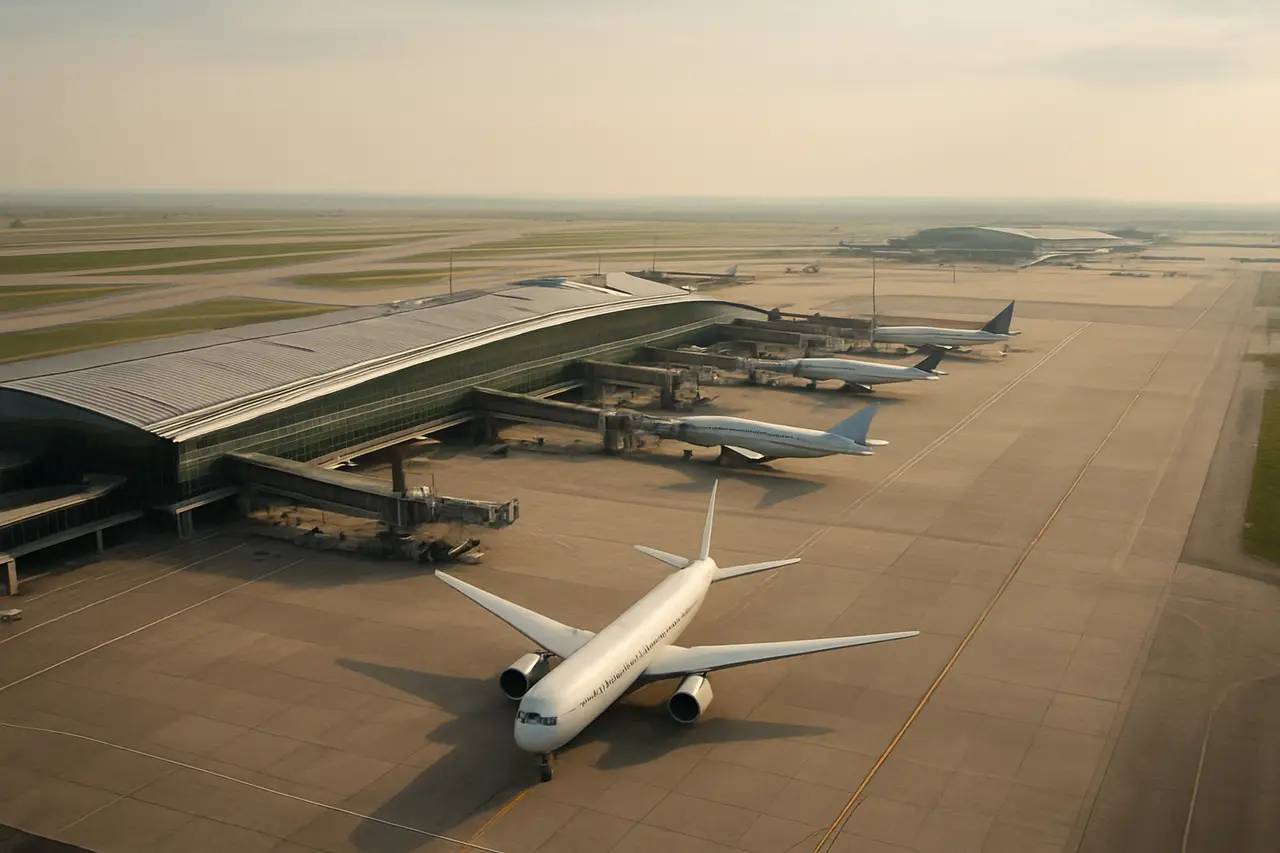
The short answer: A large international airport's built structures and paved surfaces can weigh several million metric tons, often exceeding 5 million metric tons (over 11 billion pounds) when runways, terminals, and other infrastructure are included.
Airport weight by type
Airports cover vast areas of paved runways, terminals, and hangars, making their total weight enormous and difficult to estimate precisely.
| Component | Approximate weight |
|---|---|
| Runways and taxiways (paving) | millions of metric tons |
| Terminal buildings | hundreds of thousands of tons |
| Hangars and support structures | tens of thousands of tons |
| Total large international airport | 5 million+ metric tons |
What affects airport weight
- Runway area. Vast paved runways and taxiways account for much of the total weight.
- Number of terminals. Large terminal buildings of steel, glass, and concrete add heavily.
- Paving thickness. Runways are built thick to bear aircraft, increasing weight.
- Support buildings. Hangars, control towers, and parking structures contribute more mass.
- Airport size. Major hubs with multiple runways weigh far more than small regional fields.
How airport weight compares
At over 5 million metric tons, a large international airport weighs far more than any single skyscraper, and its paved surfaces alone can outweigh hundreds of stadiums.
Frequently asked questions
What is the heaviest part of an airport?
The paved runways and taxiways usually account for most of an airport's weight, because they cover huge areas and are built thick to support heavy aircraft. Terminal buildings add a large share as well.
Why is an airport's weight hard to estimate?
Airports combine many different structures and vast paved areas, and the figure depends on what is included. Counting runways, terminals, hangars, and infrastructure together gives totals in the millions of tons.
How is an airport's weight calculated?
Estimates add up the volume of pavement, concrete, steel, and other materials multiplied by their densities. Runway area and paving thickness are the biggest drivers of the total.