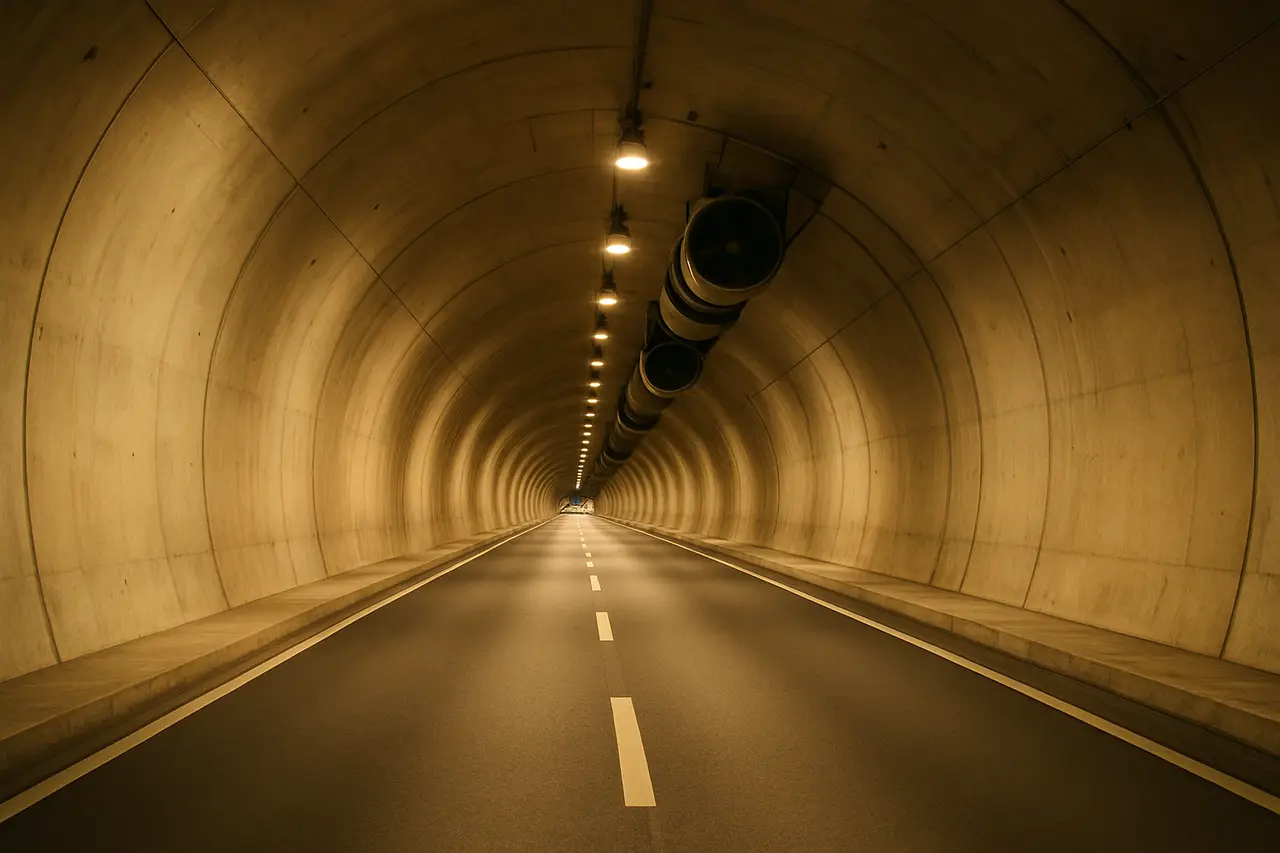
The short answer: A typical road tunnel can weigh between 1 million and 10 million tons (about 900,000 to 9,000,000 metric tonnes), depending on its length, diameter, and construction.
Tunnel weight by type
Tunnels are massive underground structures whose weight comes largely from the reinforced concrete lining and the surrounding excavated material.
| Type (example) | Typical weight |
|---|---|
| Short utility tunnel | tens of thousands of tons |
| Subway/metro tunnel section | hundreds of thousands of tons |
| Medium road tunnel | about 1 to 5 million tons |
| Long major road tunnel | 5 to 10 million tons or more |
What affects tunnel weight
- Length. Longer tunnels require far more lining material and weigh much more.
- Diameter. Wider tunnels need thicker, heavier linings.
- Lining material. Reinforced concrete segments make up most of a tunnel's structural weight.
- Depth and geology. Tunnels in unstable ground need heavier reinforcement.
- What is counted. Whether estimates include only the lining or also surrounding rock greatly changes the figure.
How tunnel weight compares
A medium road tunnel at several million tons weighs far more than the largest skyscrapers, easily outweighing dozens of stadiums combined.
Frequently asked questions
What makes a tunnel so heavy?
Most of a tunnel's structural weight comes from the thick reinforced concrete lining used to hold back the surrounding earth. The sheer length of a tunnel multiplies this material into millions of tons.
Does a tunnel's weight include the surrounding rock?
It depends on the estimate. Some figures count only the concrete lining and structure, while others include the vast amount of rock and soil that surrounds and supports the tunnel.
How is a tunnel's weight estimated?
Engineers estimate tunnel weight by multiplying the volume of the concrete lining and other materials by their densities. Length and diameter are the biggest factors in the result.