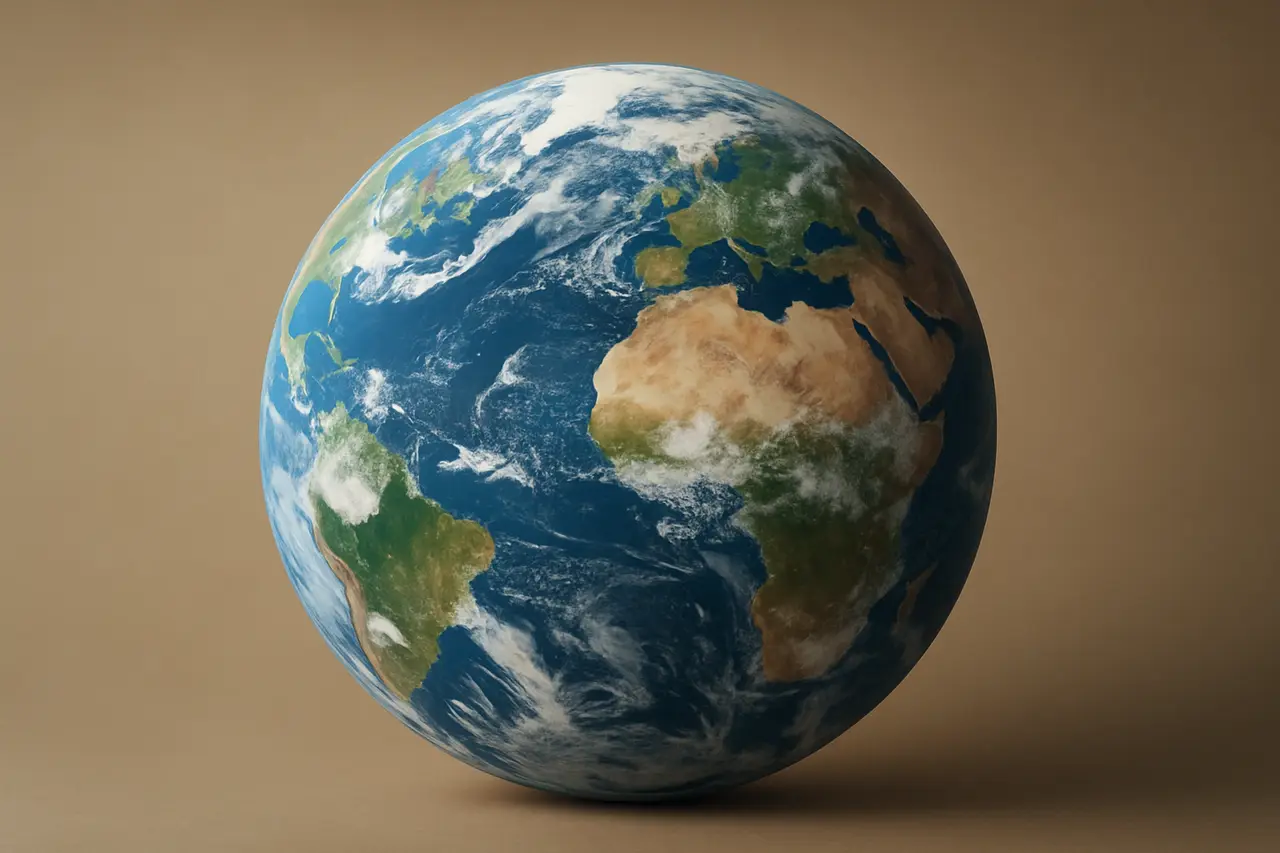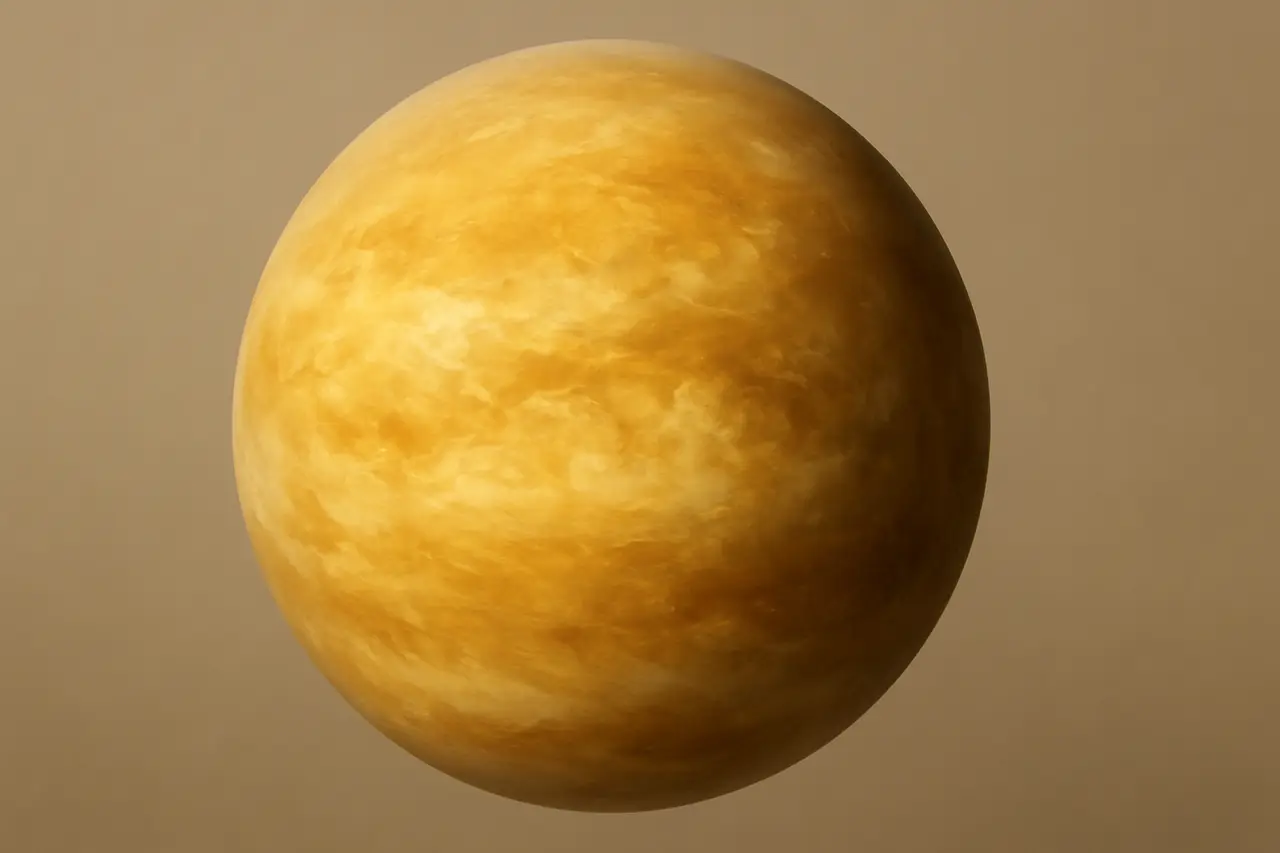
The short answer: Venus has a mass of about 4.87 × 1024 kg (roughly 1.07 × 1025 lb), which is around 0.815 times the mass of Earth.
Venus weight by type
Venus is the second planet from the Sun and is often called Earth's sister planet because of their similar size and mass, despite very different surface conditions.
| Comparison | Relative mass |
|---|---|
| Venus mass | about 4.87 × 10²⁴ kg |
| Compared to Earth | about 81.5% |
| Compared to Mars | about 7.6 times |
| Surface gravity | about 90% of Earth's |
What affects Venus weight
- Similar size to Earth. Venus is nearly Earth's twin in diameter, so it holds a comparable mass.
- Rocky composition. As a terrestrial planet, Venus is made mostly of rock and metal.
- Iron core. A dense core contributes a major share of the planet's mass.
- High density. At about 5.24 g/cm³, Venus is nearly as dense as Earth.
- Measurement via spacecraft. Orbiters have measured Venus's gravity to determine its mass.
How Venus weight compares
Venus weighs about 81.5% as much as Earth, making it the closest planetary match to our world, while it is more than seven times heavier than Mars.
Frequently asked questions
Why is Venus called Earth's sister planet?
Venus is called Earth's sister planet because the two are very close in size, mass, and density. Venus has about 81.5% of Earth's mass, though its surface conditions are extremely hostile.
What is gravity like on Venus?
Venus has about 90% of Earth's surface gravity because its mass and size are so similar to Earth's. A person would weigh nearly the same on Venus as on Earth.
How was Venus's mass measured?
Venus's mass was determined by tracking the orbits of spacecraft sent to the planet, such as the Magellan orbiter. Their motion reveals Venus's gravitational pull and therefore its mass.