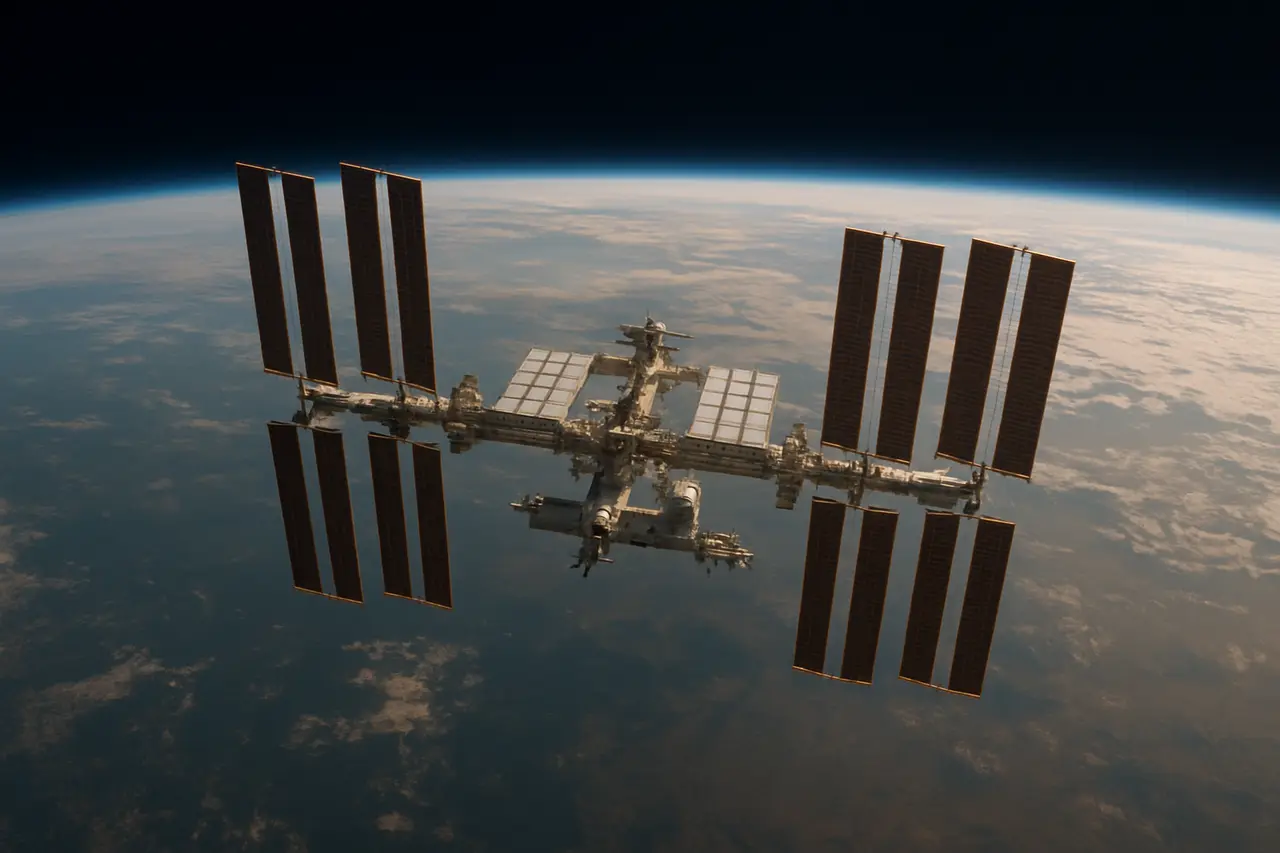
The short answer: The International Space Station weighs approximately 420,000 kg (about 925,000 lb), making it the heaviest human-made object in orbit.
International Space Station weight by type
The International Space Station is a large, modular spacecraft that orbits Earth as a crewed research laboratory, assembled from many connected sections.
| Component | Approximate mass |
|---|---|
| Pressurized modules | tens of thousands of kg each |
| Truss and solar arrays | roughly 100,000+ kg combined |
| Docked spacecraft (visiting) | adds several thousand kg |
| Total assembled station | about 420,000 kg |
What affects International Space Station weight
- Number of modules. Each pressurized module added during assembly increased the total mass.
- Truss and solar arrays. The large metal truss and power systems contribute heavily.
- Visiting spacecraft. Docked crew and cargo vehicles temporarily raise the station's mass.
- Supplies and equipment. Onboard cargo, experiments, and water add to the running total.
- Microgravity, not weightless. In orbit the station has full mass but is in continuous free fall, so it feels weightless.
How International Space Station weight compares
At around 420,000 kg, the ISS weighs roughly as much as 320 mid-sized cars, or about the same as a fully loaded jumbo jet.
Frequently asked questions
How heavy is the ISS compared to other spacecraft?
The ISS is the largest and heaviest object humans have placed in orbit, at about 420,000 kilograms. That is far heavier than any single satellite or space telescope.
Does the ISS weigh anything in space?
The ISS still has its full mass of about 420,000 kilograms, but it feels weightless because it is in constant free fall around Earth. Mass and weight are different things.
How was the ISS's mass built up?
The station's mass grew over years of assembly as modules, trusses, and solar arrays were launched and connected. Visiting cargo and crew vehicles add temporary mass when docked.