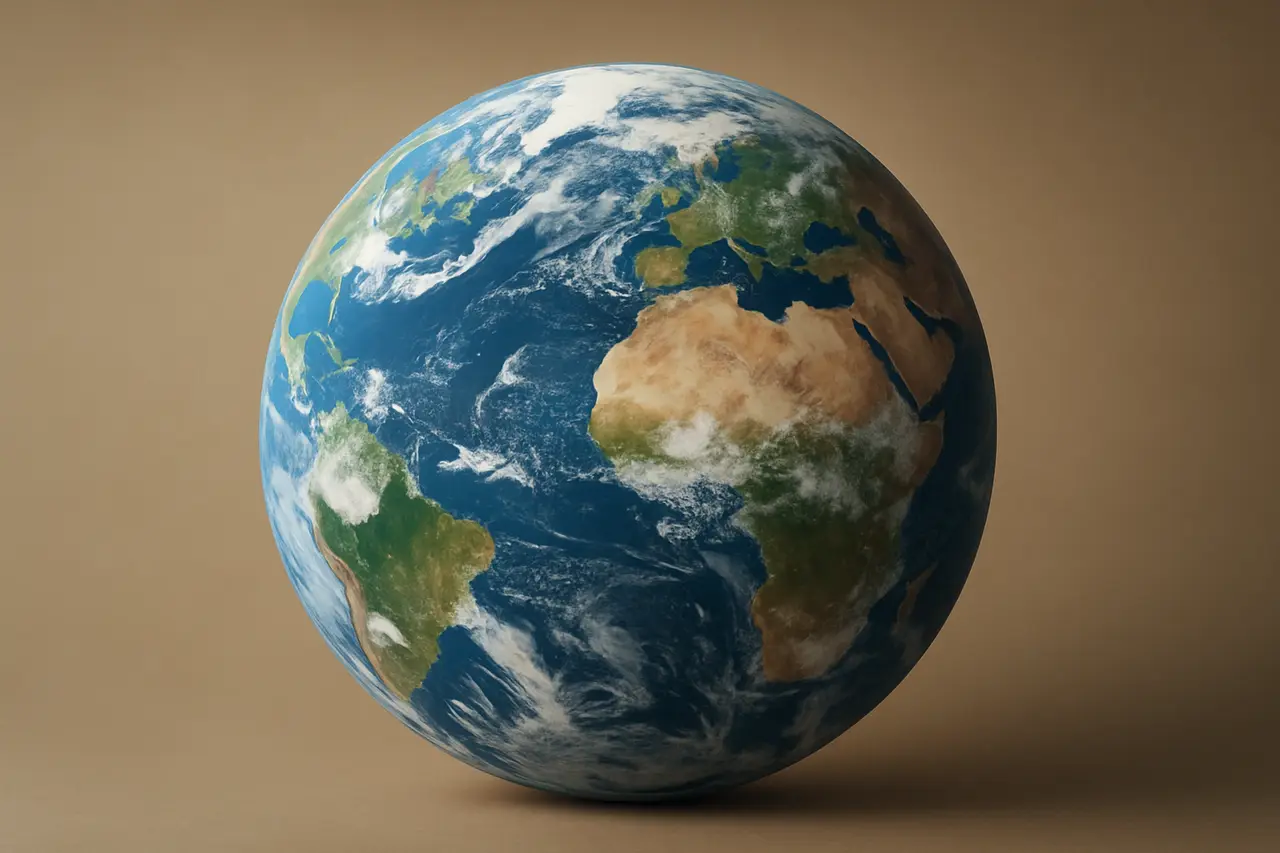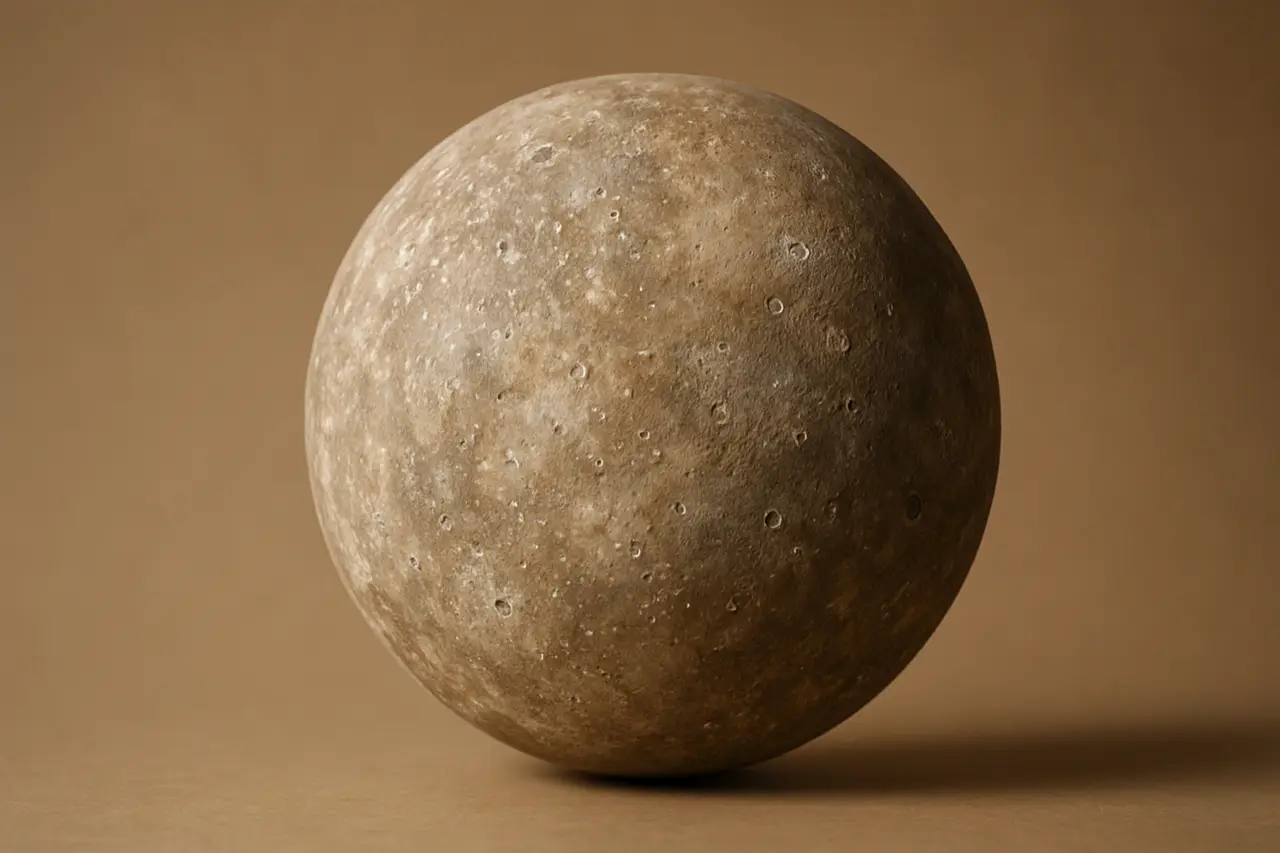
The short answer: Mercury has a mass of about 3.3 × 10²³ kg (roughly 7.3 × 10²³ lb), which is around 0.055 times the mass of Earth.
Mercury weight by type
Mercury is the closest planet to the Sun and the smallest in the solar system, yet it has a surprisingly large, dense iron core.
| Comparison | Relative mass |
|---|---|
| Mercury mass | about 3.3 × 10²³ kg |
| Compared to Earth | about 5.5% |
| Compared to the Moon | about 4.5 times |
| Surface gravity | about 38% of Earth's |
What affects Mercury weight
- Small size. Mercury is the smallest planet, so its total mass is modest.
- Large iron core. An oversized metallic core makes up most of the planet's mass.
- High density. At about 5.43 g/cm³, Mercury is nearly as dense as Earth despite its small size.
- Thin crust and mantle. The rocky outer layers add relatively little to the total.
- Measurement via spacecraft. The MESSENGER mission measured Mercury's gravity to refine its mass.
How Mercury weight compares
Mercury weighs only about 5.5% as much as Earth, but it is still roughly four and a half times heavier than our Moon.
Frequently asked questions
Why is Mercury so dense?
Mercury has an unusually large iron core relative to its size, which makes it the second-densest planet after Earth. This dense core packs a lot of mass into a small body.
How does Mercury's mass compare to the Moon?
Mercury is about four and a half times more massive than Earth's Moon. Although it is the smallest planet, it is still considerably heavier than the Moon.
How was Mercury's mass determined?
Mercury's mass was measured by tracking the orbit of the MESSENGER spacecraft as it circled the planet. The spacecraft's motion revealed Mercury's gravitational pull and mass.