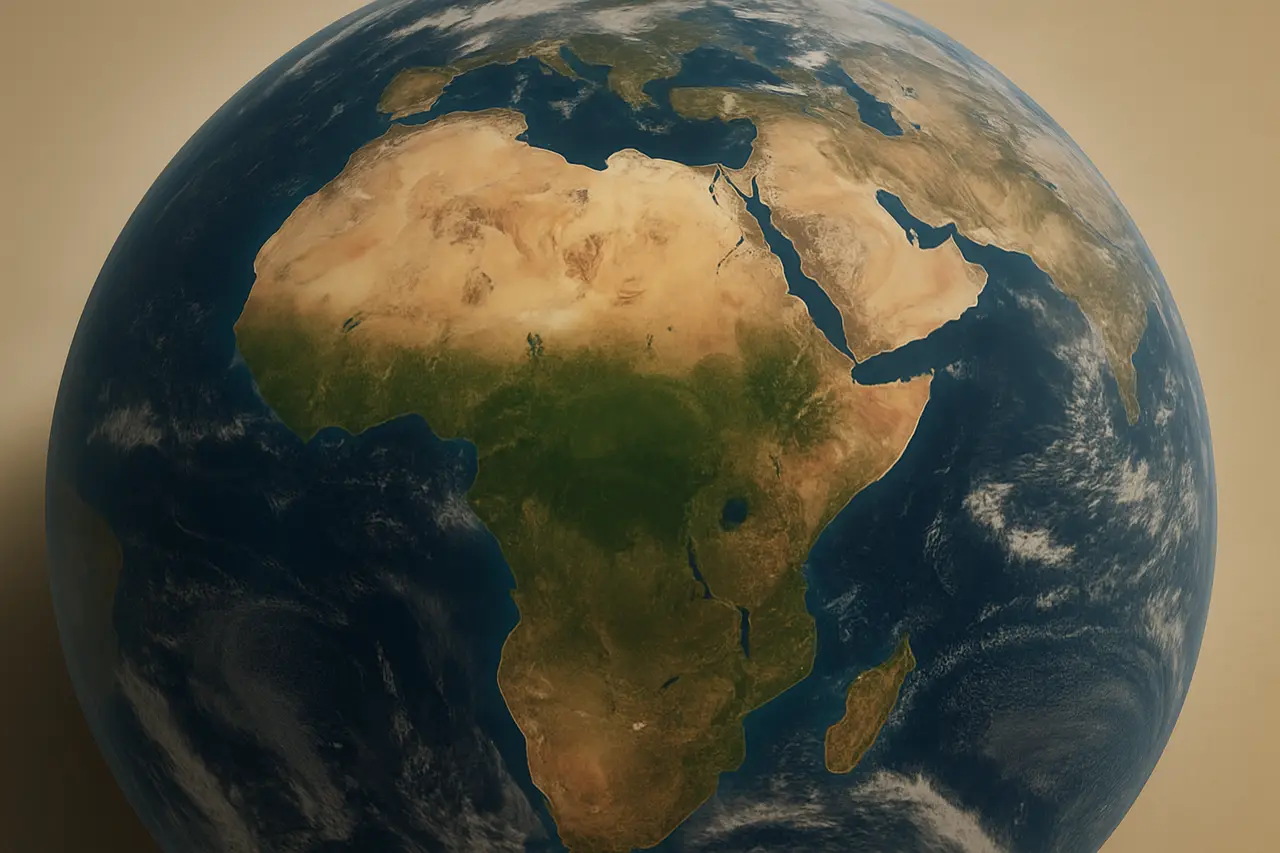
The short answer: A typical continent weighs on the order of 10^18 to 10^19 kg (a few quintillion kilograms). Africa, for instance, is estimated at roughly 2.3 × 10^18 kg. Here "weight" means the mass of the continental landmass and the crust beneath it. No one can put a continent on a scale, so every figure below is a clearly-labeled scientific estimate based on area, crust thickness, and rock density.
Continent weight by size
| Continent | Approx. area | Relative mass |
|---|---|---|
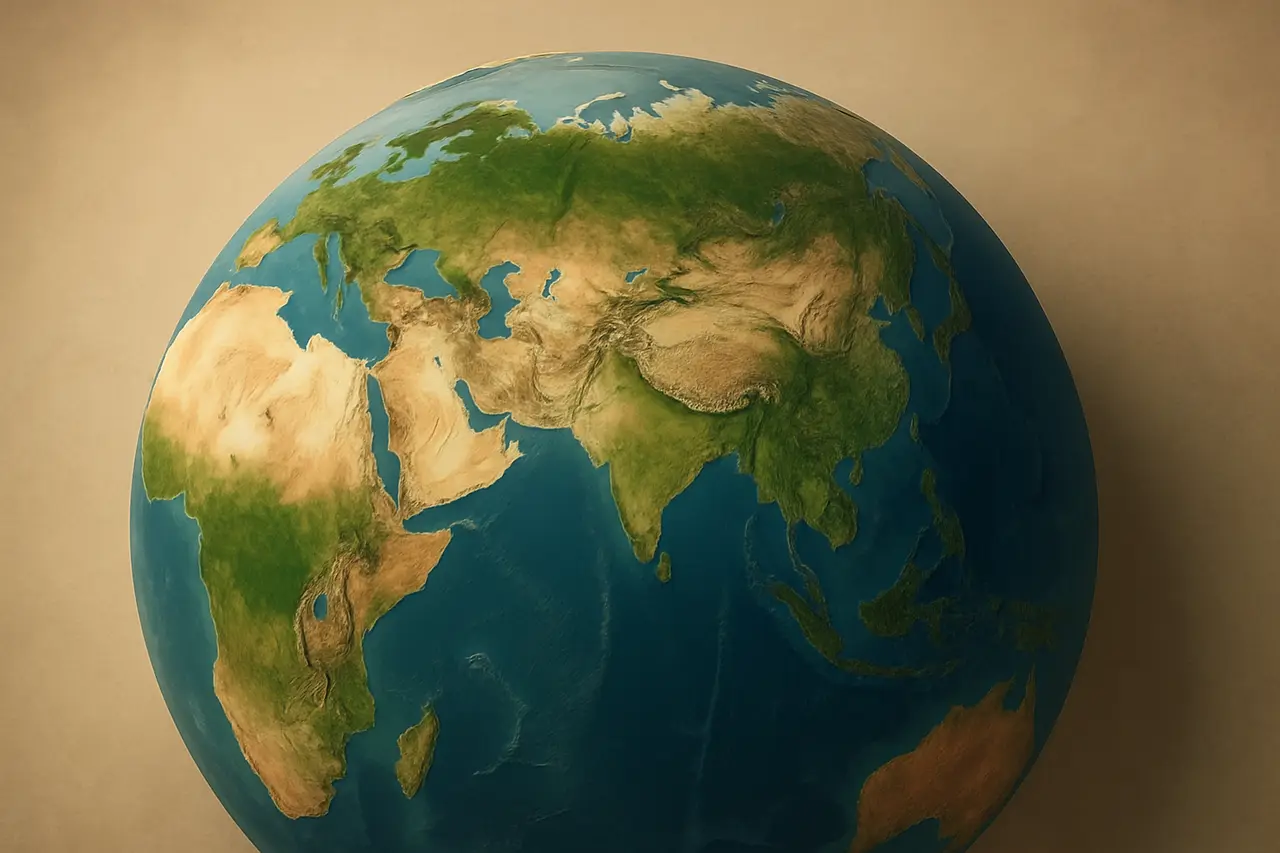
| Asia | ~44 million km² | Heaviest (largest area) |
| Africa | ~30 million km² | Very heavy |
| North America | ~24 million km² | Heavy |
| South America | ~18 million km² | Moderate |
| Antarctica | ~14 million km² | Moderate, plus a thick ice sheet |
| Europe | ~10 million km² | Lighter |
| Australia | ~8 million km² | Lightest (smallest area) |
How a continent's weight is estimated
Scientists estimate a continent's mass with a simple formula: area × average crust thickness × average density. Continental crust is roughly 30–40 km thick (about 35 km on average) and has a density near 2,700 kg per cubic meter — lighter than oceanic crust, which is closer to 3,000 kg/m³. Multiply a continent's area in square meters by that thickness and density and the total lands in the quintillions of kilograms. Because these inputs are themselves averages, the answer is always an order-of-magnitude estimate rather than an exact figure.
What changes a continent's weight
- Total land area. More surface area means more crust and more mass — the main reason Asia is the heaviest continent.
- Crust thickness. Mountain ranges sit on thicker, heavier "roots" of crust, adding mass beneath the surface.
- Rock density. Denser rock packs more mass into the same volume.
- Ice cover. Antarctica's ice sheet alone is about 2.6 × 10^19 kg, heavier than the rock mass of most continents.
How a continent compares
The entire Earth weighs about 5.97 × 10^24 kg, so even the largest continent is a tiny sliver of the planet — well under one ten-thousandth of its mass. Continents are only a thin, light layer of crust that "floats" on the much denser mantle, a balance geologists call isostasy, which is why crust thickness matters so much. Yet a single continent still outweighs all of humanity (roughly 5 × 10^11 kg) by astronomical factors.
Frequently asked questions
How much does a continent weigh?
On the order of 10^18 to 10^19 kg — a few quintillion kilograms. Africa is estimated at about 2.3 × 10^18 kg. These are approximations, not exact measurements.
How do scientists estimate a continent's mass?
By multiplying its land area by the average crust thickness (~35 km) and the density of continental rock (~2,700 kg/m³).
Which continent is the heaviest?
Asia, because it has the largest area (~44 million km²). Larger area means more crust and more mass.
Does Antarctica's ice count toward its weight?
If you include the ice sheet, yes — about 2.6 × 10^19 kg of ice, which actually outweighs the rock mass of most continents.
How does a continent compare to Earth's total mass?
Earth weighs about 5.97 × 10^24 kg, so even the biggest continent is well under one ten-thousandth of the planet.