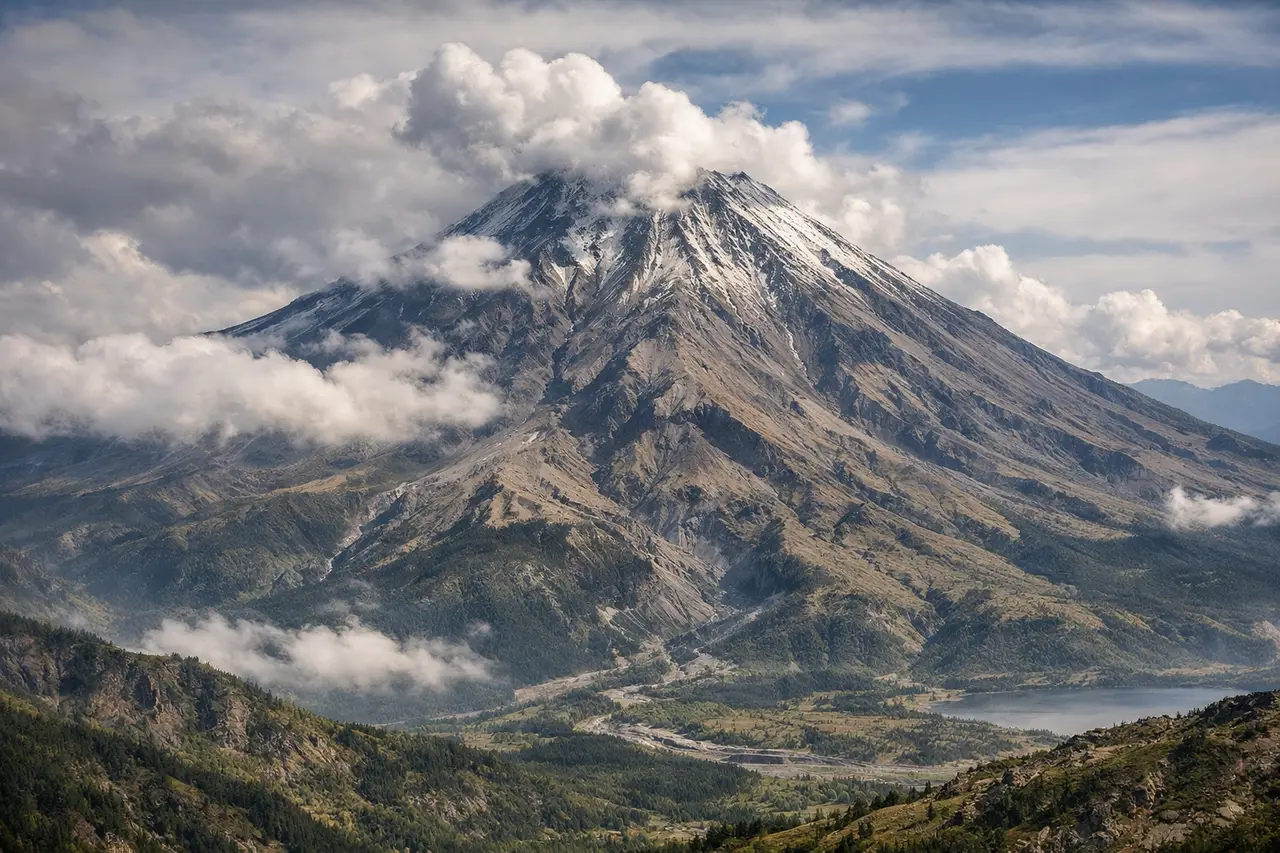
The short answer: A volcano can weigh roughly billions to trillions of tons, depending on its height, width, and internal rock structure. The exact figure depends on the total rock volume and the density of the volcanic material making it up.
Volcano weight by type
A volcano's weight is far more than the visible cone, since it includes buried lava flows, ash layers, and rock built up over many eruptions. Estimates come from volume models and typical rock densities.
| Volcano type (example) | Approximate mass |
|---|---|
| Small cinder cone | tens of millions of tons |
| Stratovolcano (e.g. Mt. Fuji-sized) | hundreds of billions of tons |
| Large shield volcano | trillions of tons |
| Mauna Loa / Hawaiian massif | many trillions of tons |
What affects volcano weight
- Total volume. The height and base diameter together set how much rock the volcano contains.
- Rock density. Solid basalt is around 2,800-3,000 kg per cubic meter, while porous ash is lighter.
- Buried structure. Much of a volcano's mass lies hidden below the surface and seafloor.
- Eruptive history. Repeated eruptions add new layers and steadily increase total mass.
- Erosion. Wind, water, and collapse can strip mass away over long timescales.
- Internal cavities. Magma chambers and gas voids slightly reduce the average density.
How volcano weight compares
A large shield volcano can outweigh a major mountain range and contains more rock than humanity has mined in all of history, dwarfing any human-built structure.
Frequently asked questions
How do scientists estimate a volcano's weight?
They model its volume from height, base size, and shape, then multiply by the average density of volcanic rock. Buried portions are inferred from geology and seismic surveys.
Is the magma inside counted in a volcano's weight?
Estimates vary. Most figures count the solid edifice, but the underlying magma chamber adds further mass if included.
What is the heaviest volcano on Earth?
Mauna Loa in Hawaii is often cited among the most massive, since much of its bulk rises from the deep ocean floor, totaling many trillions of tons.