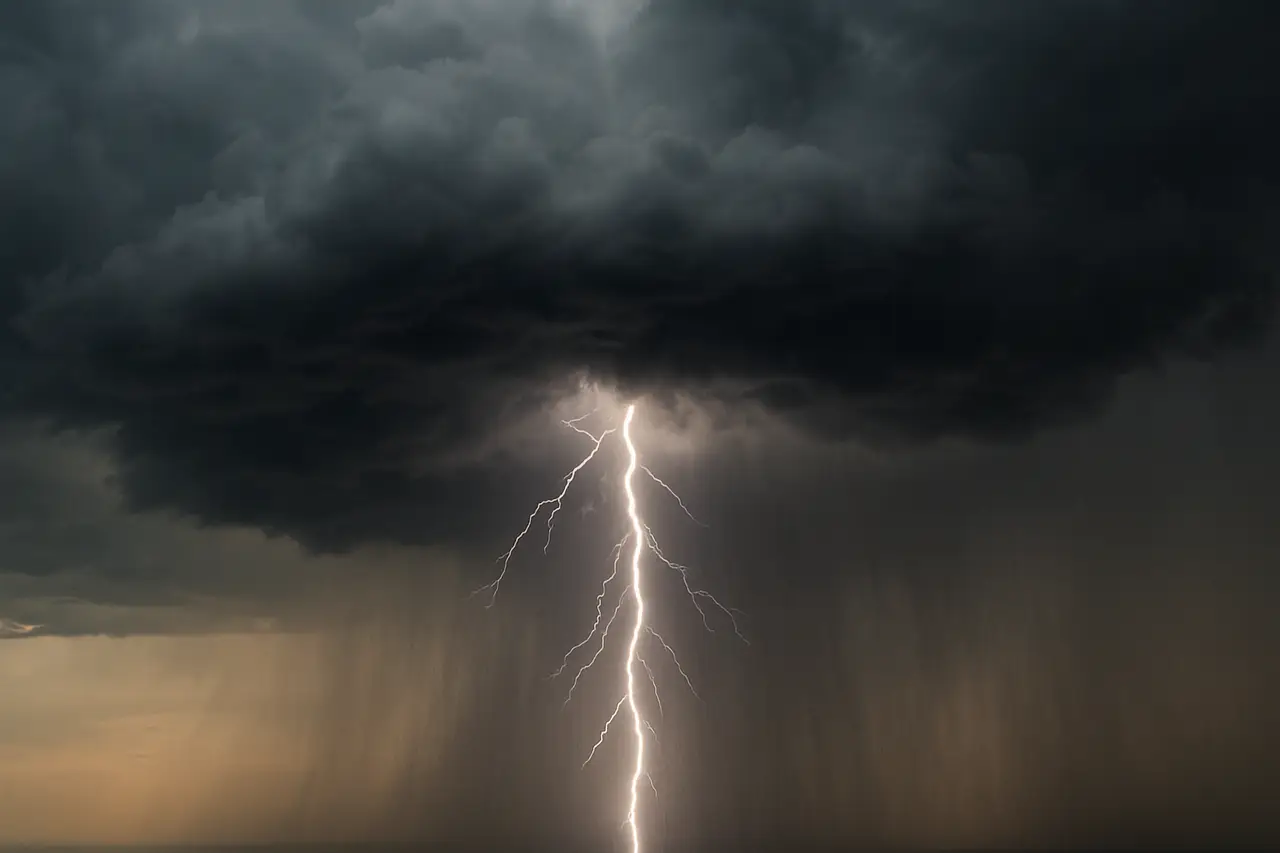
The short answer: An average thunderstorm cloud weighs roughly 500,000 kilograms (about 1.1 million pounds), mostly from water droplets and ice suspended in the air.
Thunderstorm weight by type
A thunderstorm forms when moist air rises and cools, condensing water vapor into droplets and ice. Its weight comes mainly from that suspended water, spread through a towering cloud.
| Thunderstorm part (example) | Rough weight |
|---|---|
| Average storm cloud | about 500,000 kg |
| Small cell | tens to hundreds of thousands of kg |
| Large supercell | many millions of kg |
| Rain dropped over its life | far greater total |
What affects thunderstorm weight
- Cloud size. A taller, wider storm cloud holds more suspended water.
- Water content. Droplets and ice make up nearly all of the cloud's weight.
- Updraft strength. Strong rising air can hold more water aloft.
- Moisture supply. Humid conditions feed more water into the storm.
- Stage of life. A mature storm holds more water than a forming or dying one.
How thunderstorm weight compares
Around half a million kilograms of suspended water is roughly the weight of a fully loaded jumbo jet, floating invisibly inside a single storm cloud.
Frequently asked questions
How can a cloud hold so much water and still float?
The water exists as tiny droplets and ice crystals kept aloft by rising air currents. Spread through a huge volume, they stay suspended until they grow heavy enough to fall.
Is a thunderstorm heavier than a regular cloud?
Yes, thunderstorm clouds are taller and denser, holding far more water than ordinary fair-weather clouds. That extra water makes them significantly heavier.
Does a thunderstorm weigh more during heavy rain?
At its peak a thunderstorm holds the most water, but it also sheds weight as rain falls. Over its full life it cycles much more water than it holds at any single moment.