The short answer: A lightning bolt weighs only about a few grams at most, since it is made of a thin channel of ionized air plasma with very little total mass.
Lightning bolt weight by type
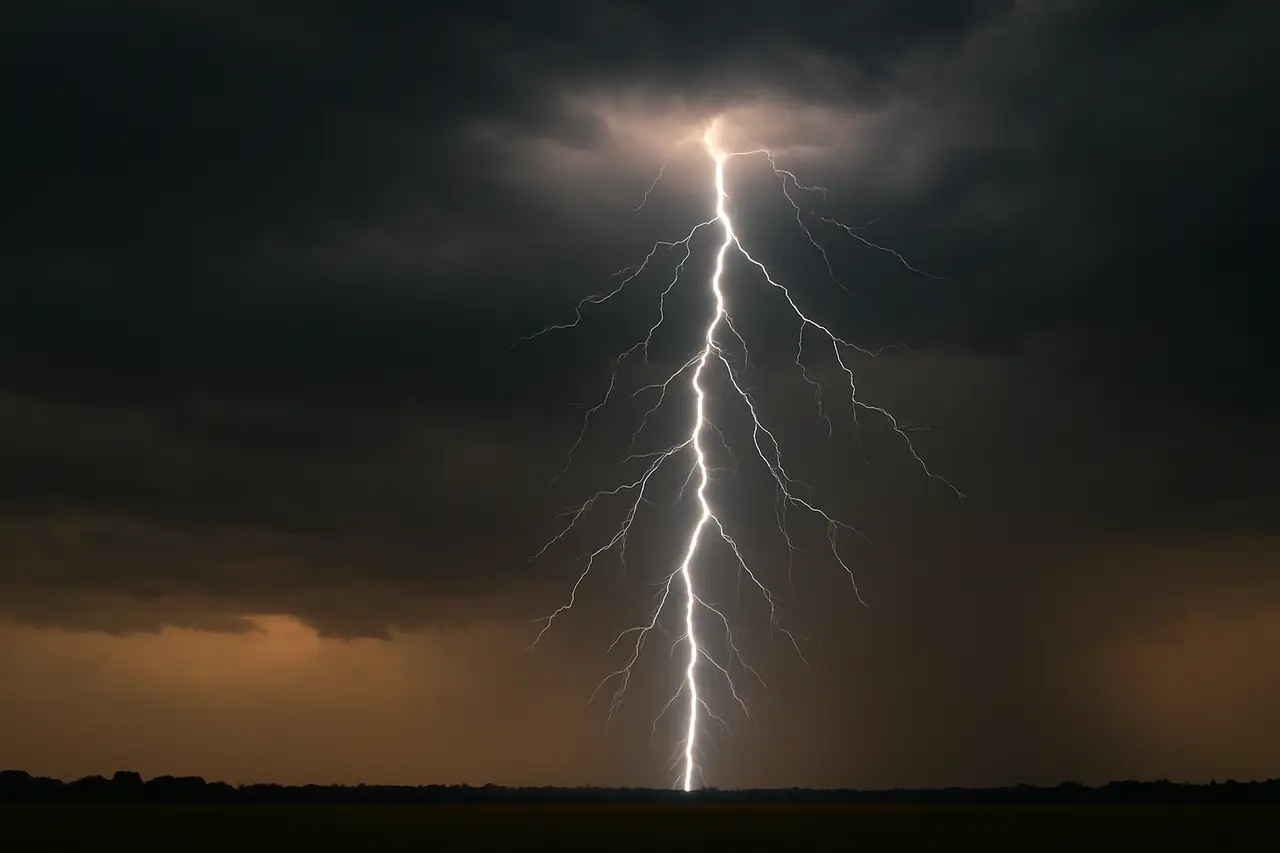
Lightning is a sudden electrostatic discharge that ionizes a narrow channel of air into glowing plasma. That plasma has mass, but the amount of air involved is tiny, so the weight is minuscule.
| What you consider (example) | Rough weight |
|---|---|
| The plasma channel itself | a few grams at most |
| A typical bolt's air mass | small fraction of a gram to grams |
| The energy released | no significant added mass |
| The thunder it makes | no mass (sound) |
What affects lightning bolt weight
- Channel size. The bolt's narrow width keeps the amount of ionized air tiny.
- Air density. Air is very light, so even a long channel holds little mass.
- Bolt length. Longer bolts ionize slightly more air, adding a touch of mass.
- Plasma state. The matter is just superheated air, not added material.
- Energy vs. mass. The huge energy in lightning adds no meaningful weight.
How lightning bolt weight compares
Despite its dramatic power, a lightning bolt weighs no more than a few paperclips, since it is just a thin thread of superheated air.
Frequently asked questions
Does lightning have any mass?
Yes, the ionized air plasma in a bolt has mass, but only a tiny amount. A typical bolt weighs no more than a few grams.
If lightning is so powerful, why is it so light?
Lightning's power comes from its electrical energy, not from mass. The channel of ionized air it creates is extremely thin and holds very little material.
Does the energy in lightning add weight?
The energy has an almost immeasurably small mass equivalent. For all practical purposes, it adds no weight to the bolt.