The short answer: A landslide can weigh anywhere from a few hundred tons to billions of tons, since earth materials run about 1,600 to 2,700 kilograms per cubic meter and slide volumes vary enormously.
Landslide weight by type
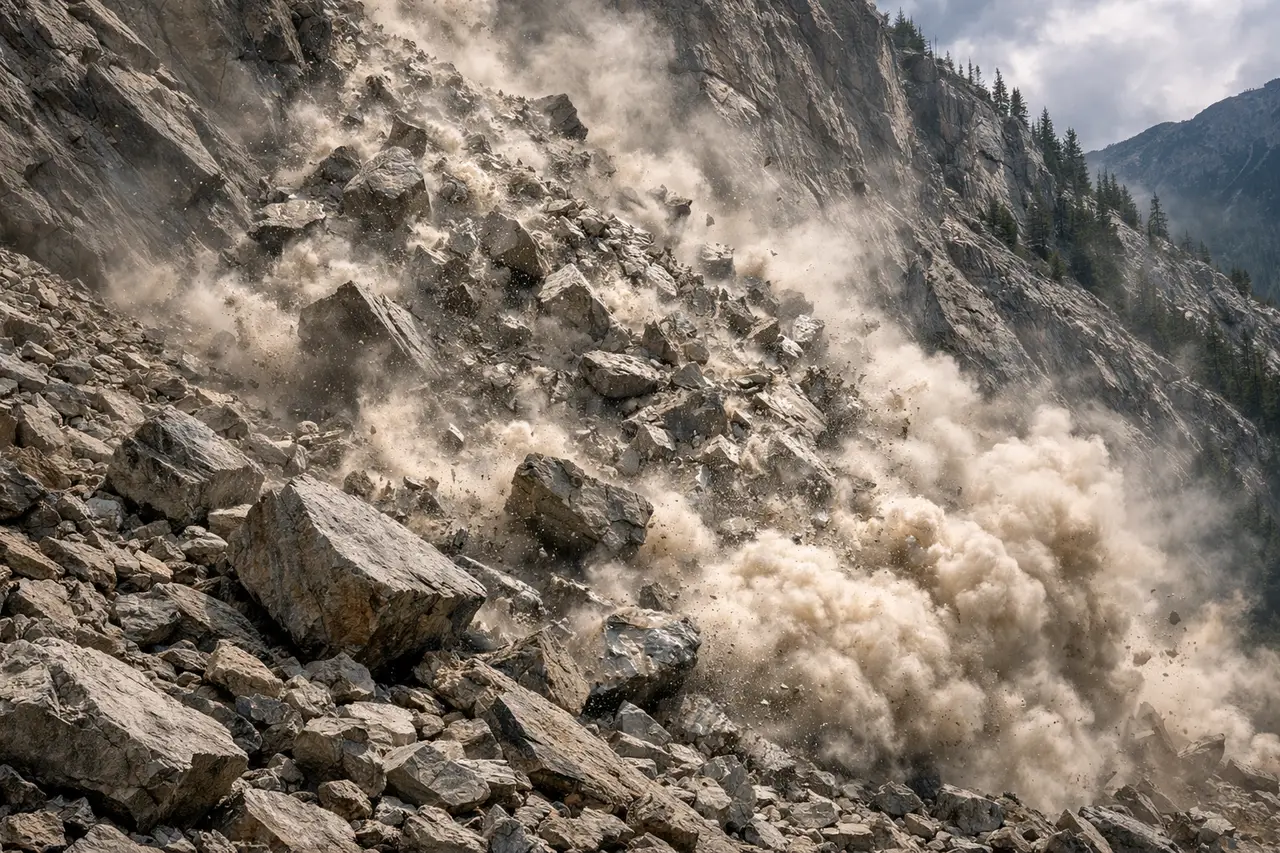
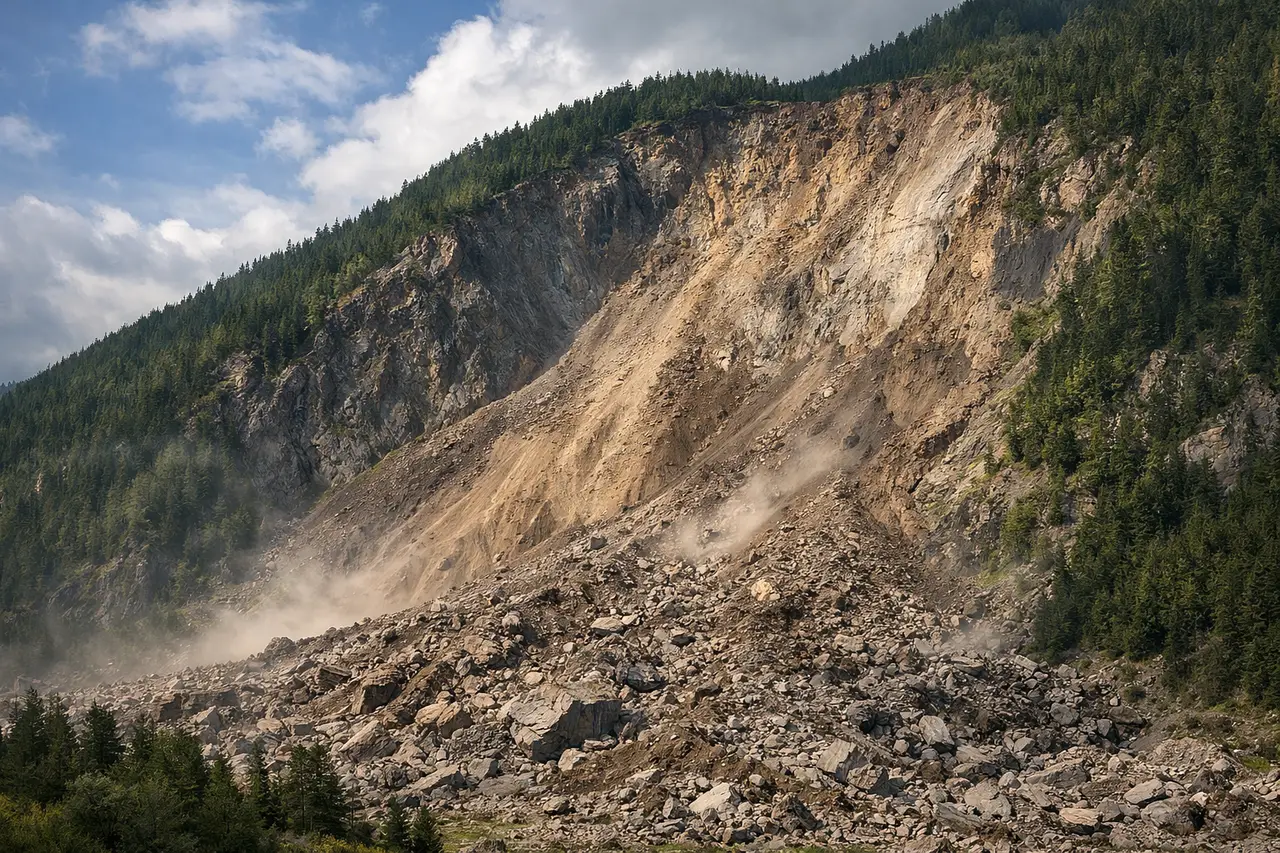
A landslide is the downslope movement of rock, soil, and debris. Its weight is estimated from the volume of material that moves and the density of that material.
| Landslide scale (example) | Rough weight |
|---|---|
| Small slope failure | hundreds to thousands of tons |
| Moderate hillside slide | tens of thousands of tons |
| Large debris flow | millions of tons |
| Massive mountain collapse | billions of tons |
What affects landslide weight
- Volume. The amount of rock and soil that moves drives the total weight.
- Material density. Earth materials range from about 1,600 to 2,700 kg per cubic meter.
- Water content. Saturated, muddy slides weigh more than dry ones.
- Rock vs. soil. Solid rock is denser and heavier than loose soil.
- Slope size. Larger, steeper slopes can release far more material.
How landslide weight compares
A large landslide can weigh millions of tons, enough to register on seismic instruments like a small earthquake as it crashes downhill.
Frequently asked questions
How is a landslide's weight estimated?
Geologists estimate the volume of material that moved and multiply it by the density of the rock and soil. The result gives an approximate total mass.
Why do wet landslides weigh more?
Water fills the spaces between soil and rock particles, adding extra mass. Saturated, muddy slides are therefore heavier than dry ones of the same volume.
Can a landslide really shake the ground like an earthquake?
Yes, the largest landslides move so much material that they generate seismic waves. These can be picked up by instruments as small quake-like signals.