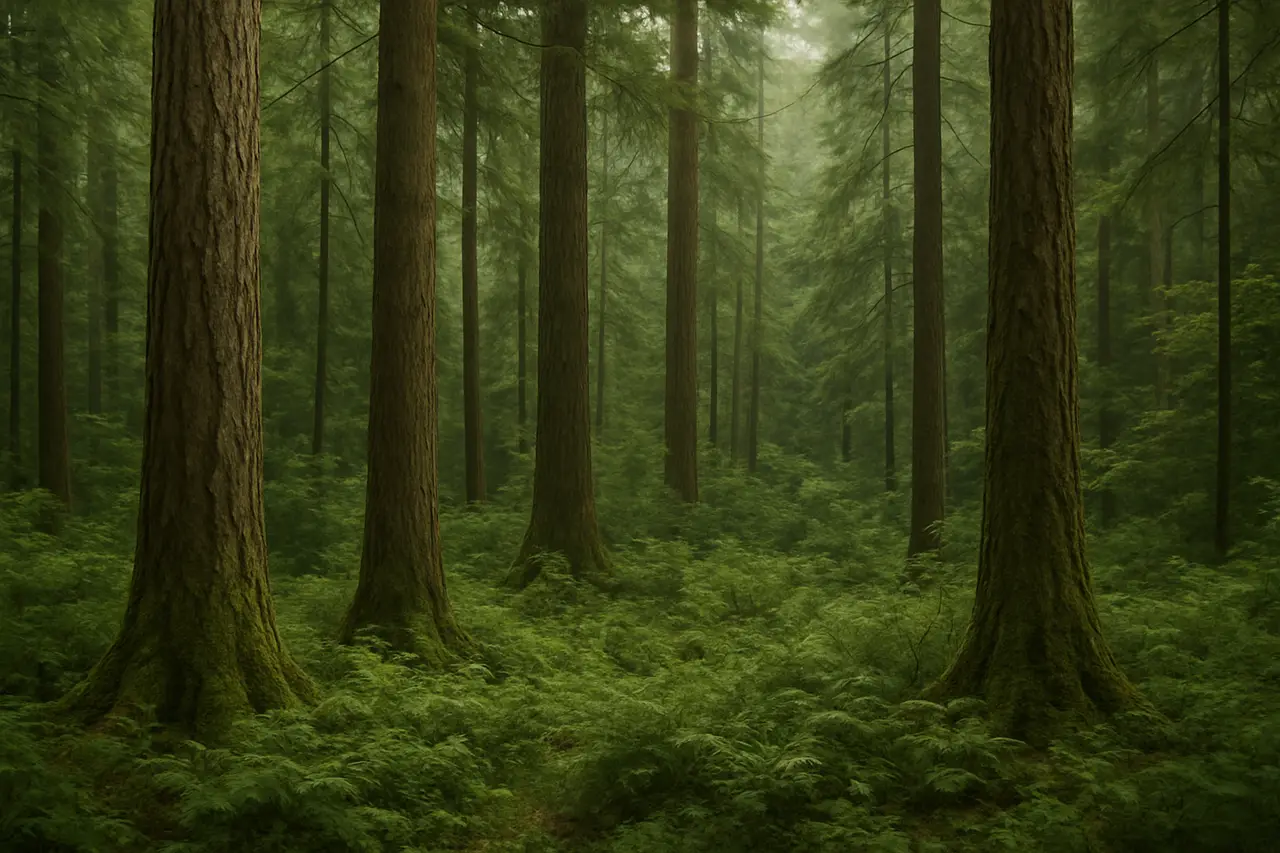
The short answer: A temperate forest covering about one square kilometer can weigh roughly 10,000 to 20,000 metric tons (about 11,000 to 22,000 US tons) when you count trees, plants, and organic matter.
Forest weight by type
A forest's weight is the combined mass of its living biomass, from towering trees to undergrowth and roots. Estimates vary widely by forest type, age, and how much soil and dead material is included.
| Forest type (example) | Rough biomass per km² |
|---|---|
| Young temperate woodland | a few thousand tons |
| Mature temperate forest | about 10,000–20,000 tons |
| Dense tropical rainforest | 30,000+ tons |
| Boreal (taiga) forest | 5,000–15,000 tons |
What affects forest weight
- Tree density. More trees per area means a heavier forest overall.
- Forest age. Mature forests hold far more biomass than young ones.
- Species mix. Dense hardwoods weigh more than lighter softwoods.
- Climate. Warm, wet rainforests grow far more biomass than colder forests.
- What is counted. Including soil and dead wood greatly increases the total.
How forest weight compares
A square kilometer of mature forest can weigh as much as roughly 1,500 to 3,000 fully grown elephants, mostly stored in the wood of its trees.
Frequently asked questions
What makes up most of a forest's weight?
The trees, and especially their trunks and branches, account for most of a forest's biomass. Soil and undergrowth add more depending on what is counted.
Are tropical forests heavier than temperate ones?
Generally yes, because warm, wet conditions support denser, faster-growing vegetation. Tropical rainforests can hold well over 30,000 tons of biomass per square kilometer.
Does a forest get heavier over time?
Yes, as trees grow and store more carbon, the forest's biomass increases. Mature forests are much heavier than recently planted or young ones.