The short answer: Fire itself has essentially no weight, because the flame is hot gas, light, and plasma; but the smoke, ash, and gases it produces can weigh anywhere from kilograms to tons.
Fire weight by type
Fire is a chemical reaction releasing heat and light, not a physical substance you can put on a scale. Its measurable weight comes from the byproducts of combustion rather than the flame.
| What you measure (example) | Rough weight |
|---|---|
| The flame itself | negligible (hot gas and light) |
| Smoke from a campfire | grams to a few kilograms |
| Ash residue from a fire | kilograms |
| Gases from a large fire | many tons |
What affects fire weight
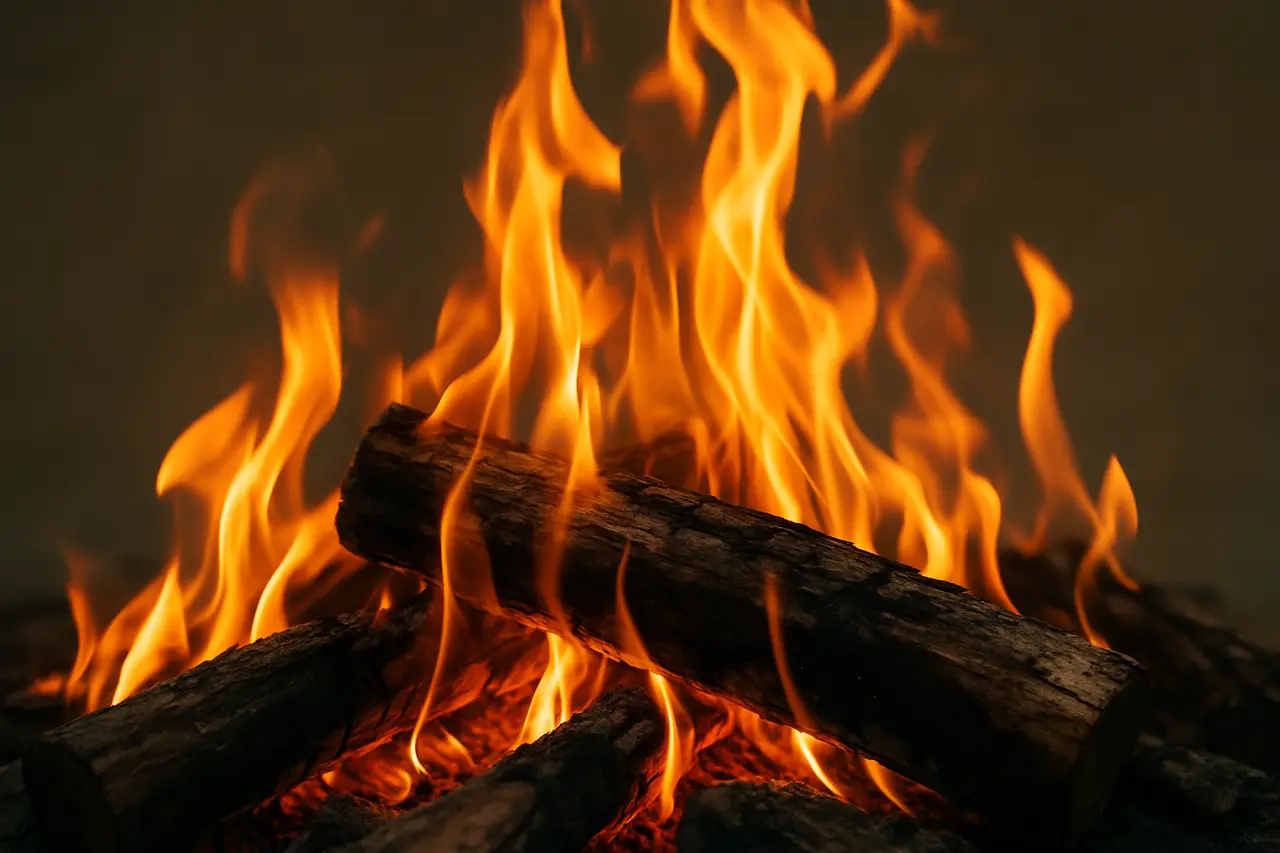
- Nature of flame. A flame is glowing hot gas and plasma, which has only a tiny mass.
- Fuel burned. More fuel means more smoke, ash, and gas produced.
- Combustion products. Most of fire's weight is in the carbon dioxide, water vapor, and soot released.
- Ash left behind. Unburned mineral residue stays as solid, weighable ash.
- Fire size. Larger fires generate far more byproduct mass.
How fire weight compares
The flame you see weighs about as much as the warm air above a candle, but a large wildfire can release combustion gases weighing as much as thousands of cars.
Frequently asked questions
Does a flame have any weight at all?
A flame is mostly hot gas and light, so its weight is negligible. The hot gases are actually lighter than the surrounding air, which is why flames rise.
Where does fire's weight really come from?
It comes from the products of combustion, like smoke, ash, carbon dioxide, and water vapor. These byproducts can weigh from grams to many tons depending on the fire.
Why does fire rise upward?
The hot gases in a flame are less dense than cooler surrounding air, so they float upward. This buoyancy is what gives flames their characteristic upward shape.