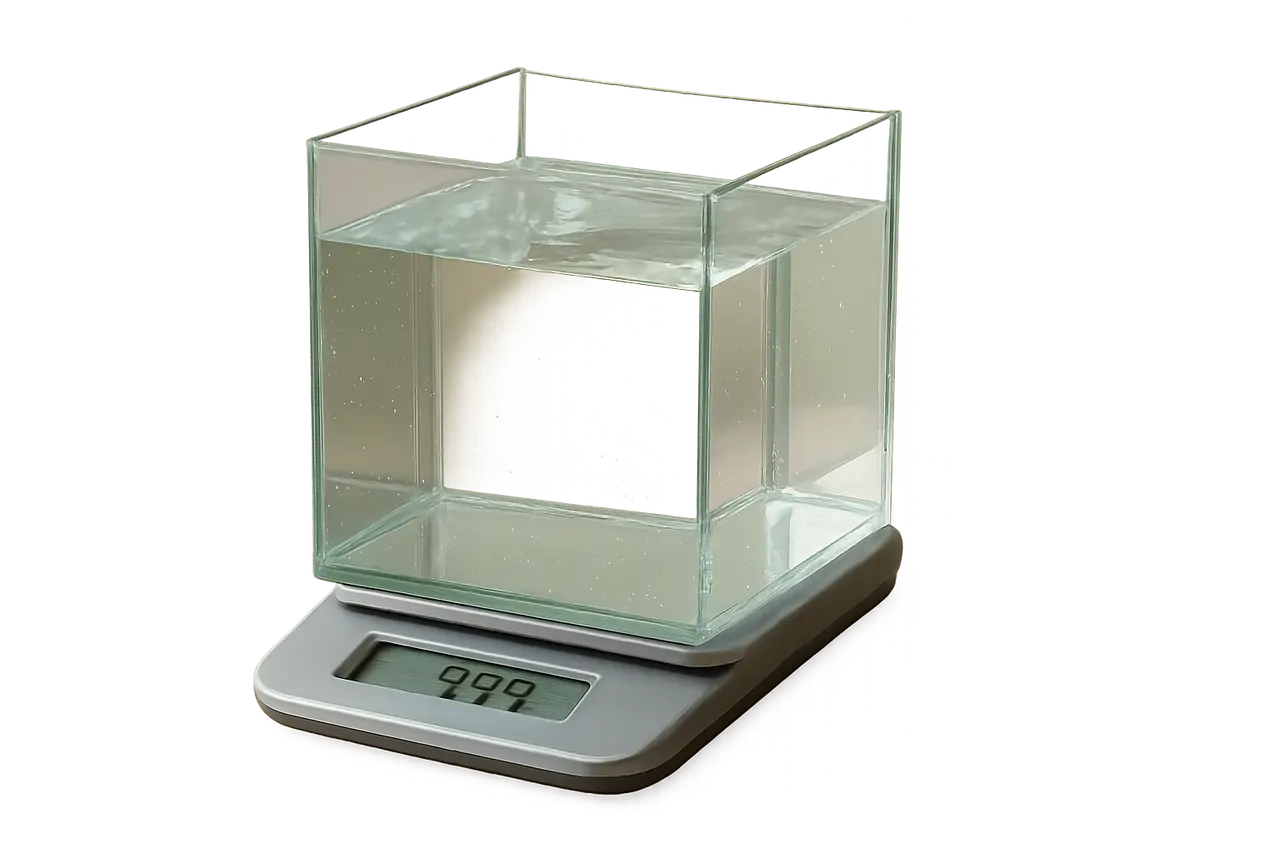
The short answer: A cubic meter of fresh water weighs about 1,000 kilograms (roughly 2,204 pounds, or one metric ton) at standard temperature and pressure.
Cubic meter of water weight by type
A cubic meter is a cube one meter on each side, holding 1,000 liters of water. Pure water has a density very close to 1,000 kilograms per cubic meter, which is why the figures line up so neatly.
| Water type (example) | Weight per cubic meter |
|---|---|
| Fresh water (4°C) | about 1,000 kg |
| Fresh water (20°C) | about 998 kg |
| Seawater | about 1,025 kg |
| Warm water (80°C) | about 972 kg |
What affects cubic meter of water weight
- Temperature. Warmer water expands slightly, lowering its weight per cubic meter.
- Salinity. Dissolved salt makes seawater denser than fresh water.
- Pressure. Very high pressure compresses water a small amount, raising density.
- Dissolved minerals. Hard or mineral-rich water weighs marginally more than pure water.
- Air content. Trapped air bubbles can slightly reduce the effective weight.
How cubic meter of water weight compares
One cubic meter of water weighs about the same as a small car, which is why even modest tanks and pools need sturdy support.
Frequently asked questions
Why does a cubic meter of water weigh exactly a tonne?
The metric system was designed so that one liter of water weighs one kilogram. Since a cubic meter holds 1,000 liters, it weighs about 1,000 kilograms, or one metric ton.
Does salt water weigh more than fresh water?
Yes, dissolved salt increases density, so a cubic meter of seawater weighs around 1,025 kilograms. That is why objects float more easily in the ocean.
Does temperature change the weight?
Slightly. Water is densest near 4°C and expands as it warms, so warm water weighs a little less per cubic meter. The difference is small for everyday purposes.