The short answer: A melon typically weighs about 1 to 3 kilograms (2.2 to 6.6 pounds), though large watermelons can be much heavier.
Melon weight by type
Melon weight varies enormously by type, with rind thickness and seed cavity affecting the edible portion. Here are some common types and their typical weights.
| Type (example) | Typical weight |
|---|---|
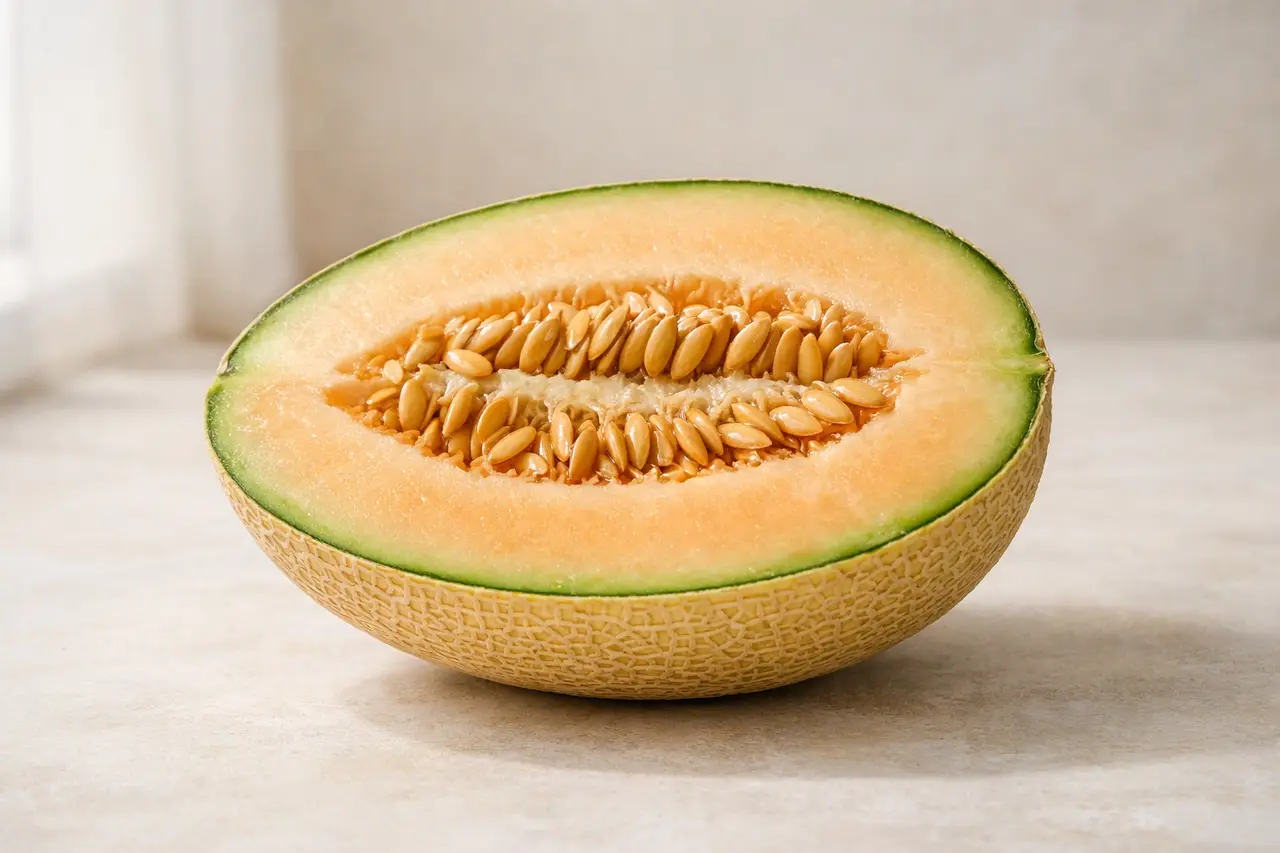
| Cantaloupe | about 0.5-2 kg (1.1-4.4 lb) |
| Honeydew | about 1.5-3 kg (3.3-6.6 lb) |
| Galia / muskmelon | about 1-2 kg (2.2-4.4 lb) |
| Watermelon | about 4-10 kg (8.8-22 lb) |
What affects melon weight
- Type. Cantaloupe, honeydew, and watermelon span a very wide weight range.
- Size grade. A large melon can weigh several times a small one.
- Rind thickness. A thick rind adds weight but is not edible.
- Seed cavity. The hollow center reduces the edible flesh per pound.
- Ripeness. A ripe melon is dense with juice and feels heavy.
- Growing conditions. Water and climate affect how large melons grow.
How melon weight compares
A typical cantaloupe or honeydew weighs about the same as a bag of sugar or a small bowling ball is far heavier; a medium melon is roughly two liters of water (around 2 kilograms).
Frequently asked questions
How much does a cantaloupe weigh?
A cantaloupe usually weighs about 0.5 to 2 kilograms (1.1 to 4.4 pounds).
How much does a watermelon weigh?
Watermelons are much heavier, commonly weighing about 4 to 10 kilograms (8.8 to 22 pounds).
How much of a melon is edible?
After removing the rind and seeds, the edible flesh is usually about 50 to 65 percent of the whole melon's weight.