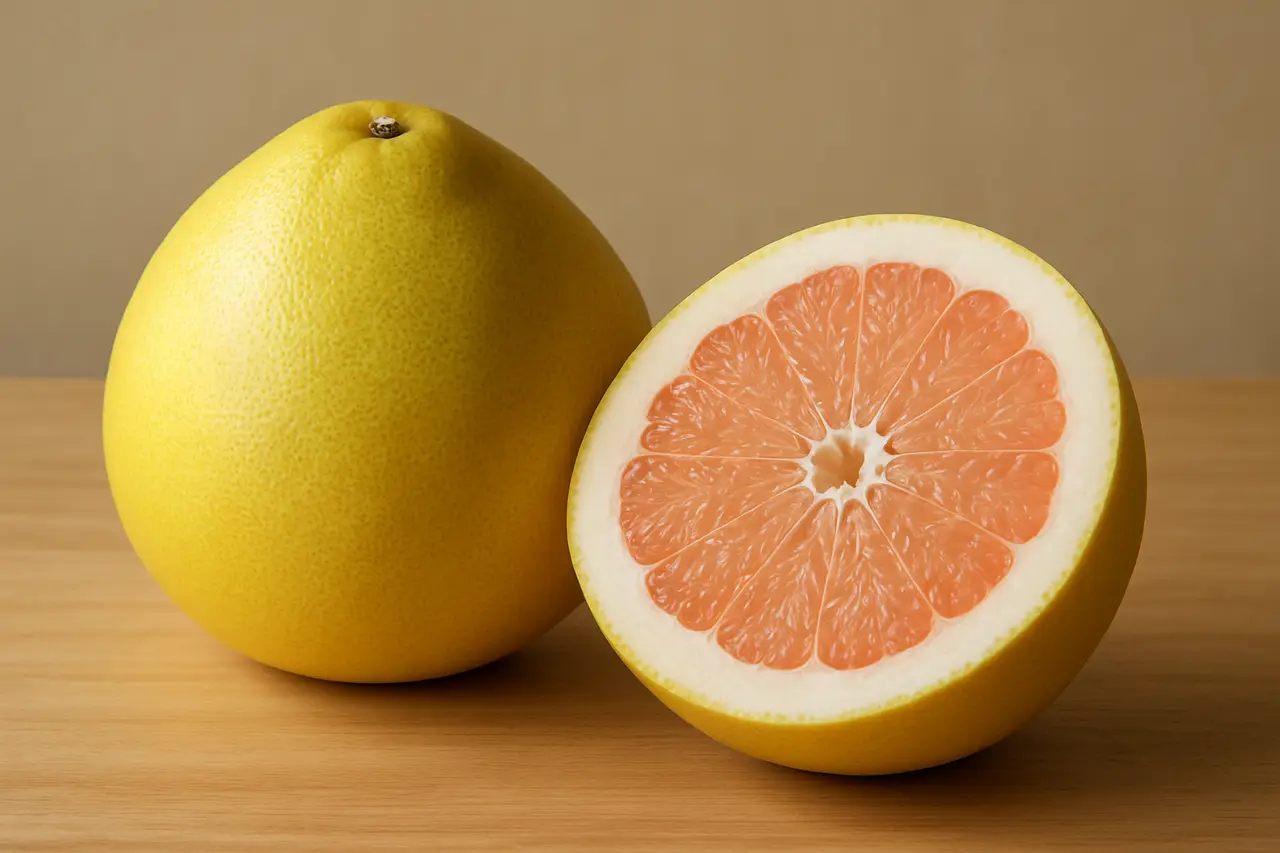
The short answer: A pomelo typically weighs about 1 to 2 kilograms (2.2 to 4.4 pounds). As the largest citrus fruit, some grow to the size of a small melon.
Pomelo weight by type
Pomelo weight varies with variety and growing conditions, and the very thick rind and pith make up a large share of the fruit.
| Type (example) | Typical weight |
|---|---|
| Small | 0.7 to 1 kg (1.5 to 2.2 lb) |
| Medium | 1 to 1.5 kg (2.2 to 3.3 lb) |
| Large | 1.5 to 2.5 kg (3.3 to 5.5 lb) |
| Edible flesh only (medium) | roughly 0.4 to 0.7 kg (1 to 1.5 lb) |
What affects pomelo weight
- Variety. Different pomelo cultivars range widely in size and shape.
- Thick rind. The very thick peel and spongy pith add substantial weight.
- Ripeness. Juicier, fully ripe fruit weighs more than under-ripe ones.
- Growing conditions. Climate, soil, and irrigation affect final fruit size.
- Whole vs. segmented. Peeled segments weigh well under half of the whole fruit.
How pomelo weight compares
A typical pomelo weighs about the same as a small cantaloupe, or roughly as much as a one-liter bottle of water plus its container several times over for the larger ones.
Frequently asked questions
Is a pomelo heavier than a grapefruit?
Yes, a pomelo is usually much heavier. A grapefruit weighs roughly 200 to 400 grams, while a pomelo commonly weighs 1 to 2 kilograms.
How much of a pomelo is edible?
Because the rind and pith are so thick, only about a third to a half of the total weight is edible flesh.
Why are pomelos so big?
Pomelo is the largest citrus species and the natural parent of the grapefruit, so its fruit and thick rind grow much larger than other citrus.