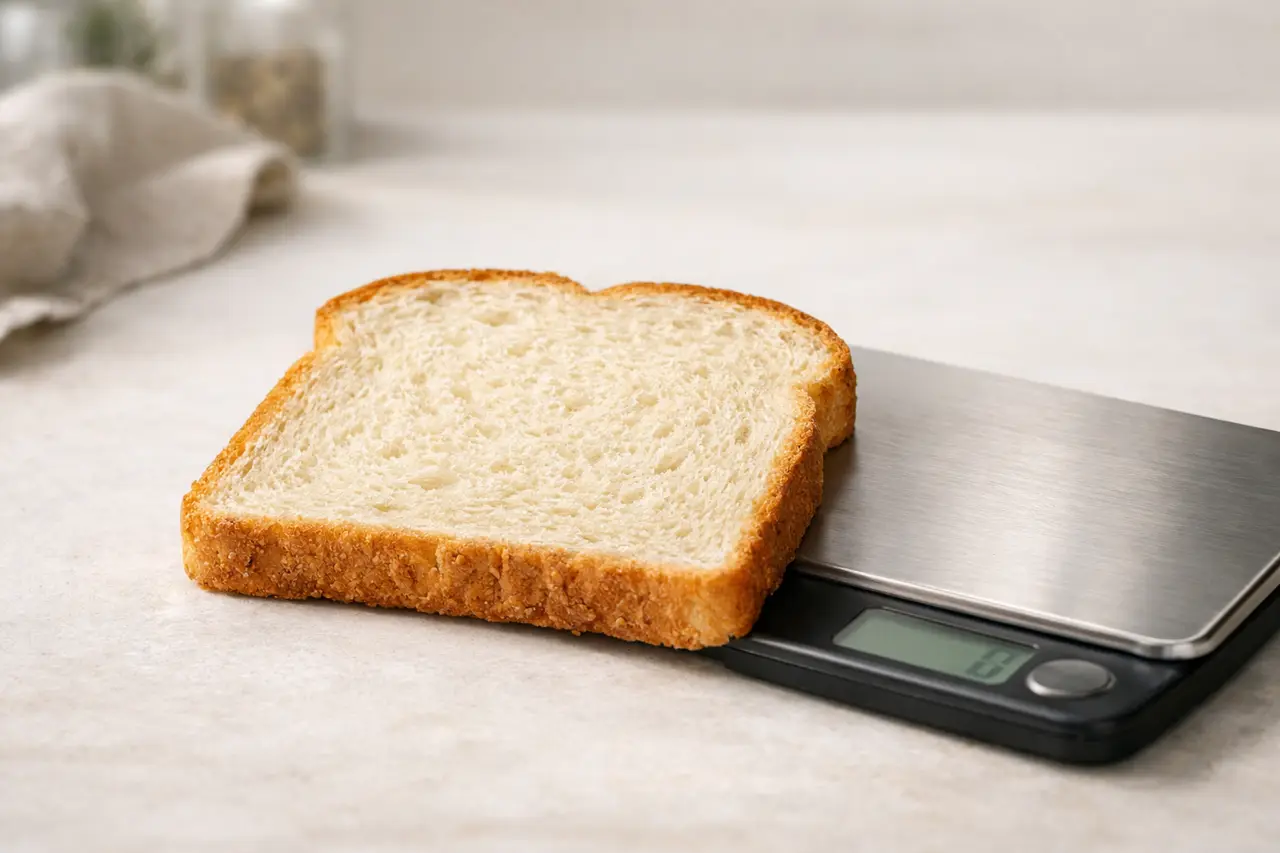
The short answer: A slice of bread typically weighs about 25 to 40 grams (0.9 to 1.4 ounces), depending on the loaf style and slice thickness.
Slice of bread weight by type
A slice of bread varies in weight with loaf type, thickness, and moisture. Here are some common types and their typical weights.
| Type (example) | Typical weight |
|---|---|
| Thin sandwich / light bread slice | about 20-25 g (0.7-0.9 oz) |
| Standard white or wheat slice | about 25-35 g (0.9-1.2 oz) |
| Thick-cut / artisan slice | about 40-55 g (1.4-1.9 oz) |
| Dense rye or sourdough slice | about 45-60 g (1.6-2.1 oz) |
What affects slice of bread weight
- Slice thickness. Thick-cut and Texas-toast slices weigh far more than thin sandwich slices.
- Loaf style. Dense ryes and sourdoughs are heavier than airy white bread.
- Crumb density. Tightly packed crumb holds more dough per slice.
- Moisture. Fresh bread holds more water; stale bread is lighter.
- Crust amount. End slices include extra crust and weigh a bit more.
- Added ingredients. Seeds, nuts, or whole grains raise the weight.
How slice of bread weight compares
A standard slice of bread weighs about the same as an AA battery (roughly 25 grams) or a single large strawberry, while a thick artisan slice is closer to a golf ball.
Frequently asked questions
How much does a slice of white bread weigh?
A standard slice of white sandwich bread usually weighs about 25 to 35 grams (0.9 to 1.2 ounces).
Why are sourdough slices heavier?
Sourdough and rye have a denser crumb and hold more moisture, so a slice can weigh 45 to 60 grams even at a normal thickness.
How much do two slices for a sandwich weigh?
Two standard slices weigh roughly 50 to 70 grams (1.8 to 2.5 ounces) together, before any fillings.